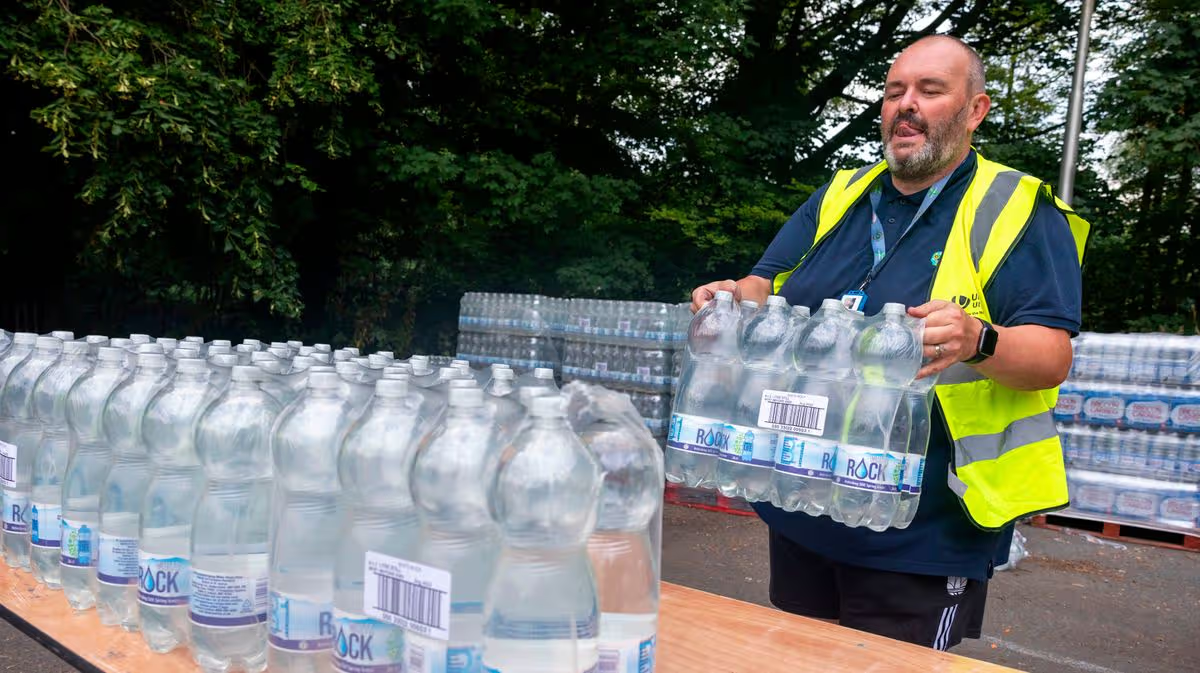



A severe disruption to water supplies has descended upon three Kent villages at the worst possible time, as residents endure a historic and sweltering bank holiday heatwave. For the communities of Charing, Challock, and Molash, the simple, vital act of accessing clean drinking water has become a daily struggle. The crisis began in the early hours of Saturday morning, with initial reports of problems surfacing around 8:30 am. What might typically be an inconvenient outage has been dramatically amplified by the record-breaking temperatures gripping the UK, turning a utility failure into a pressing health and welfare concern. The timing could scarcely be worse, with families and individuals seeking respite from the sun finding themselves without one of the most fundamental resources needed to stay cool and hydrated.
The human impact of this failure is profound and multifaceted. Beyond the obvious inconvenience of being unable to cook, clean, or shower, the lack of water poses a direct risk to health during a severe heat event. The elderly, those with underlying health conditions, and young children are particularly vulnerable without a reliable means to rehydrate. The mental and physical strain of sourcing alternative supplies—whether queuing for bottled water deliveries, if available, or traveling to distant friends, family, or public points—adds a layer of exhaustion to an already taxing situation. The pastoral calm of these Kent villages has been replaced by a climate of anxiety and frustration, as residents are forced to devote significant energy to solving a problem that should be a basic, guaranteed service.
This incident starkly highlights the fragility of our essential infrastructure in the face of increasingly extreme weather patterns. While the precise technical cause of the supply failure in this instance is not detailed in the initial report, the context of a “historic” heatwave raises urgent questions. Are our water systems, some dating back decades, resilient enough to cope with the stresses of prolonged high temperatures and shifting ground conditions? The communities of Charing, Challock, and Molash are living through a real-time stress test, and the system, for them, has faltered. Their experience serves as a microcosm of a much larger national conversation about investment, maintenance, and future-proofing the utilities upon which modern life depends.
In response to such crises, community spirit often becomes the immediate lifeline. Neighbors are likely checking on one another, sharing information about where to find water, and assisting those unable to travel. This natural solidarity is a powerful and positive force. However, it should not be a substitute for robust, rapid, and transparent action from the responsible water company. Residents rightfully expect clear, frequent communication on the cause of the issue, the steps being taken to resolve it, and a realistic timeline for restoration. The provision of emergency water tankers or bottled water stations becomes not a courtesy, but an absolute necessity under these dangerous climatic conditions.
The narrative of this outage is inextricably tied to the broader environmental context. This is not merely a bank holiday weekend inconvenience; it is a disruption occurring against the backdrop of a changing climate that is producing more frequent and intense heatwaves. Such events will inevitably place greater strain on all public infrastructure. Therefore, resolving the immediate crisis for these Kent villages is only the first step. A thorough investigation must follow to determine if this was a preventable fault, and what lessons can be learned to harden the network against future extreme weather events. The goal must be to ensure that no community is left so perilously exposed again.
As the sun beats down on Charing, Challock, and Molash, the resolution of this water crisis cannot come soon enough. The patience of the residents is being tested not just by the lack of water, but by the stifling heat that makes its absence so much more dangerous. Their experience is a sobering reminder that the comforts of reliable utilities are a cornerstone of our daily security and well-being. When that cornerstone crumbles, especially during a climate-driven emergency, the effects are deeply felt. The hope for these villagers, and for all of us observing, is that a swift restoration of service is accompanied by a long-term commitment to building infrastructure that can withstand the pressures of the new climate reality.