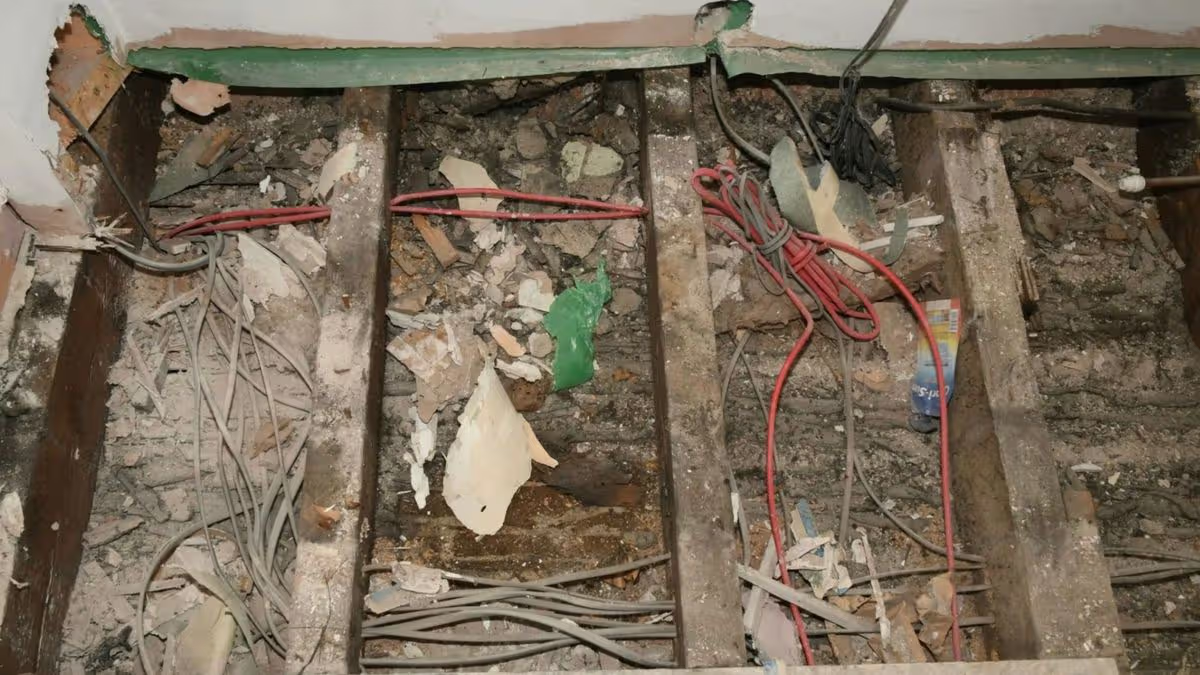


In the quiet town of Bishop Auckland, County Durham, a routine renovation project in 2024 became a doorway to a century-old tragedy. Builder David Dent, alongside a colleague, was working on a flat in Fore Bondgate when they uncovered a hidden bundle beneath the floorboards. Wrapped in brittle twine and a newspaper dated 1910, the package was an unsettling discovery. Curiosity compelled David to peel back the layers of history, revealing a sight that would forever alter him: a tiny, delicate skull. In that moment of shock, the skeletal remains, belonging to what was later confirmed to be a full-term newborn, partially fell apart in his hands. This was not just an archaeological find; it was a profound and human encounter with a lost life.
The emotional impact of that day was immediate and severe. After contacting his wife and then the police, David handed over the remains, initially told to keep the matter private. The reality fully struck him the following day when a news report on his car radio confirmed the discovery of an infant’s body. He was forced to pull his van over, overwhelmed by the gravity of what he had held. The builder, a father of six himself, began to suffer from Post Traumatic Stress Disorder (PTSD). The image of the frail bones and the mystery of the child’s story haunted him, casting a shadow over his daily life for many months.
Investigators worked to piece together the scant evidence. While an early scientific analysis suggested the baby could have lived and died as early as the 18th century, the clues pointed more strongly to the year printed on the wrapping: 1910. Detective Chief Inspector Melvin Sutherland indicated that the child likely lived and died in that era, a theory honored on the baby’s eventual headstone. The twine used to bind the bundle also suggested a possible, heartbreaking cause of death. This infant, whose story was silenced for over a hundred years, was given the name “Baby Auckland.”
For David, the journey toward healing coincided with the community’s act of closure. After a postponed inquest, scheduled for September 17, 2024, the baby was finally laid to rest in Bishop Auckland Town Cemetery. Learning that the child had received a dignified burial brought a measure of peace to David. He expressed his intention to visit the grave in his own time, to pay his personal respects by placing a teddy bear there. This gesture, from a man originally from Bishop Auckland, symbolizes a poignant connection across time—a contemporary father acknowledging an unnamed child from the past.
David has noted that his PTSD has been steadily improving in recent months. The act of burial, the naming of the baby, and the prospect of a future inquest have transformed a traumatic secret into a shared historical narrative. The story is no longer solely a private horror but a public acknowledgment of a life that existed. This process has allowed David to begin integrating the experience, moving from the role of an accidental discoverer to a participant in the child’s belated memorial.
The discovery beneath the floorboards is a stark reminder of the hidden histories within ordinary places. It underscores how the past can surface in the most unexpected ways, carrying emotional weight that resonates deeply with present lives. For David Dent, the renovation project became an encounter with mortality, grief, and ultimately, compassion. The tale of Baby Auckland is now not just a mystery from 1910, but a narrative about discovery, trauma, recovery, and the enduring human need to honor life, however briefly it was lived.