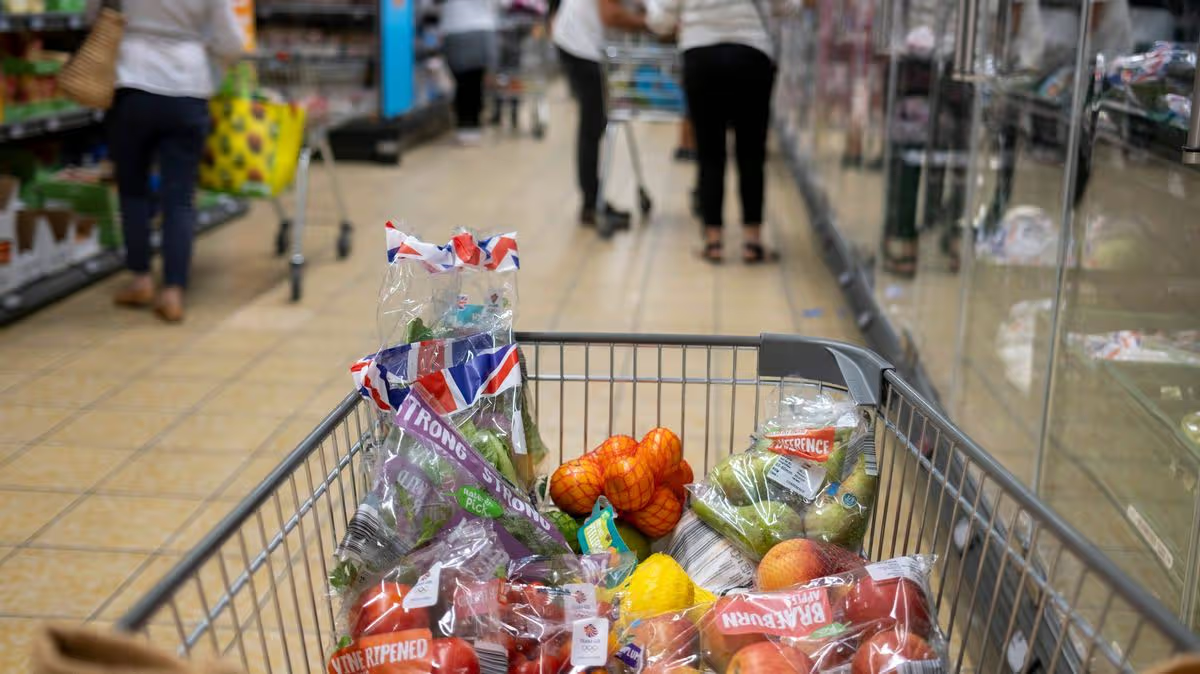




The global food system is facing a period of sustained and profound pressure, with familiar staples like bread and pasta becoming persistently more expensive. A recent analysis from the Energy and Climate Intelligence Unit (ECIU) paints a worrying picture: even when the immediate triggers for price spikes subside, the relief for household budgets is minimal and agonizingly slow. The report identifies a “rocket and feathers” effect, where food prices shoot upward rapidly due to a crisis but then drift downward with frustrating lethargy. The data suggests that after a major shock, only about 7% of the initial price rise is clawed back after two years. In terms of real affordability, when adjusted for wages, only about a third of the financial pain has been reversed in the same period. This means that the financial strain from today’s crises will linger on our grocery bills for years to come, embedding a new, higher cost baseline for everyday living.
Two major forces are currently propelling this rocket: geopolitical conflict and climatic disruption. The ongoing turmoil in the Middle East has directly inflated the costs of oil, gas, and fertiliser—the fundamental ingredients of modern agriculture. Since farming, transportation, and food processing are deeply energy-intensive, any spike in these markets quickly translates to higher supermarket prices. Concurrently, the extreme El Niño weather pattern is wreaking havoc on harvests across the globe. This climatic phenomenon is particularly damaging for key commodities like cocoa, food oils, rice, and sugar, with cascading risks for everyday products such as chocolate, coffee, tea, and even meat reliant on soy-based feed. These are not isolated issues but interconnected shocks that strain the entire supply chain.
For the UK, the situation is compounded by local vulnerabilities. As noted by ECIU analyst Chris Jaccarini, England has endured three of its worst harvests on record in the past five years, a clear signal of domestic agricultural systems under climate stress. The cumulative impact is staggering; a previous ECIU report indicates that UK food prices are on track to be 50% higher by this November compared to the start of the cost-of-living crisis in mid-2021. This relentless climb creates a sense of a “never-ending escalator upwards,” eroding consumer confidence and squeezing household finances. While political responses, such as the recent announcement of targeted food tariff cuts by Chancellor Rachel Reeves, may offer minor, selective relief on items like biscuits or nuts, they do not address the systemic vulnerabilities driving the broader trend.
The core of the crisis, as explained by experts like Henry Dimbleby, the former lead of the UK’s National Food Strategy, is a profound lack of resilience. Our food system has become perilously over-reliant on volatile global markets for fossil fuels and fertilisers, and too dependent on concentrated, just-in-time supply chains. When a shock hits—be it a war disrupting energy flows or a drought devastating a key growing region—the system has little buffer. As climate change accelerates, making extreme weather events like floods and droughts more frequent and severe, these shocks are predicted to become the norm rather than the exception. Without fundamental change, the current bout of food inflation is not an anomaly but a preview of a new and distressing normal.
The path forward, therefore, hinges on building systemic resilience. The consensus from analysts is clear: prevention is the only lasting cure. This requires a dual strategy. First, nations must aggressively cut their dependence on fossil fuels, decarbonising agriculture, transport, and processing to shield food prices from the whims of the oil and gas markets. Second, supply chains and production must be diversified and fortified. This could mean supporting more local and sustainable farming practices, improving soil health to withstand weather extremes, and developing smarter food storage and distribution networks. The goal is to create a system that can absorb and adapt to shocks without passing the full, immediate cost onto the consumer.
Ultimately, the issue transcends economics and enters the realm of social justice. As Dimbleby warns, the heaviest burden of these persistent price rises falls “on those least able to bear it.” Food insecurity, already a critical concern, is exacerbated with every percentage point of inflation. Tackling this challenge is therefore not just about economic stability but about basic social equity. Building a more resilient, climate-proof, and less energy-volatile food system is an immense task, but the data shows it is an essential one. Without decisive action, the spectre of permanently elevated food prices will continue to loom over household budgets, turning a weekly necessity into a source of enduring financial strain for millions.