


Paragraph 1
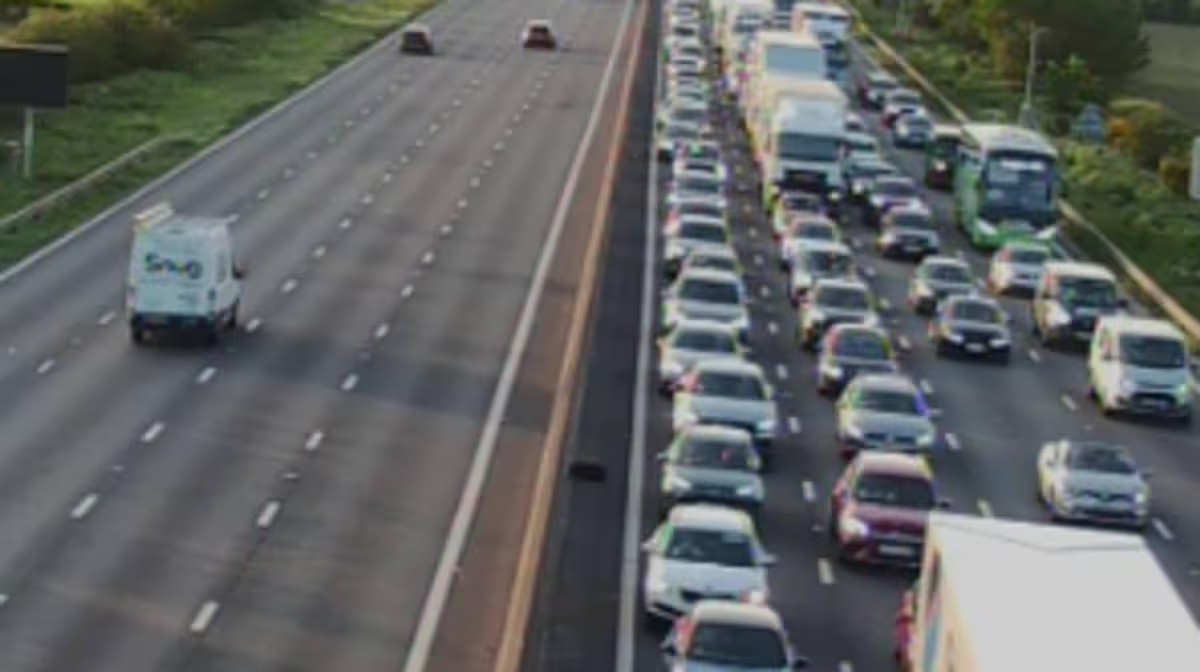
A severe collision has brought a section of one of Britain’s busiest motorways to a standstill this morning. On the M6 in Staffordshire, a “serious” crash involving two lorries has forced the complete closure of the southbound carriageway, triggering a major emergency response. The incident occurred between junctions 15 and 14, near Stoke-on-Trent, effectively sealing off a vital artery for traffic heading towards the Midlands and the South. The immediate aftermath saw a swift and coordinated deployment of resources, with police, fire, and ambulance services rushing to the scene alongside specialist National Highways Traffic Officers. Their priority is the critical work of rescue and investigation, but the ripple effects of this closure are already being felt across the region’s road network.
Paragraph 2
The specific closure spans from the Hanchurch Interchange, which serves Stoke-on-Trent, Stone, and Eccleshall, down to the Creswell Interchange for Stafford north. This is not a minor local route but a key segment of the national infrastructure, a conduit for freight, commuters, and long-distance travel. The sudden severing of this link creates an immediate logistical puzzle for thousands of journeys. Authorities have issued stark warnings to drivers, advising that those already caught within the closure or attempting to use this route now face extensive delays, currently estimated to be up to an hour and a half. These figures, however, are likely to grow as congestion builds on alternative routes and the duration of the closure remains uncertain.
Paragraph 3
Behind the official terminology of a “serious” crash lies a scene of considerable complexity and concern. The involvement of two large goods vehicles suggests a high-energy collision, often requiring intricate and time-consuming work by emergency crews. The focus on the ground is undoubtedly on securing the scene, providing urgent medical care to any injured individuals, and beginning the painstaking process of recovering the vehicles. This kind of incident transcends a simple traffic disruption; it is a human event, with hopes pinned on the skill of first responders and the resilience of those involved. The collective effort of all services present underscores the gravity of the situation and the commitment to managing both its immediate human cost and its wider consequences.
Paragraph 4
For the travelling public, the practical impact is severe and multifaceted. The advised delays are not merely suggestions but realistic forecasts based on the motorway’s typical volume. Southbound traffic must now divert, likely via the A500 and A34, which are themselves major roads but ill-equipped to absorb the entire sudden influx of M6 traffic. This will cause congestion spilling into local towns and junctions, creating a cascading effect of slowdowns. Haulage companies face disruptions to supply chains, commuters risk missing appointments or work, and family journeys are extended by frustrating, unpredictable delays. The economic and personal inconvenience radiates far from the actual crash site.
Paragraph 5
National Highways, the agency responsible for England’s motorways and major A-roads, plays a central role in managing such crises. Their Traffic Officers are not just there for traffic management; they work alongside emergency services to facilitate a safe and efficient response. Their subsequent tasks will include coordinating the recovery of the vehicles, assessing any damage to the road surface or barriers, and ultimately determining when the carriageway can be safely reopened. This process is methodical and safety-driven, meaning the closure will persist until every hazard is cleared and every investigative need is met. Their updates will be crucial for drivers throughout the day.
Paragraph 6
In summary, this incident on the M6 is a stark reminder of how fragile our interconnected transport system can be. A single collision has transformed a designed-for-speed motorway into a paused landscape, mobilising a full spectrum of emergency care and logistical control. While the official communications necessarily focus on facts—closure points, delay times, involved vehicles—the reality is a human story of sudden disruption, hope for the wellbeing of those involved, and a test of regional resilience. Drivers are urged to heed the warnings, seek alternative routes, and prepare for significant journey time increases. The road will reopen, but for now, the priority remains on the scene itself, where the work of recovery and care takes precedence over the flow of traffic.