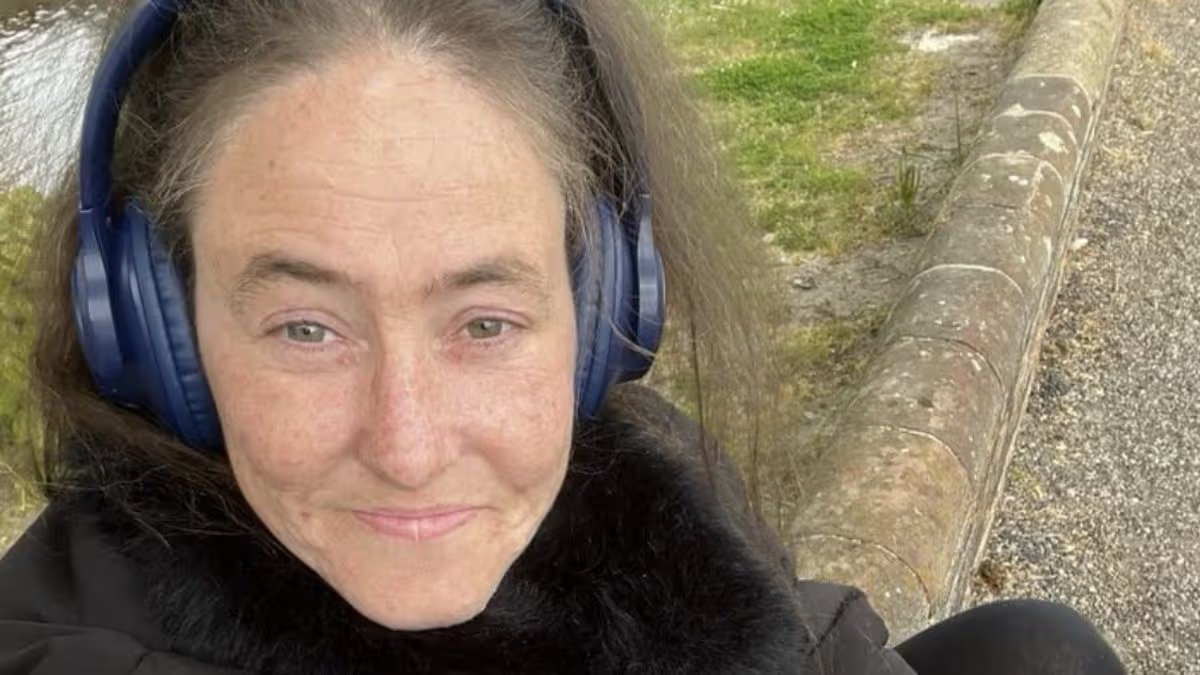




In October 2024, Jayme Stephen’s life was irrevocably changed by a seemingly trivial domestic accident. While feeding her beloved Border Collie, Ted Bear, the 39-year-old from Aberdeenshire stepped on a single piece of dry dog food she had dropped on the floor. A minor discomfort at first, a small mark on her foot, it was an incident so mundane it would be forgotten by most within moments. For Jayme, however, it was the catalyst for a medical catastrophe. Unbeknownst to her, that tiny puncture wound became a gateway for a vicious infection. Within five days, what began as a slight irritation escalated into agonizing pain and severe swelling, forcing her to call an ambulance. Rushed to hospital, she was diagnosed with life-threatening sepsis, her body launching a devastating immune response to an infection that was already spreading with alarming speed through her foot.
Jayme’s journey to this critical point was shaped by a lifelong companion of a different kind: Type 1 Diabetes. Diagnosed at just seven years old after her mother noticed excessive thirst and the tell-tale sweet smell of ketones on her breath, Jayme had spent decades managing the condition. She faced the challenges head-on, from the childhood self-consciousness of snacking on Milky Ways in class to endure cruel remarks about insulin injections. Determined not to let diabetes dictate her life, she forged an intensely active identity, finding solace and strength in canoeing, archery, kickboxing, and daily hikes with Ted. However, the condition had silently exacted a toll; for about a decade, she had experienced diabetic nerve damage, losing feeling in her legs—a factor that likely masked the initial severity of the injury from the dog biscuit.
In the hospital, the battle to save both Jayme’s life and her limb was frantic and brutal. Over five days, she endured three major surgeries. Doctors first removed dead tissue from her foot in a debridement procedure. In a second, more exploratory operation, surgeons sliced open the sole of her foot to discover that the infection had caused extensive necrosis, with most of the nerves already destroyed. Despite these efforts, the infection raged on, leaving the medical team with no viable option. The unthinkable decision was made: to save Jayme’s life, her right leg would have to be amputated below the knee. Though she had always understood amputation was a risk, the reality was a profound shock. “I was gutted,” she recalls, describing the fear and devastation of that moment before waking from the hour-long surgery and forcing herself to look at her changed body.
The physical loss was monumental, but Jayme’s spirit faced a parallel challenge in the mental and emotional adjustment that followed. The first 19 months thrust her into the world as a full-time wheelchair user, confronting myriad unanticipated difficulties, from navigating accessibility to finding suitable clothing. The mental strain of living with a chronic condition, which she admits had previously isolated her, was now compounded by trauma and a radically new reality. Through this darkness, her constant has been Ted Bear. With remarkable resilience and devoid of any bitterness, she emphasizes, “I love my dog so much, he brings me so much joy and I don’t blame him for what happened.” Her companion remained a cornerstone of her will to persevere.
Emerging from this harrowing ordeal, Jayme has found a powerful new perspective and a compelling mission. She is determined to transform her personal tragedy into a source of awareness and positivity for others. She speaks out to warn the diabetic community about the critical need for vigilant foot care, illustrating how a minute injury can spiral into a life-altering emergency with terrifying speed. Furthermore, she aims to educate the public on lesser-known diabetic symptoms, like sweet-smelling breath. Yet, her message transcends caution. It is one of profound human resilience. “I want to turn a negative into a positive,” she states, reflecting a philosophy that cherishes life’s intrinsic value over material concerns.
Today, Jayme Stephen is rebuilding her active life on her own terms. She rejects the notion that her illness or her amputation will define her. With characteristic determination, she continues to walk Ted Bear, adapting her routines but not her passion for living. She acknowledges future risks, such as potential eyesight loss, with a poignant reframe: “You can never lose your vision because your memories are your vision.” Her story is a stark reminder of the fragility of the human body, especially when complicated by chronic conditions, but it is ultimately a powerful testament to the enduring strength of the human spirit. Jayme’s journey from a piece of kibble to an amputation is a narrative of shocking misfortune, but her path forward is one of unwavering courage, advocacy, and a hard-won appreciation for the preciousness of life itself.