


Paragraph 1
In Madrid, a sense of cautious optimism is growing at the Gómez Ulla Hospital this week. The focus is on thirteen individuals who have been in strict isolation after potential exposure to the hantavirus. These are passengers from the cruise ship MV Hondius, and they have just received the welcome news of a second consecutive negative test result. After over a week in individual quarantine rooms, their situation is improving significantly. According to José García, a hospital union representative, the group is in high spirits, relieved and excited by this positive development. This milestone is not just a personal victory for them, but also a crucial indicator for the medical teams, suggesting that the stringent containment measures put in place are effectively preventing the spread of the virus within the hospital setting.
Paragraph 2
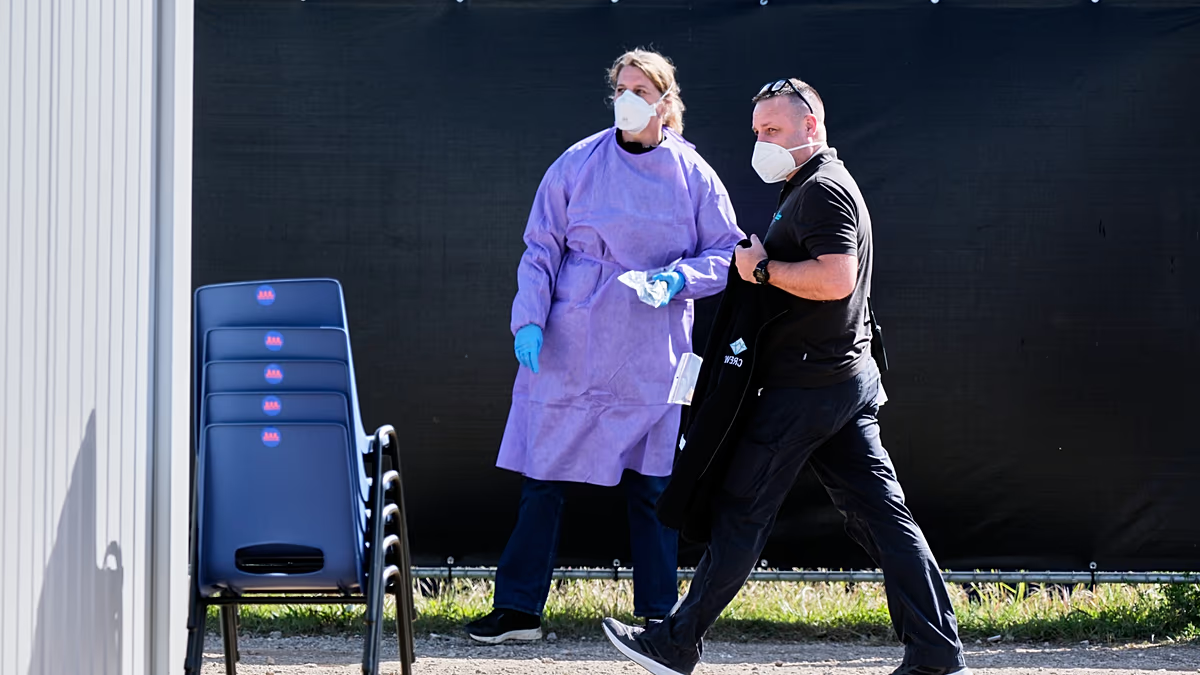
This improved outlook translates into a careful easing of restrictions for these thirteen people. Beginning this Tuesday, they are being granted permission to leave the confines of their private rooms. However, this newfound freedom is meticulously regulated to ensure ongoing safety. They can now move into the common areas of their dedicated hospital ward, but must remain fully equipped with personal protective equipment (PPE) and face masks at all times, adhering strictly to protocols established by public health authorities. Furthermore, they will soon be allowed to receive visitors. These visits will be carefully managed—staggered to avoid crowding and conducted under safe, controlled conditions. This step is a vital psychological boost, offering a semblance of normalcy and human connection after days of complete separation.
Paragraph 3
While the thirteen contacts are seeing their conditions relax, the hospital’s sole confirmed hantavirus patient remains under intensive but hopeful observation. The individual, a 70-year-old man, has been receiving treatment in the specialized High-Level Isolation and Treatment Unit since the previous week. The latest reports on his condition are encouraging; he is said to be progressing well and is in good spirits. In a touching detail that underscores the human aspect of this ordeal, the union representative shared that the patient is most eager for his health to stabilize so that he can simply return to the routine of a “normal quarantine” period alongside the others. His situation is being monitored around the clock, with medical staff evaluating all possible scenarios for his continued care and recovery.
Paragraph 4
Looking ahead, there is discussion about the next phase for the group in isolation. Health officials are considering the possibility that, after 28 days from the start of their quarantine, they might be allowed to complete their isolation period at home. José García, while relaying this possibility, emphasized a philosophy of prudence. He advocated for a step-by-step approach, ensuring that any such decision is made only when Public Health authorities are completely confident that it poses no risk. Even if a transition home is approved, he stressed that compliance with all safety protocols would need to be rigorously maintained and monitored. This careful, measured stance reflects the hospital’s overarching priority: to protect both the patients and the wider community without rushing any step in the process.
Paragraph 5
Amidst this specific viral containment effort, the hospital is also addressing important internal staffing matters that impact its overall capacity to respond to such crises. The CSIF union has welcomed a significant administrative decision: the renewal of contracts for 200 hospital staff whose positions were nearing expiration. This move, following negotiations between the union and the Ministry of Public Administration, provides stability and retains critical experience within the hospital system. Additionally, plans are underway to hire a further 70 new employees. These developments are crucial, as they ensure that Gómez Ulla Hospital is not only managing the immediate situation but is also bolstering its long-term resilience and operational strength for future challenges.
Paragraph 6
The scene at Gómez Ulla Hospital, therefore, encapsulates a multifaceted response to a public health event. On one front, there is the direct clinical and logistical management of the hantavirus cases—a story of careful isolation, encouraging test results, and the gradual, safe reintegration of human contact and movement. On another, it highlights the essential administrative and human resource efforts that underpin such a medical response. The renewal of staff contracts and new hirings are a testament to the need for sustained investment in healthcare infrastructure. Together, these elements paint a picture of an institution navigating a complex situation with scientific rigor, procedural caution, and an understanding of the profound human need for hope, connection, and stability during a period of uncertainty.