


The landscape of Alzheimer’s disease diagnosis is poised for a profound shift with a significant new development. Roche, in collaboration with Eli Lilly and Company, has announced that its Elecsys pTau217 blood test has received the CE Mark, clearing it for clinical use within the European Union. This milestone marks the arrival of the first blood test specifically designed to both signal and rule out Alzheimer’s, moving the field beyond the long-standing reliance on complex, expensive, and often inaccessible diagnostic methods. By confirming the safety and performance of the test, this regulatory approval opens a new chapter, promising a more streamlined path to answers for the millions of individuals and families affected by this debilitating disease.
The societal and personal urgency for such a tool cannot be overstated. Alzheimer’s disease is the most common cause of dementia, responsible for up to 80% of cases, and its prevalence is rising sharply. Within the European Union alone, the number of people over 60 living with dementia has surged from 5.9 million in 2000 to approximately 9.1 million in 2018. Disturbingly, projections suggest this figure could reach 13.4 million by 2030 and climb to around 18.7 million by 2050. This escalating crisis places an immense and growing strain on healthcare systems and, more importantly, on families. For these individuals, navigating the maze of memory clinics, spinal taps, and PET scans can be a lengthy, invasive, and emotionally draining ordeal, often delaying crucial care and support for years. This test arrives as a beacon of hope in that challenging landscape.
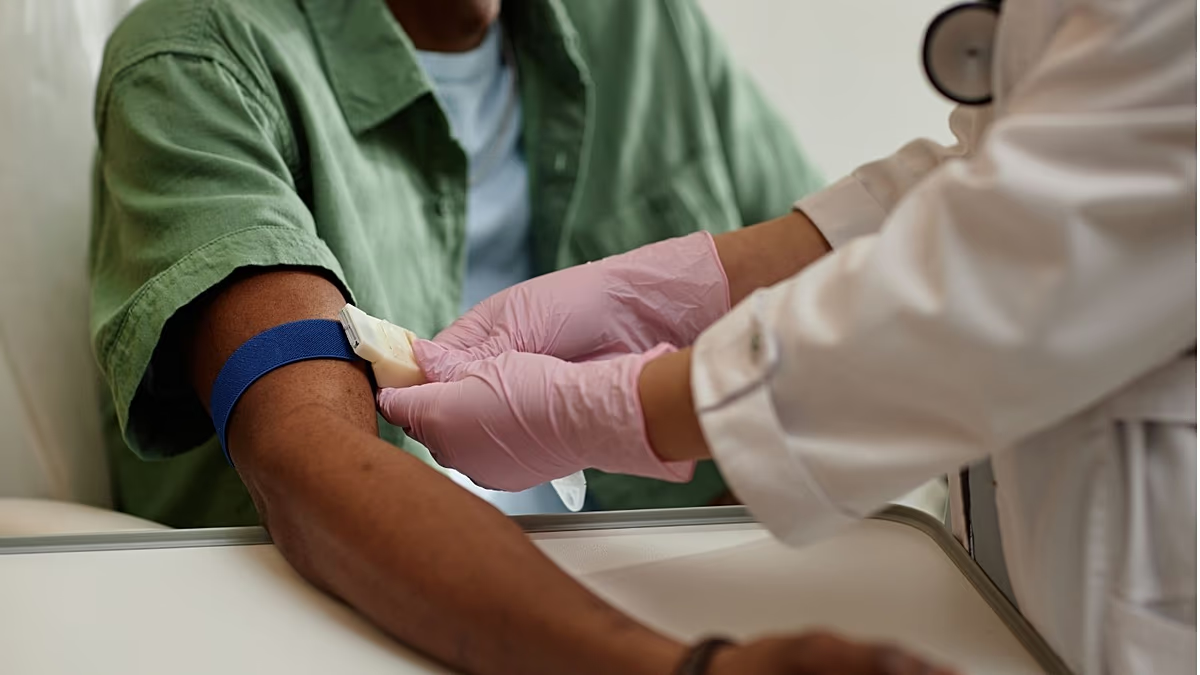
Roche’s leadership has framed this innovation as a crucial step toward humanizing and accelerating the patient journey. Matt Sause, CEO of Roche Diagnostics, emphasized that the launch of pTau217 directly addresses the “long and difficult path to a diagnosis” faced by so many. By integrating this advanced blood test into routine care, the goal is to empower physicians—starting with general practitioners—to conduct earlier and more accessible assessments. This shift is transformative. A simple blood draw in a primary care setting can now provide data that either strongly suggests Alzheimer’s pathology or effectively rules it out, guiding swift and appropriate referrals to specialists. This not only promises to reduce the “pressure on healthcare systems” by avoiding costly and unnecessary procedures but, fundamentally, it places a timely answer within closer reach of the patient.
The scientific principle behind the test is elegantly targeted. The Elecsys pTau217 assay detects minute levels of a specific protein, phosphorylated tau 217, in the bloodstream. This protein is a direct biological byproduct of the core pathology of Alzheimer’s disease—the accumulation of amyloid plaques in the brain. A positive test result, indicating elevated levels of pTau217, serves as a strong biological signal that these hallmark plaques are likely present. Conversely, a negative result, showing low levels of the protein, reliably indicates that Alzheimer’s is unlikely to be the cause of a patient’s cognitive symptoms. This latter point is particularly powerful, as it can prevent individuals from undergoing invasive lumbar punctures for cerebrospinal fluid or expensive PET scans, sparing them anxiety, discomfort, and cost while redirecting the diagnostic search toward other potential conditions.
For the pharmaceutical and research community, particularly partners like Eli Lilly and Company, this diagnostic breakthrough carries a dual significance. Carole Ho, Executive Vice President of Lilly and President of Lilly Neuroscience, rightly noted that “a timely diagnosis is the first and most critical step toward meaningful care.” This step is not only about care management and planning but is also foundational to the future of treatment. As new disease-modifying therapies that target amyloid begin to emerge, identifying the right patients accurately and early is paramount. A reliable, scalable blood test like pTau217 creates the essential infrastructure to identify eligible individuals at scale, ensuring that potential treatments can reach those who may benefit most, at a stage when intervention can be most impactful.
In essence, the clearance of the Elecsys pTau217 blood test represents far more than a technical achievement; it signifies a move toward a more compassionate, efficient, and equitable paradigm in Alzheimer’s care. By demystifying and simplifying the first, most critical step of diagnosis, it returns a sense of agency to patients and their doctors. It offers a clear path out of diagnostic limbo, enabling families to plan, access support services, and, as the therapeutic landscape evolves, seek appropriate interventions with greater speed. While challenges in treatment and cure remain, this innovation shines a light on the often-shadowed path to a diagnosis, transforming it from a daunting obstacle into a manageable step—a fundamental change that will resonate through clinics, families, and the future of neurology for years to come.