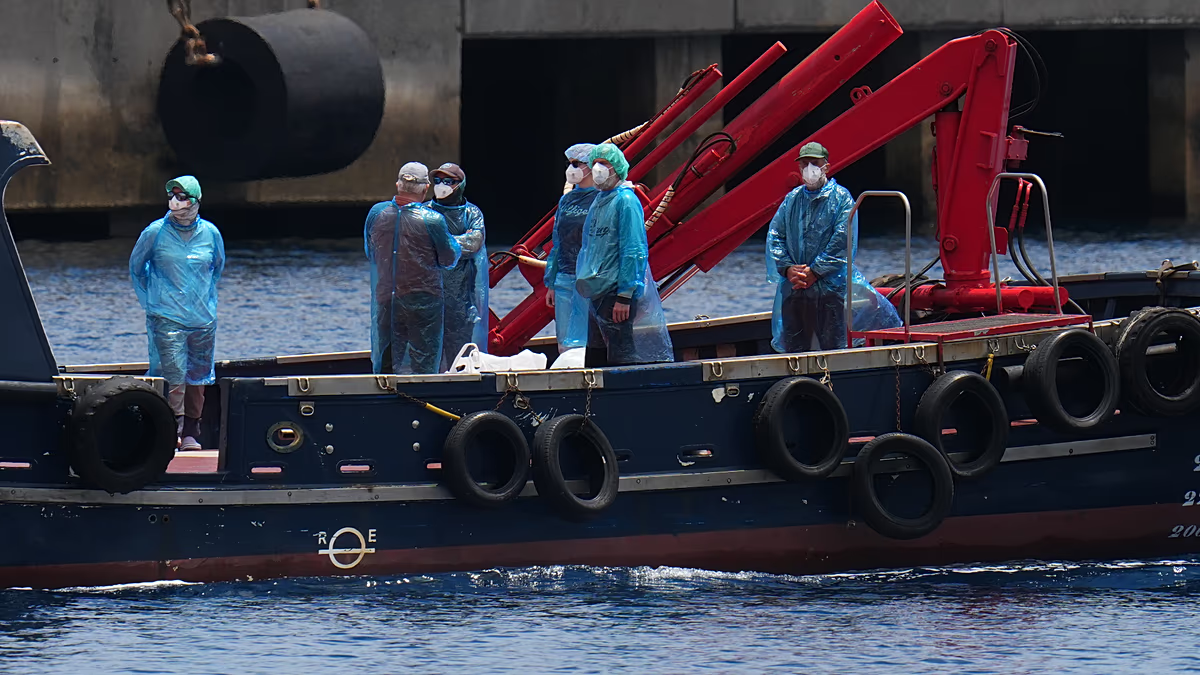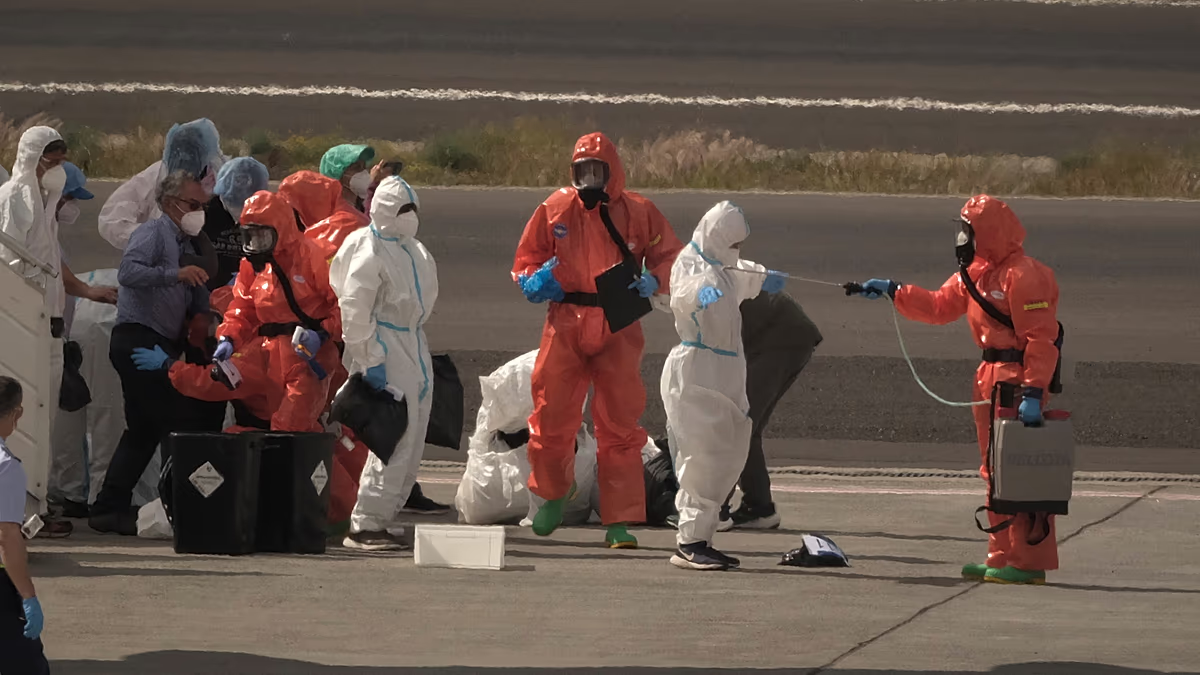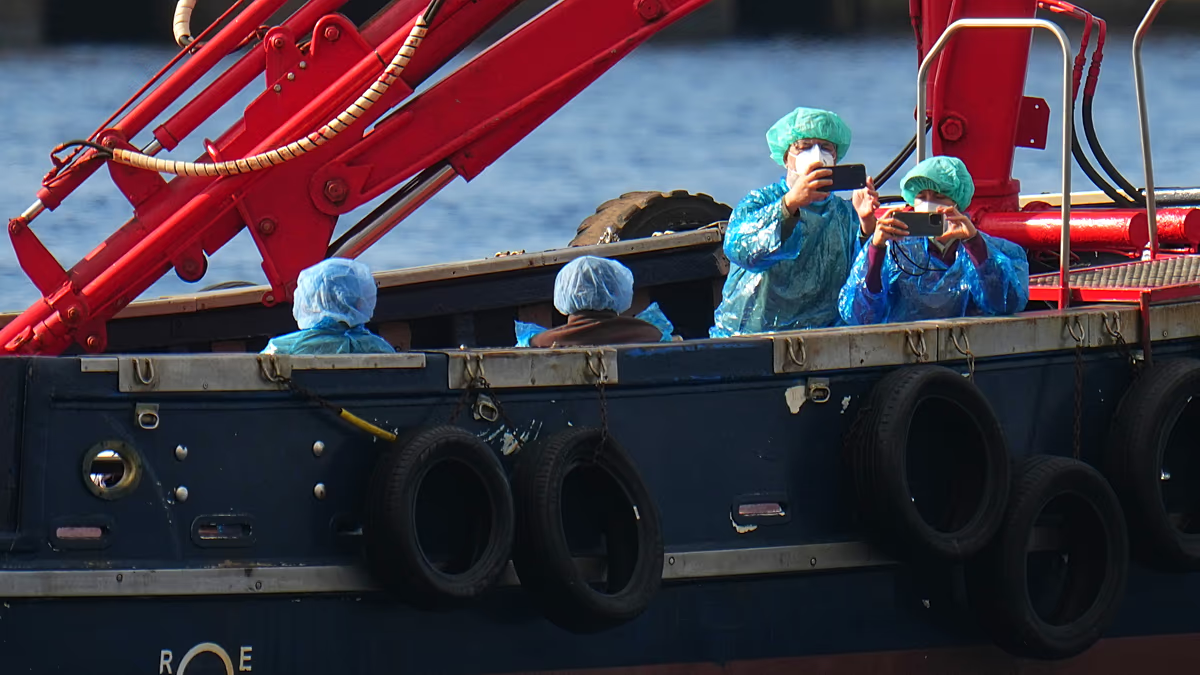

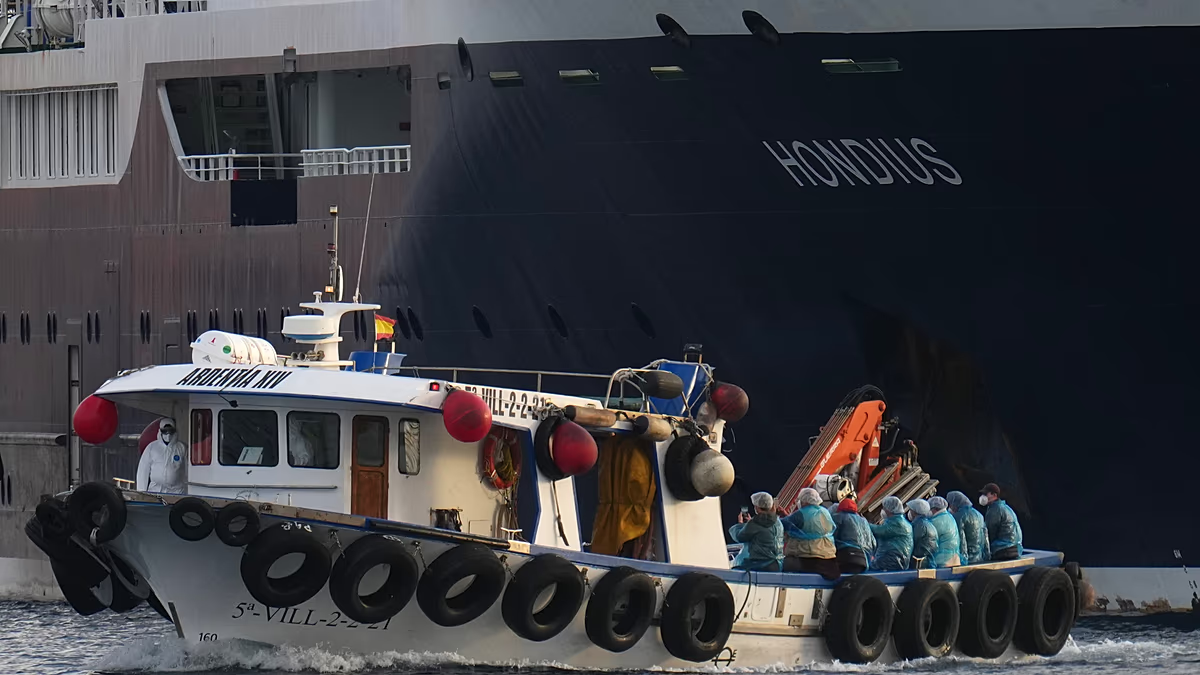


In a dramatic turn of events amidst a global health scare, the MV Hondius, a Dutch cruise ship grappling with a hantavirus outbreak, found an unexpected and temporary refuge in the port of Granadilla in Spain’s Canary Islands on Monday evening. This decision, far from the vessel’s intended route back to the Netherlands, was not taken lightly. Spanish maritime authorities, prioritizing safety above all, strongly recommended the docking due to rapidly deteriorating weather conditions. As the ship approached for what was meant to be a maritime evacuation operation, powerful gusts of wind began to batter the area, creating a perilous situation. The storm proved relentless, constantly turning the sizable cruise ship and rendering all attempts to stabilize it unsuccessful. After more than an hour of tense and fruitless maneuvering, the captain had no choice but to heed the authorities’ advice and dock, pausing the complex repatriation mission for the sake of everyone’s immediate physical safety.
The justification for this critical decision was firmly underscored by Spain’s Minister of Health, Mónica García. She publicly confirmed the ship’s temporary mooring, explicitly grounding the action in the expert recommendations of the Capitanía Marítima, the local maritime authority. García emphasized that the measure was a direct response to the volatile environmental conditions, stating that the strong winds and heavy waves made the Port of Granadilla the safest possible location. Disembarking passengers and coordinating evacuation teams in the open, churning sea would have posed an unacceptable risk. Her statements served to align public health protocol with maritime safety protocol, presenting a unified front where the well-being of passengers and crew during the physical evacuation was as paramount as managing the viral outbreak itself. This temporary pause, while delaying the journey home, was a necessary interlude to ensure no lives were lost to the storm.
Meanwhile, the health situation aboard and ashore continued to evolve with sobering developments. On Monday evening, medical reports confirmed that one of the fourteen Spanish nationals evacuated from the MV Hondius had tested provisionally positive for hantavirus at the Gómez Ulla hospital in Madrid. This individual, while currently isolated and showing no symptoms, represents a tangible confirmation of the outbreak’s reach beyond the ship’s confines. The remaining evacuees are in quarantine after testing negative, a standard but crucial precaution. Adding a layer of gravity to the situation, the World Health Organisation (WHO) issued a cautious warning. Olivier Le Polain, head of the WHO’s epidemiology unit, explained that due to the virus’s long and variable incubation period—averaging three weeks but potentially stretching to six—new cases could emerge in the coming days and weeks. This warning underscored that the crisis management phase would be a marathon, not a sprint, requiring sustained vigilance.
The significance of the event is further highlighted by the high-level diplomatic and health discussions it has triggered. In response to the escalating situation, Spanish President Pedro Sánchez and the Director-General of the WHO, Dr. Tedros Adhanom Ghebreyesus, scheduled a meeting for Tuesday morning at the Moncloa Palace. Their agenda: to jointly analyze the management of the health crisis precipitated by the hantavirus outbreak on the cruise ship. This coordination between national leadership and the world’s foremost global health authority signals the incident’s seriousness and the commitment to a transparent, internationally aligned response. The timing of the meeting, set for after the expected completion of the passenger disembarkation, indicates a strategy to move from emergency response to strategic evaluation, seeking lessons and ensuring coordinated next steps.
Ultimately, the ship’s journey underscores a stark collision of human endeavor, infectious disease, and the formidable power of nature. The MV Hondius, bound for the Netherlands to complete the repatriation of its 28 passengers, was intercepted not just by a virus, but by a storm that forced a recalculation of the safest possible course. This interplay of challenges—medical, logistical, and environmental—complicates what is already a sensitive international public health operation. The docking in Granadilla, while a detour, became an essential chapter in the narrative, a demonstration that crisis management must be adaptable, respecting both epidemiological guidelines and the immutable forces of the natural world.
As President Sánchez and Dr. Tedros prepare to address the media following their consultations, the world watches a scenario that feels emblematic of modern global challenges. The incident on the MV Hondius is more than a localized emergency; it is a test of international cooperation, transparent communication, and multi-layered risk management. From the deck of a storm-tossed ship to the halls of the Moncloa Palace, the response weaves together the efforts of maritime captains, health ministers, epidemiologists, and world leaders. Their shared goal remains the safe conclusion of the passengers’ odyssey and the containment of the outbreak, a reminder that in our interconnected world, the health of a few on a single vessel is a concern for all.