


Paragraph 1
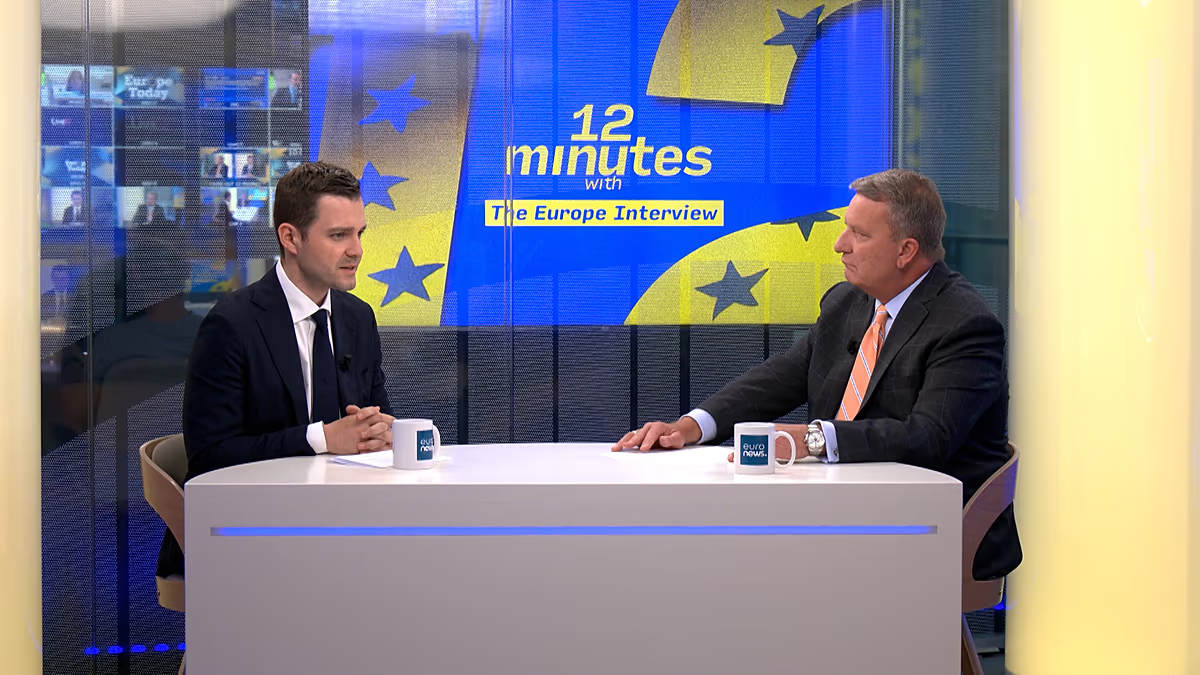
In a significant move to revitalize Ukraine and Moldova’s European integration, European Commissioner Marta Kos has called on all EU member states to formally open every accession negotiation cluster for both countries by July. This appeal, made in Brussels, represents a renewed and urgent diplomatic push to overcome months of political stalemate. Kos emphasized that extensive preparatory work, or “front-loading,” has been completed, leaving the process technically ready to advance. The European Commission sees a new window of opportunity to break the deadlock, largely due to a change in leadership in Hungary, which had previously used its veto power to stall progress under former Prime Minister Viktor Orbán.
Paragraph 2
The proposed timeline is ambitious. Commissioner Kos suggested that the first negotiation cluster could be opened as early as June, during Cyprus’s tenure holding the EU’s rotating presidency. The remaining five clusters would then follow in July, when Ireland assumes the presidency. This procedural step is crucial; these clusters are groupings of policy chapters, each linked to major reforms an aspiring country must undertake to align with EU standards, spanning critical areas from the rule of law and judicial independence to economic governance. Final accession, however, remains a merit-based process requiring the eventual unanimous approval of all 27 member states.
Paragraph 3
A central element in this renewed momentum is the changed political landscape in Budapest. With Péter Magyar sworn in as Hungary’s new Prime Minister in April, Brussels hopes for a more constructive and less obstructive approach from Hungary. While Prime Minister Magyar has firmly defended Ukraine’s territorial integrity in line with international law, he has also echoed a widespread sentiment among EU capitals by rejecting any “fast-track” to membership. He insists the process must remain rigorous and conditions-based. This creates a delicate balance: the Commission praises Ukraine’s reform progress but refuses to set a concrete entry date, while Kyiv actively seeks a clear, written timetable to solidify its European perspective.
Paragraph 4
The upcoming European summit in mid-June, which will be Magyar’s first as prime minister, is poised to be a critical “temperature check” for these complex relations. Although the technical act of opening negotiation clusters can be approved by diplomats without a leaders’ summit, the high-level meeting will symbolically gauge the political will among Kyiv, Brussels, and Budapest. Commissioner Kos’s June deadline for the first cluster strategically aligns with this summit, applying gentle pressure and testing the new Hungarian government’s willingness to cooperate. The outcome will signal whether the months of veto-driven deadlock are truly over.
Paragraph 5
However, Prime Minister Magyar has outlined specific conditions for a reset in relations with Ukraine. He has linked Hungary’s support to legal changes in Ukraine that protect the rights of the ethnic Hungarian minority, particularly concerning their linguistic, cultural, and historical identity. This longstanding issue has been a major point of contention between Budapest and Kyiv. In a positive step toward dialogue, a meeting between Magyar and Ukrainian President Volodymyr Zelenskyy is anticipated in early June, potentially paving the way for compromises that could unblock the EU integration process.
Paragraph 6
Simultaneously, on the financial front, there is parallel progress. Kos expressed confidence that Ukraine is set to receive the first tranche of a substantial €90 billion EU loan package. This aid, crucial for Ukraine’s stability and reconstruction, had also been blocked by Hungary’s previous veto. Its expected release further underscores the shifting dynamics in Brussels. Ultimately, the coming weeks are a pivotal test of European unity and strategic resolve. The goal is to translate technical readiness into tangible political action, offering Ukraine and Moldova a concrete and accelerated path forward on their journey to the European Union, while navigating the nuanced demands and diplomatic conditions of all member states.