


The Golden Legacy: Chopard’s Three-Decade Journey Crafting the Cannes Palme d’Or
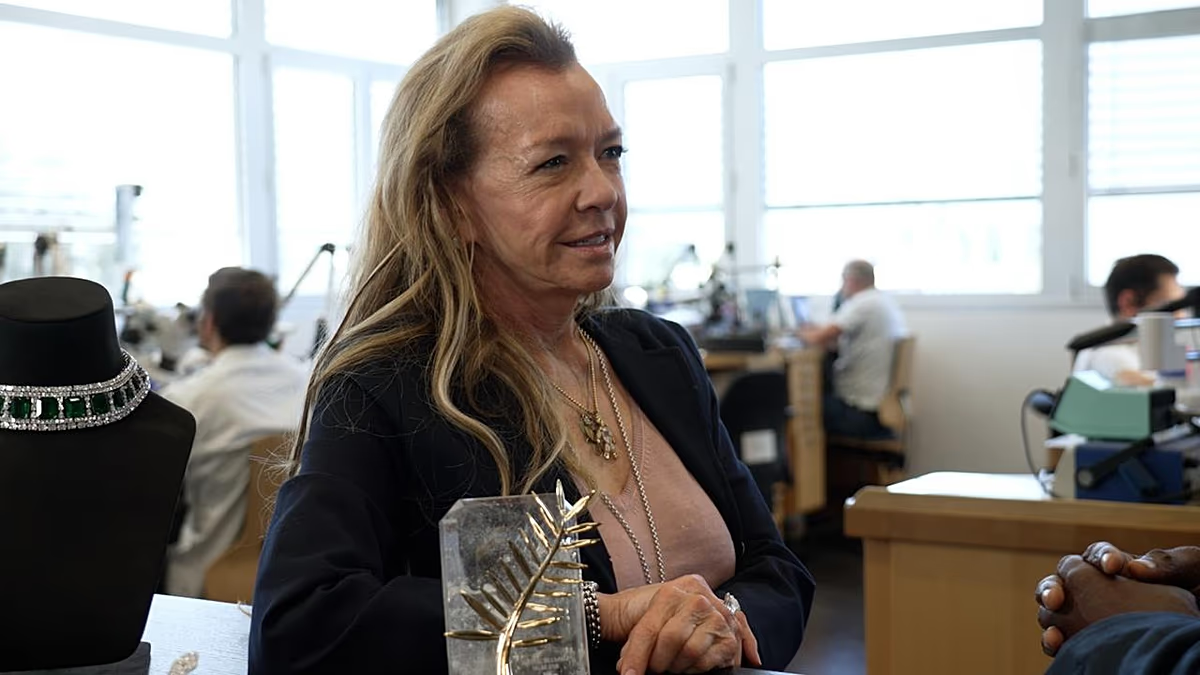
For the past thirty years, the creation of cinema’s most coveted prize, the Cannes Film Festival’s Palme d’Or, has been a carefully guarded tradition in the workshops of the Swiss jeweler Chopard. Nestled near Geneva, master artisans have employed time-honored techniques to transform ethical gold and rock crystal into the iconic palm leaf trophy. This partnership, now as much a part of Cannes lore as the red carpet itself, began not through calculated corporate strategy, but through a chance conversation born of one woman’s passion for cinema and design. The artistic vision guiding this process belongs to Caroline Scheufele, Chopard’s Co-President and Artistic Director, whose personal touch has redefined the award’s elegance and substance for nearly three decades.
The story of how Chopard became the guardian of the Palme is a delightful tale of serendipity. In the mid-1990s, Scheufele, a lifelong lover of the “seventh art,” was opening a Chopard boutique opposite the Cannes Palais. Hoping to attract festival celebrities, she sought to align the brand with the cinematic world. Months before, in Paris, she met with then-festival president Pierre Viot. In his office, her designer’s eye was caught by the Palme d’Or sitting on a shelf. When Viot mentioned they were considering a restyle after 15 years, Scheufele seized the moment. “I said, ‘You know my real job is not organising glamorous dinners and parties, my real job is designing,’” she recalls. She boldly asked if she could propose a more aesthetic and glamorous version. With Viot’s approval, she left that day with the original palm under her arm, beginning a legacy that continues to this day.
The birth of each new Palme d’Or is an alchemical process that blends art, science, and immense patience. It begins in the foundry, where gold is meticulously alloyed with other metals. Artisans then create a detailed wax model from a mould, which is inspected with a critical eye before being encased in plaster. This plaster mould spends an entire night in a furnace, a transformative firing that prepares it to receive the molten gold. The liquid gold is poured, filling every cavity to capture the palm’s intricate details. Once cooled, the plaster is broken away to reveal the raw, golden casting—the first emergence of that year’s prize from its elemental origins.
What follows is a symphony of meticulous handcrafting. The raw casting undergoes hours of precise filing to smooth edges and define its form. This is followed by exhaustive finishing and polishing, where artisans burnish the gold to its signature brilliant luster. Each step is a delicate, painstaking maneuver, demanding unwavering attention to detail. The final, crowning touch is the attachment of the palm to its base—a unique, prism-like block of flawless rock crystal. This crystal, chosen for its clarity and purity, elevates the gold, allowing light to dance through it and symbolizing the transparency and brilliance of cinematic art.
Caroline Scheufele’s personal signature is woven into the trophy’s very design. She transformed what she humorously described as a flat, “run-over” looking leaf into a flowing, elegant sculpture full of movement. Furthermore, she elevated its material worth and ethical standing, ensuring it is now crafted from 118 grams of 18-carat ethical Fairmined gold, a standard Chopard champions. Her most personal touch is a subtle, symbolic heart shape carved at the base of the central leaf. “It’s pretty symbolic for Chopard. I design a lot with hearts,” she says, embedding a token of passion and love into an award that celebrates artistic passion. This heart is a quiet reminder that behind the global glamour lies a deeply human dedication to craft and beauty.
As the 79th Cannes Film Festival commences, with a jury led by South Korean master Park Chan-wook poised to judge the year’s finest films, the latest Palme d’Or sits ready. It is more than a trophy; it is the culmination of a months-long journey of tradition, ethical sourcing, and artistic devotion. From a fortunate meeting in a Parisian office to the skilled hands in a Genevan atelier, the Palme’s story mirrors the festival’s own blend of chance, talent, and enduring legacy. It stands as a golden promise—not just of prestige, but of the timeless human pursuits of excellence, beauty, and storytelling that the Cannes Film Festival exists to honor.