

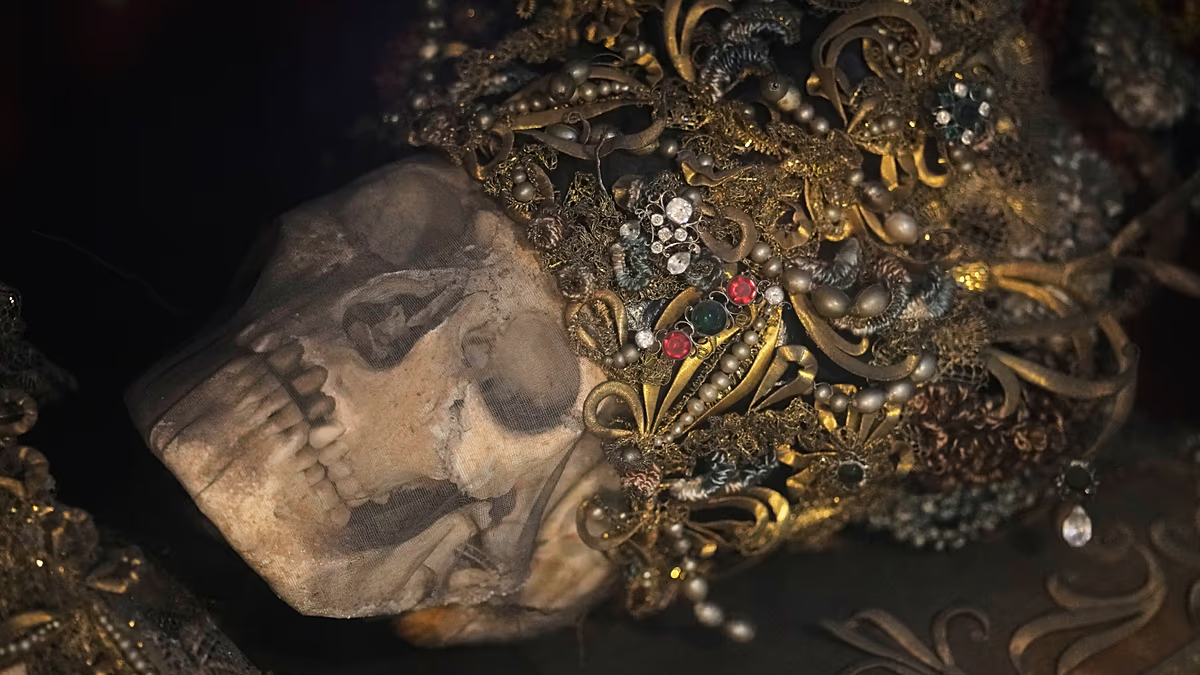
Tucked away in the serene Bavarian countryside, the Benedictine monastery church of Banz near Bad Staffelstein holds a haunting and opulent secret. Within its walls, visitors encounter an arresting sight: four fully articulated skeletons, each lavishly adorned in silk, intricate lace, and shimmering gold and silver jewellery studded with precious stones. Known as Vincenzius, Valerius, Benedictus, and Felix Benedictus, these are not mere museum pieces but revered “catacomb saints” or “Holy Bodies.” Their journey began centuries ago when their remains were transported from the Roman catacombs to this German monastery in the late 17th and 18th centuries. For many, the initial encounter is one of eerie fascination, a shiver-inducing blend of mortality and splendour that challenges our modern sensibilities.
To understand why such macabre relics were so cherished, one must step back into the turmoil of post-Reformation Europe. As Priest Walter Ries explains, these saints arrived at the close of the devastating Thirty Years’ War, a period when conflict, famine, and plague had decimated vast portions of the German population. In this landscape of profound suffering, the Baroque movement in the Catholic Church sought to offer a tangible connection to the divine and the promise of hope. The meticulous, beautiful adornment of these skeletons was not a celebration of death but a deliberate “escape from the present.” By draping bones in luxury and presenting them as victorious martyrs, the Church aimed to open “the gate to heaven,” transforming reminders of mortality into beacons of eternal life and spiritual triumph.
The personal impact of these Holy Bodies is profound and lasting. Church custodian Anita Gottschlich acknowledges the initial creepiness, whispering about the hollow gaze from a skeleton’s eye sockets. Yet, she observes a powerful, enduring fascination. Older visitors who first saw the saints as children often return, instinctively seeking them out, their memories vividly intact across decades. This speaks to the relics’ unique role: they are unforgettable anchors of both personal and communal history. Far from being hidden away, they serve as a direct, physical bridge between the earthly and the heavenly, captivating the imagination of each generation that passes through the church’s doors.
The phenomenon of the catacomb saints extends far beyond Banz. Throughout Bavaria and across neighbouring regions like Austria, Switzerland, Czechia, and Italy, similar adorned skeletons can be found in Baroque churches, often enshrined in glass cabinets. Their origin story is rooted in legend and fervent belief. In the 16th century, countless remains were discovered in the unmarked graves of Rome’s ancient catacombs. With no specific identities known, the Church designated them as early Christian martyrs, their very anonymity becoming a canvas for universal veneration. As Ries notes, acquiring such a relic significantly elevated a church or monastery’s status, potentially turning it into a coveted pilgrimage site, a spiritual destination promising grace and miracles.
The presentation of these saints is carefully curated to heighten their sanctity and impact. At Banz, wooden panels depicting painted images of the skeletons typically cover the display cases, keeping the actual remains concealed. This practice builds anticipation and reverence, reserving the direct viewing for especially sacred occasions. On holy days like All Saints’ Day, the panels are removed, revealing the jewelled skeletons to gathered believers. This ritual transforms the viewing into a special, communal event, underscoring that these are not objects for casual glance but sacred figures for contemplative veneration, connecting the present-day faithful to the ancient martyrs in a moment of focused devotion.
Ultimately, the catacomb saints of Banz represent a profound and complex intersection of history, art, and faith. They are artefacts born from a desperate need for hope in a brutal era, embodying the Baroque spirit’s attempt to answer despair with dazzling beauty. Today, they stand as powerful reminders of humanity’s enduring quest to find meaning in mortality and to honour sacrifice. Whether one feels a sense of reverence, historical curiosity, or a slight shudder, these adorned skeletons compel us to reflect on the stories we tell about life, death, and what we hold sacred. They remain, as intended, unforgettable symbols of a faith that sought light in one of history’s darkest chapters.