

In a significant move to bolster European defense capabilities, European Commissioner for Defense Andrius Kubilius and European Commissioner for Budget Piotr Serafin are traveling to Warsaw and Vilnius this Friday to finalize major loan agreements with Poland and Lithuania. These loans are a cornerstone of the EU’s SAFE (Security Action for Europe) program, an initiative designed to strengthen the continent’s defenses against external threats, most notably Russia. Poland is set to receive the largest portion, a substantial €43 billion, while Lithuania will be allocated €6 billion. This financial commitment underscores the EU’s urgent response to a growing sense of vulnerability and the need for a coordinated, robust defense industrial base.
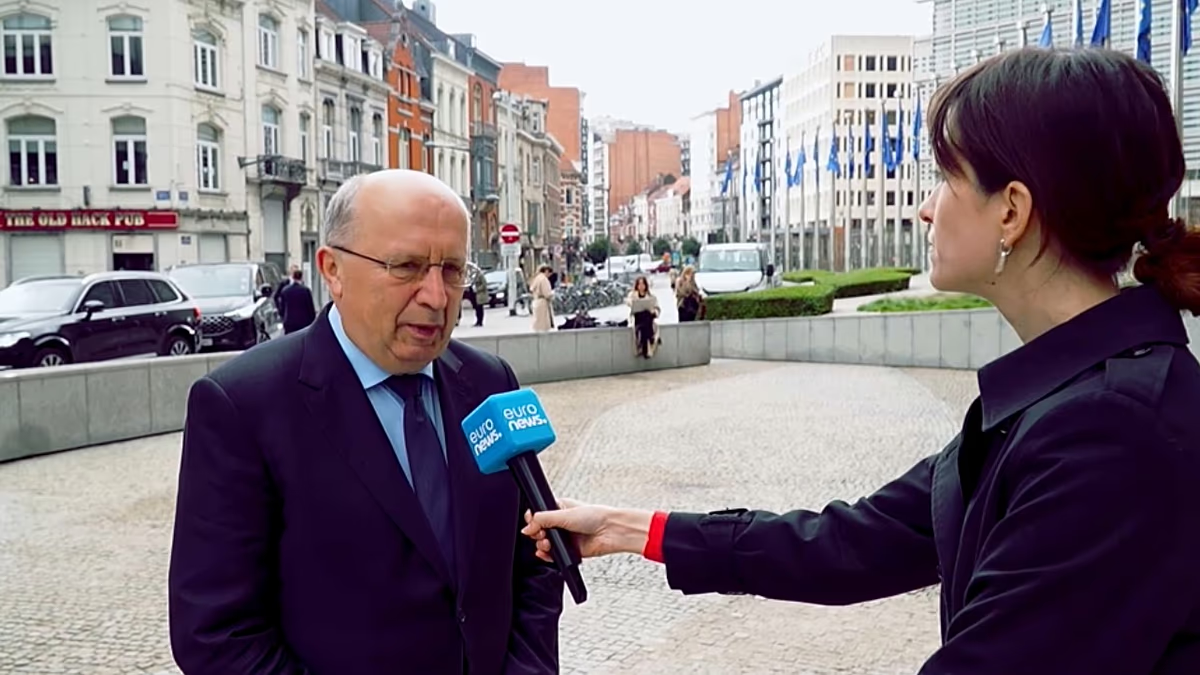
The urgency of this initiative is driven by stark warnings from officials like Commissioner Kubilius. Speaking ahead of his trip, he highlighted a alarming disparity: Russia is currently outproducing European nations in military equipment at a rapid pace. This production gap is a central concern for European security. Kubilius stressed that while the EU defense industry is increasing its output, it is not scaling up quickly enough to meet the urgent demand created by the ongoing war in Ukraine and the persistent threat from Moscow. His concerns are echoed by NATO Secretary General Mark Rutte, who has noted that Russia manufactures as much ammunition in three months as all 32 NATO member states produce in an entire year. Furthermore, Kubilius reiterated a sobering assessment shared by several EU officials: Russia could possess the capability to attack a European nation within the next five years, making the current reinforcement of defenses not just prudent but essential.
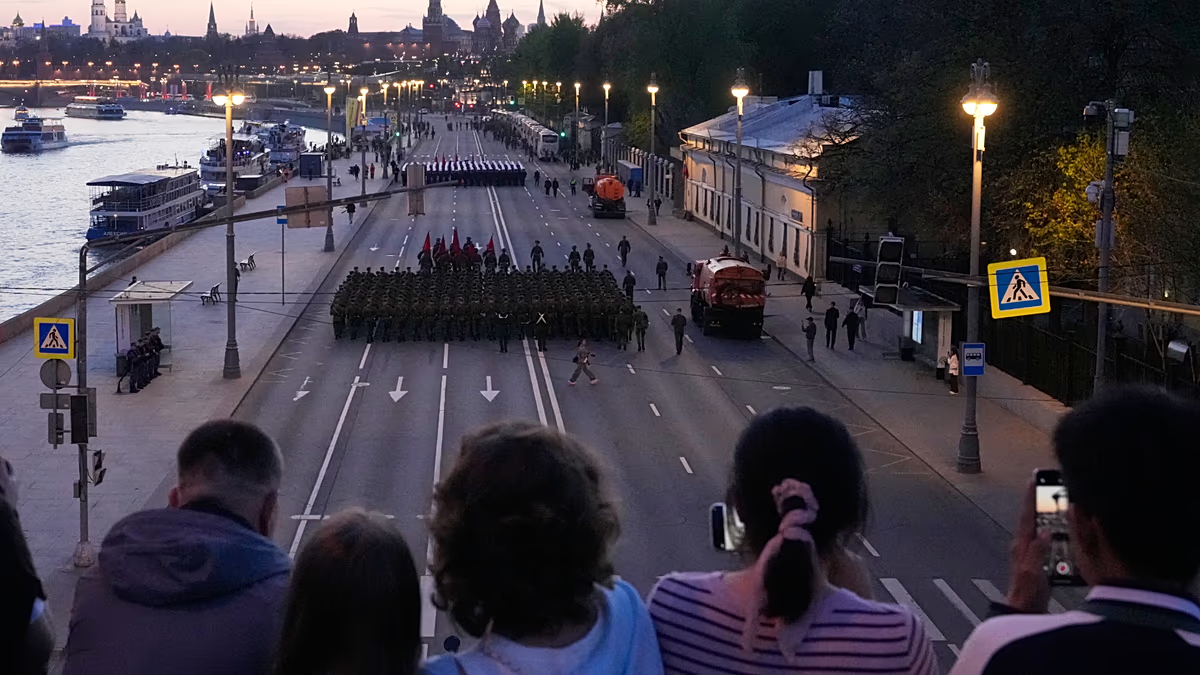
The timing of the agreement signings is deeply symbolic. They are scheduled for Friday, one day before Russia’s annual Victory Day celebrations, which often serve as a platform for nationalist propaganda. By choosing Warsaw, Poland—a nation that has faced direct provocations from Russian drones crossing its border—as the location, the EU sends a clear message of solidarity and resolve. Kubilius noted that Poland is taking on the greatest responsibility and receiving the largest share of the funds, making the symbolism particularly potent. The structure of the funding involves an initial disbursement of roughly 15% by the end of May, with subsequent payments released every six months, contingent on the member states meeting the European Commission’s conditions. All funds must be utilized by 2030, creating a clear timeline for implementation.
For Poland, the €43 billion loan will fuel four flagship programs aimed at comprehensively strengthening its defenses. These range from enhancing drone defense systems—a critical need after approximately 20 Russian drones entered Polish airspace last year—to reinforcing its 400-kilometer border with Belarus. Polish Prime Minister Donald Tusk has declared a well-armed and self-reliant Poland, cooperating closely with allies, as the nation’s absolute top priority. The government intends to direct at least 80% of the funding into domestic spending, which is expected to support around 12,000 Polish businesses, thereby also boosting the local economy and industrial capacity.
Lithuania’s €6 billion allocation will be focused on strengthening its land forces. The funds are earmarked for acquiring new combat capabilities, modernizing logistics systems, and increasing overall firepower. Lithuanian Defense Minister Robertas Kaunas stated that the funding will accelerate the formation process, pay for necessary ammunition stocks, and modernize weapon systems, significantly contributing to the Baltic Defense Line. Lithuanian President Gitanas Nausėda also emphasized that part of the funding will be used to purchase and produce defense equipment for Ukraine, demonstrating a commitment to supporting Kyiv while simultaneously enhancing Lithuania’s own security posture.
The SAFE program represents a massive €150 billion pool, with 18 member states, including Hungary, applying for funding. While Hungary’s application has faced delays due to internal political changes and cited corruption concerns under the incoming Prime Minister Péter Magyar, Commissioner Kubilius expressed confidence that the process would normalize. He explained that such reviews are standard practice, especially when awaiting the establishment of a new government to assume such significant financial responsibilities. This broader effort reflects a collective European awakening to the reality of the threat posed by Russia and a decisive step towards ensuring that the continent is not only prepared to deter aggression but is fundamentally capable of defending itself and its allies in the coming years.