


A significant new chapter is about to begin for travel between Ireland’s two capital cities. The cross-border Enterprise rail service, which links Dublin and Belfast, is poised for a transformative €700 million investment aimed at dramatically improving the journey for passengers. Currently, the 180-kilometer trip can take up to two hours and fifteen minutes, including stops at stations like Drogheda and Newry. The ambitious new goal, unveiled at a ceremony in Belfast’s Grand Central station by Irish Taoiseach Micheál Martin and Northern Ireland’s First Minister Michelle O’Neill, is to slash that travel time to under two hours. This leap in efficiency will be achieved not by constructing new tracks, but through the introduction of a fleet of brand-new, high-performance trains capable of greater acceleration and smoother operation.
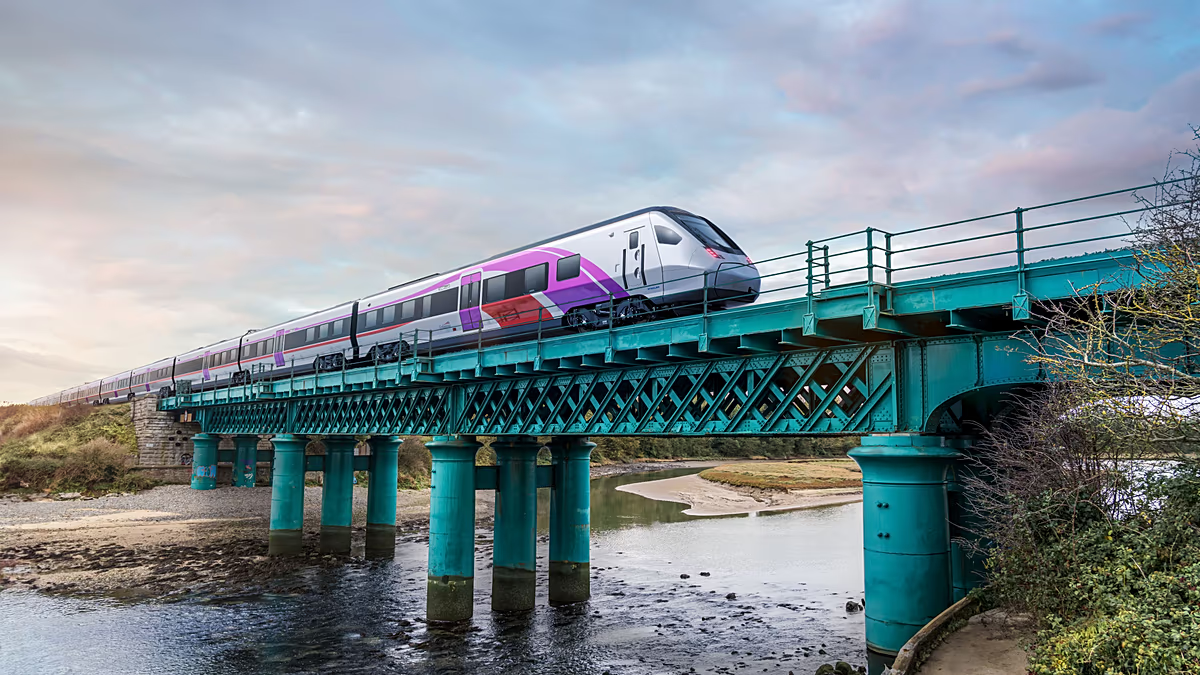
By the end of 2028, this vision will become a reality with the introduction of eight state-of-the-art Stadler intercity trains. These modern carriages will join the existing fleet to facilitate up to sixteen daily services, offering far more flexibility for travelers. The new trains represent a major technological shift, operating on a sophisticated tri-mode system. This means they can seamlessly switch between electric, diesel, and battery power. This flexibility is crucial for the current infrastructure and paves the way for a greener future, enabling quieter journeys, significantly reduced emissions, and acting as a stepping stone toward the long-term goal of full electrification of the line. It’s a forward-thinking solution that balances immediate improvement with environmental responsibility.
The passenger experience onboard is set for a substantial upgrade, moving beyond mere speed. Each new train will feature approximately 400 seats designed for comfort, along with modern conveniences like USB charging points at every seat. A dedicated dining and bar area will offer refreshments, turning the journey into a more pleasant and sociable part of the trip. Critically, the design prioritizes inclusivity, with step-free interiors to vastly improve accessibility for all passengers, including those with mobility aids, parents with strollers, and travelers with heavy luggage. This focus on comfort and accessibility reflects a modern understanding of public transport as a service for everyone.
This investment is more than just a railway upgrade; it is a powerful symbol of cross-border cooperation and shared ambition. The €698 million project is jointly funded by the Irish Government and the Northern Ireland Executive, with a notable €165 million contribution coming from the PeacePlus programme, an initiative supported by the UK government and the European Union aimed at fostering peace and prosperity across the island. Taoiseach Micheál Martin emphasized this point at the launch, stating the deal “heralds a significant new chapter for cross-border rail connectivity.” He highlighted that the project will not only create easier journeys but also generate valuable employment opportunities, strengthening the economic and social links between the two regions.
The timing of this expansion is particularly apt, as demand for the service is already soaring. Since the introduction of an hourly service in late 2024, passenger numbers on the Enterprise have surged by approximately 40%. This remarkable growth demonstrates a clear public appetite for reliable, efficient, and comfortable cross-border rail travel. The enhanced service, with its faster journey times and doubled frequency, is poised to capture this demand further, encouraging more people to choose the train over the car for intercity travel. It promises to reshape the dynamic between Dublin and Belfast, making day trips, business travel, and tourism between the cities more feasible and attractive than ever before.
Looking ahead, this project is framed as just the beginning of a broader renaissance for rail in the region. Taoiseach Martin indicated that further investment in Northern Ireland’s rail network is on the horizon, to be funded through the Shared Island Fund and announced shortly. This suggests that the Dublin-Belfast corridor is the flagship project in a wider strategy to enhance all-island connectivity. From its origins as a steam route launched in 1947, the Enterprise service is being reborn for the 21st century. This substantial investment ultimately represents a vote of confidence in a shared future, where modern, sustainable infrastructure brings people and communities closer together, fostering continued growth and partnership across the island of Ireland.