



Paragraph 1
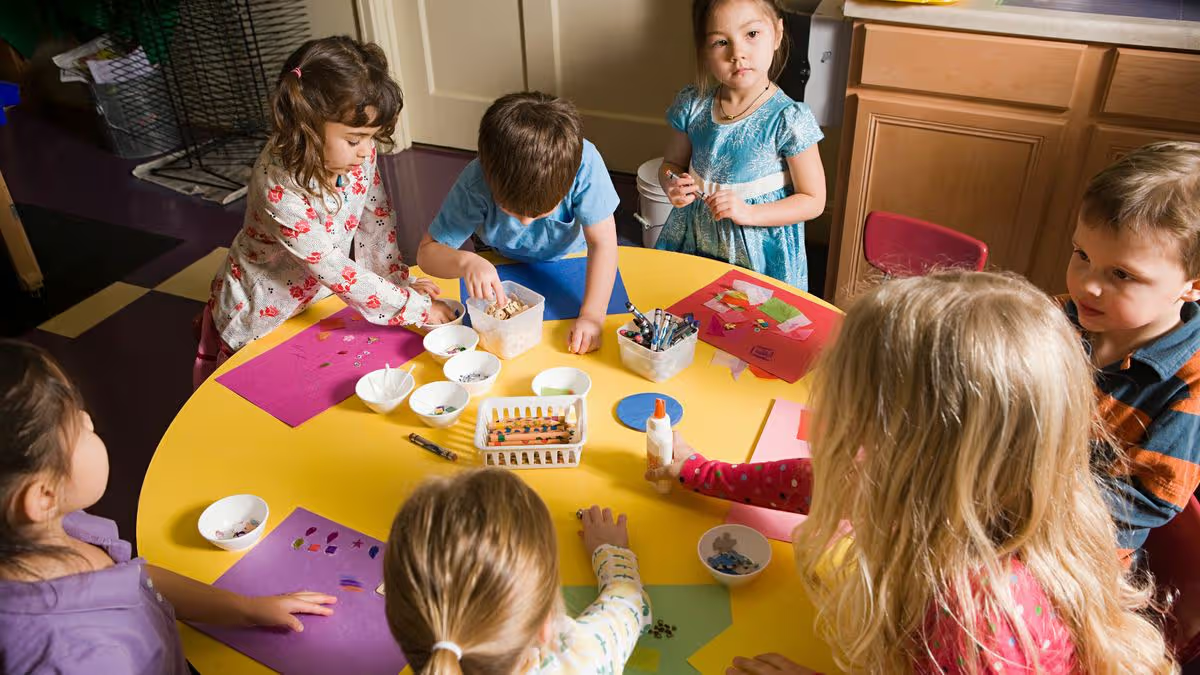
A critical safety alert has been issued for families across the UK, targeting two popular children’s craft kits. The products in question are Hunter Price’s Crayola-Branded Touchy Feely Craft Box and Hunter Price’s Crayola-Branded Discovery Craft Box, which have now been formally recalled by the Office for Product Safety and Standards (OPSS). This urgent action stems from a deeply concerning discovery: the play sand included in these creative sets may be contaminated with asbestos. Asbestos is a known human carcinogen and a banned substance due to its severe health risks, which can manifest even from minimal exposure. The presence of this material means the kits fail to meet the stringent safety requirements outlined in the Toys (Safety) Regulations of 2011, transforming what was meant to be a source of artistic fun into a potential health hazard.
Paragraph 2
The recall casts a wide net, as these craft boxes were distributed through numerous major retailers, making them accessible in many households. The Touchy Feely Craft Box, a vibrant set filled with various art supplies, was sold by Asda, Bargainmax, Sainsbury’s, The Works, and several other wholesalers and boutiques. Similarly, the Discovery Craft Box was available at many of the same outlets, including Asda, Sainsbury’s, and The Works, as well as others like Vape-Superstore Limited. This broad retail presence underscores the importance of the warning; these are not obscure products but items likely purchased for birthdays, holidays, or simple rainy-day activities. Parents and caregivers who shopped at these stores in recent months are urged to check their homes for these specific kits immediately.
Paragraph 3
The directive from safety authorities is unequivocal and must be treated with the utmost seriousness. Any household in possession of either the Touchy Feely Craft Box (Model: 35052, Barcode: 5061047350522) or the Discovery Craft Box (Model: 35501, Barcode: 5061047355015) must stop children from using them at once. The primary danger lies in the inhalation of asbestos fibers, which can become airborne if the sand is poured, played with, or disturbed. Therefore, the first step is to safely remove the product from children’s reach. The OPSS emphasizes that the risk exists “even at low levels of exposure,” making precautionary measures not just advisable but essential. This situation is a stark reminder that vigilance is a constant part of parenting, even with trusted brands like Crayola attached to a product.
Paragraph 4
Knowing how to properly handle and dispose of the kits is crucial for ensuring ongoing safety. The instructions differ slightly depending on whether the sand remains sealed or has been opened. If the sand is still in its original packaging, it should be carefully placed inside a heavy-duty plastic bag. This bag must then be sealed securely with tape, clearly labeled, and stored in a safe, inaccessible location away from children until disposal. If the sand has already been used, the cleanup process requires more care to prevent spreading any potential dust. Authorities advise using wet cloths to clean all affected surfaces while wearing protective gloves and a mask. All used materials—including the sand, cloths, gloves, and mask—should then be double-bagged for containment.
Paragraph 5
For disposal and refunds, consumers have clear pathways. The OPSS states that the product, once securely bagged, can be placed in general household waste. However, major retailers involved in the recall have activated their own return processes to support customers. Both Sainsbury’s and Asda, for instance, have published notices instructing customers to bring the product back to any store alongside proof of purchase for a full refund. Sainsbury’s specifically advises disposing of the item first for safety, then visiting a store for the refund. This dual approach ensures the hazardous material is removed from the home promptly while also guaranteeing that consumers are not financially penalized for a manufacturer’s safety failure. Those seeking additional information can contact the manufacturer, Hunter Price, directly.
Paragraph 6
In conclusion, this recall transcends a typical product notice; it is a vital public health advisory. The collaboration between the OPSS, major retailers, and the manufacturer to communicate these risks and procedures highlights the seriousness of the contamination. Families are encouraged to act calmly but swiftly, following the outlined steps to secure, clean, dispose, and seek a refund. Such incidents, while alarming, reinforce the importance of robust safety regulations and responsive recall systems. By heeding this warning, parents and guardians can effectively mitigate the risk, ensuring their homes remain safe spaces for creativity and play, free from hidden dangers. The well-being of children depends on this collective attention and immediate action.