


The serene yet treacherous waters of the Komati River in South Africa became the site of a profoundly tragic and unusual event in late April. Gabriel Batista, a 59-year-old Portuguese businessman who had called South Africa home since his family emigrated in 1975, vanished after his vehicle was swept away while attempting to cross a flooded bridge. For days, his disappearance remained a distressing mystery, with authorities and his grieving family, who had traveled to the scene, holding onto hope while facing the river’s ominous silence. The initial discovery of his abandoned car on the muddy bank provided a clue, but no resolution. The break in the case would come not from a piece of debris or a footprint, but from the unnatural behavior of one of the river’s most ancient inhabitants.
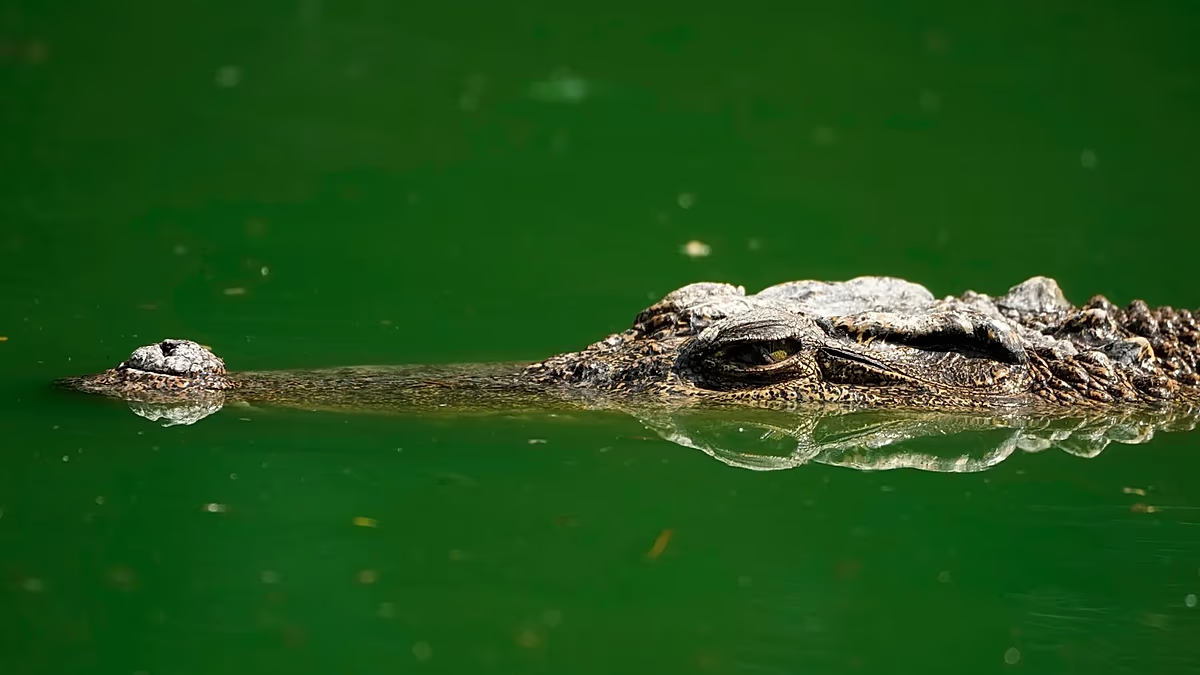
Investigators scanning the area noted a massive crocodile, estimated to weigh 600 kilograms and stretch nearly five meters in length, behaving strangely. It appeared swollen and lethargic, remaining inert even as humans approached—a significant deviation from the normally wary and reactive nature of such predators. As Captain Johan Potgieter of the local police explained, this behavior is a known indicator in the reptilian world; after consuming a very large meal, a crocodile must bask, often for days, to jumpstart its slow digestive process. This observation, coupled with the location near Batista’s vehicle, led authorities to a grim and unavoidable hypothesis: the crocodile may have been involved in the man’s fate.
Faced with this compelling evidence and the urgent need to provide answers to a family in anguish, authorities made the difficult decision to euthanize the animal. This was no simple task. The operation was described as highly dangerous and complex, requiring a helicopter to airlift the colossal reptile from the water. Captain Potgieter himself descended to carry out the procedure, underscoring the peril involved in handling such a powerful creature. The primary motive was humanitarian: to recover potential remains and conclusively solve the mystery of Batista’s disappearance. It was a solemn operation, balancing respect for life with the imperative of closure for the living.
Upon examination, the investigators’ somber suspicions were confirmed. Human remains were found inside the crocodile’s stomach. These remains were carefully retrieved and sent for DNA analysis, which ultimately provided the definitive, heartbreaking confirmation: it was Gabriel Batista. This scientific conclusion ended the official uncertainty, allowing the legal and investigative processes to proceed while giving his family, who had respectfully requested privacy from the media, a terrible but clear answer. The personal story of the man from Serra de Água, Madeira, who built a life abroad, was thus irrevocably linked to a sudden and violent encounter with the wild.
In a bizarre and poignant detail that added another layer to the story, Captain Potgieter revealed that the stomach contents included not only the victim’s remains but also approximately six pairs of rubber shoes—Crocs and flip-flops. This unsettling inventory, Potgieter noted, served as a stark testament to the crocodile’s activity and reach within the ecosystem. It hinted at other, unknown incidents and underscored the latent danger that coexists with daily life in such regions. These mundane objects, transformed into evidence, painted a vivid picture of a powerful predator for which such items are merely incidental to its natural feeding behavior.
This tragic incident stands as a sobering reminder of the powerful and unpredictable forces of nature. It is a story of a routine journey turned catastrophic by a swollen river, and of a community’s methodical, if grim, pursuit of truth. While the recovery of personal effects like shoes illustrates the crocodile’s ecological role, the central human narrative is one of profound loss. The operation, from the observation of animal behavior to the complex retrieval and final DNA confirmation, demonstrates the lengths to which authorities will go to bring closure to a family. Gabriel Batista’s death is a heartbreaking collision between human life and the untamed natural world, leaving behind a community in mourning and a lasting reflection on the boundaries we cross.