



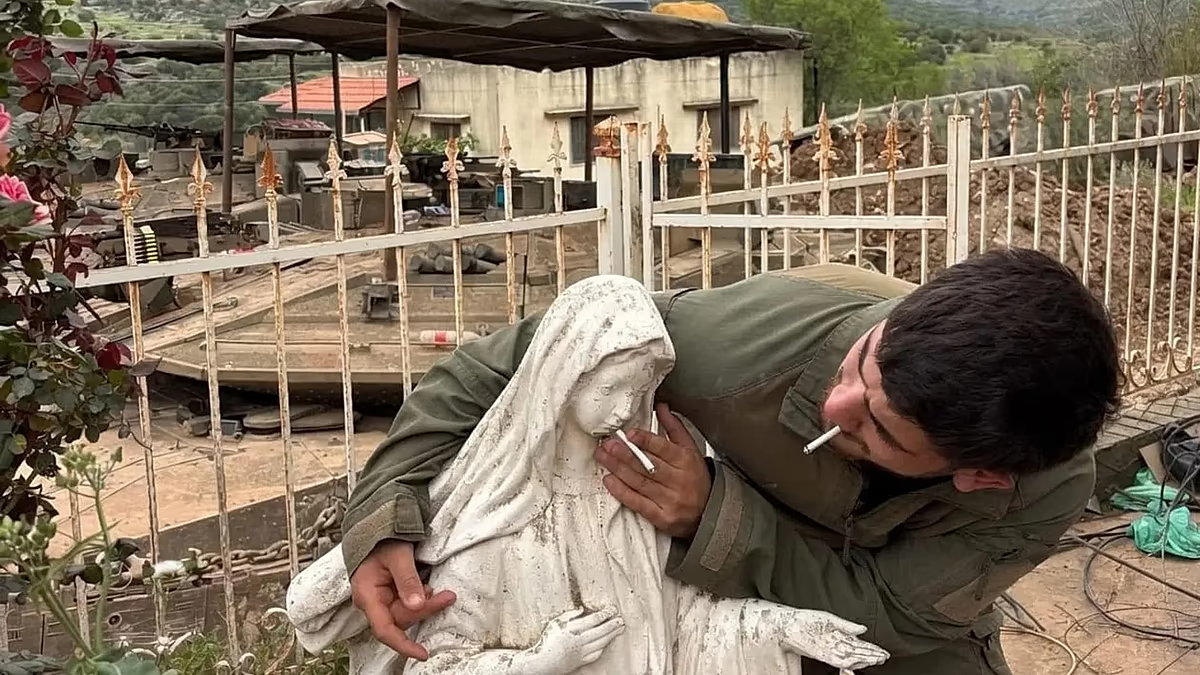
In recent weeks, the conduct of some Israeli soldiers in southern Lebanon has sparked significant controversy and drawn international attention, particularly concerning the treatment of revered Christian symbols. The latest incident involves a widely circulated photograph from social media that appears to show an Israeli soldier with his arm around a statue of the Virgin Mary, placing a cigarette in the statue’s mouth. The image, which spread rapidly online, elicited a wave of criticism and concern from observers around the world, highlighting tensions in a region already fraught with historical and religious sensitivities. The Israeli military swiftly responded to the backlash, acknowledging the gravity of the situation and committing to a thorough investigation.
Upon being questioned about the disturbing image, the Israeli military issued a statement expressing that it views the incident with the utmost severity. The military emphasized that the soldier’s behavior starkly deviates from the core values and professional conduct expected of its personnel. It confirmed that the incident would be formally investigated and that appropriate command measures would be taken against the soldier based on the findings. An initial review indicated that the photograph was not a recent capture but had been taken several weeks prior, though its emergence now has intensified scrutiny of military conduct in the area.
This episode is not an isolated one; it follows another troubling incident from late April involving Israeli soldiers and Christian religious statues in southern Lebanon. At that time, the military disciplined two soldiers who were implicated in the destruction of a statue of Jesus Christ in the village of Debl. A photo from that incident depicted a soldier using a sledgehammer to strike the head of a fallen crucifix statue. As a result, those soldiers faced consequences including 30 days of military detention and removal from combat duty. These repeated occurrences have raised serious questions about discipline and respect within certain units operating in culturally and religiously diverse environments.
In its statements addressing these incidents, the Israeli military has consistently affirmed its commitment to respecting freedom of religion and the sanctity of holy sites. It reiterated on Thursday that it holds no intention of harming civilian infrastructure, which explicitly includes religious buildings and symbols sacred to all communities. Such assurances are crucial in maintaining diplomatic and communal relations, especially in regions like southern Lebanon where multiple faiths coexist and where historical tensions can easily be reignited by perceived acts of disrespect or desecration.
The broader implications of these actions extend beyond military discipline into the realms of international perception and interfaith relations. For local Christian communities in Lebanon and for observers worldwide, such incidents can feel like profound violations, exacerbating feelings of vulnerability and disrespect. In conflict zones, the protection of cultural and religious heritage is not only a legal obligation under international norms but also a moral imperative to preserve human dignity and foster post-conflict reconciliation. The military’s promise to investigate and address these breaches is a step toward accountability, though consistent enforcement and cultural sensitivity training will be essential to prevent future occurrences.
Ultimately, these events underscore the complex challenges faced by military forces operating in areas rich with religious and cultural significance. While the Israeli military’s prompt response and disciplinary actions demonstrate an institutional willingness to correct misconduct, the recurrence of such incidents suggests a need for deeper systemic measures. Strengthening education on cultural respect, enhancing oversight, and fostering a command climate that unequivocally rejects acts of desecration are critical to upholding the values the military professes. In a world where images circulate instantly, each soldier’s conduct carries weight far beyond the immediate moment, influencing perceptions of an entire nation and its commitment to shared human values.