

Paragraph 1
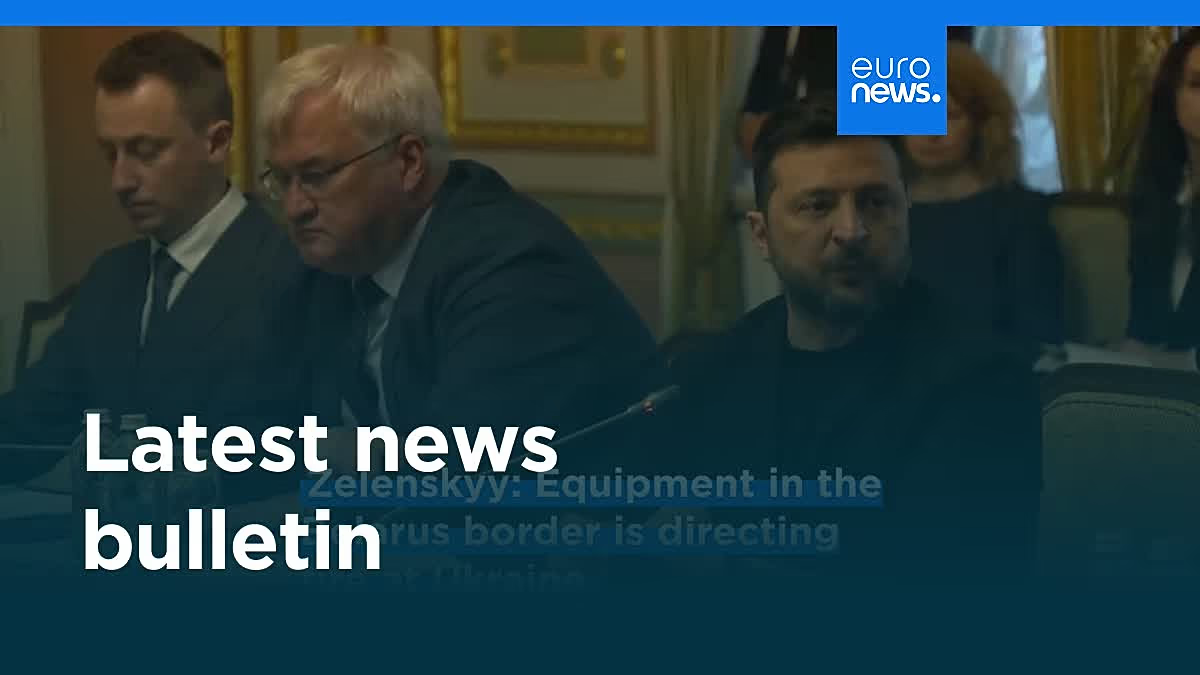
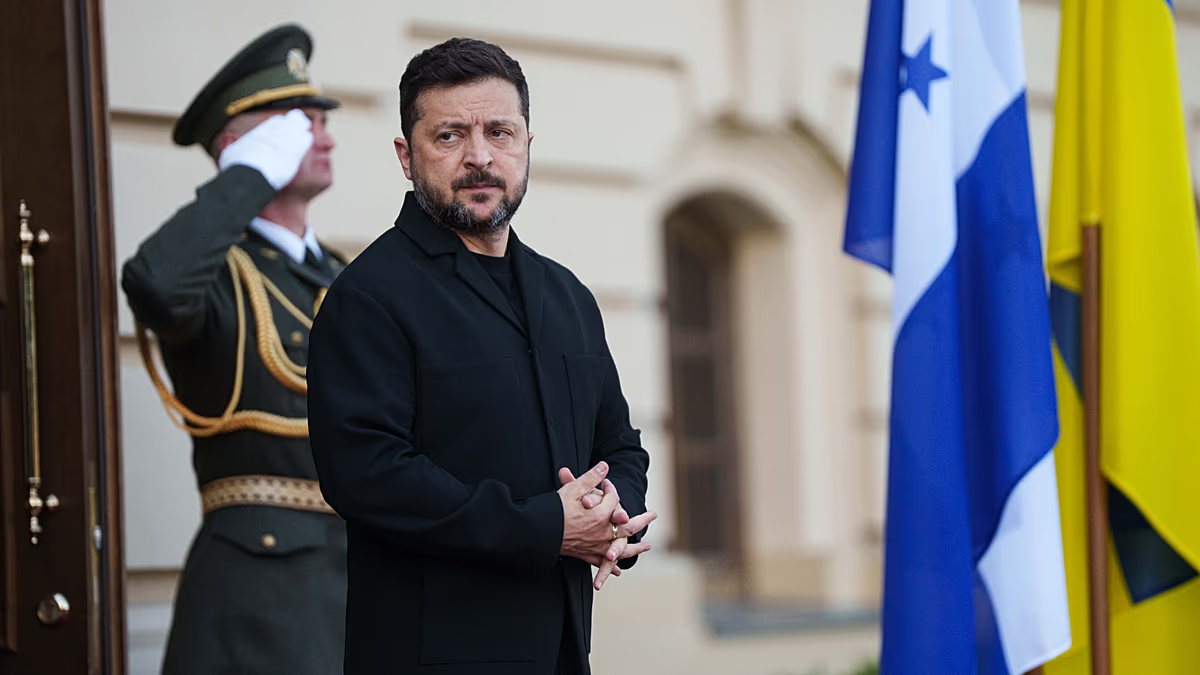
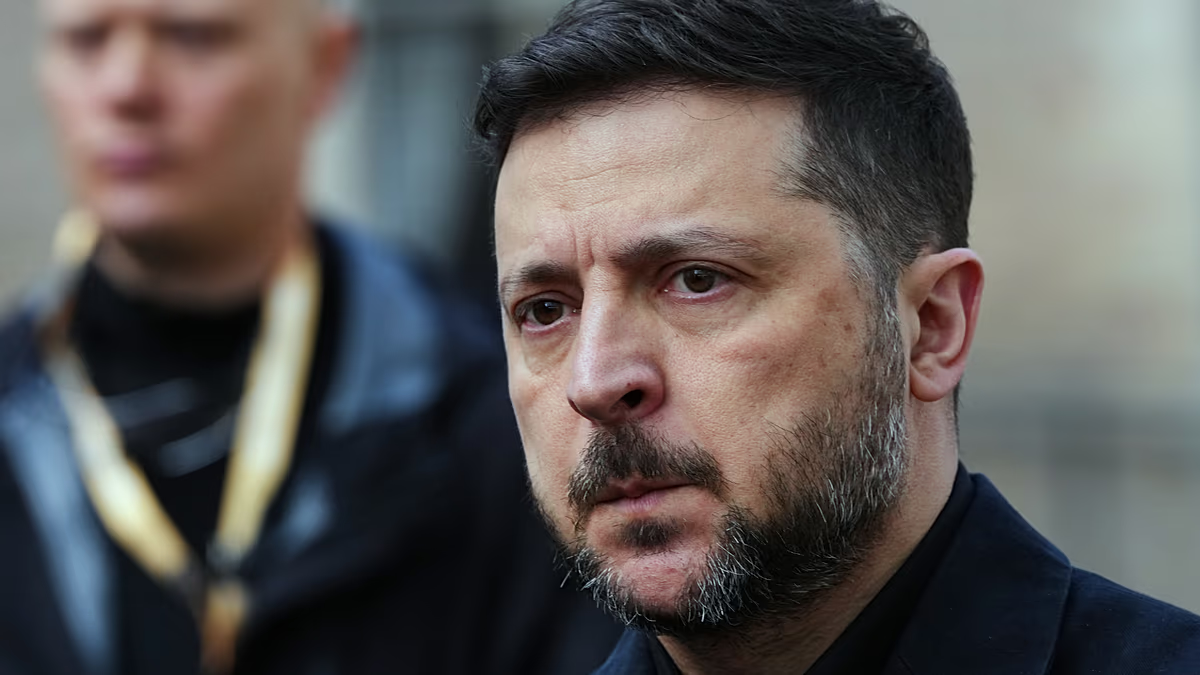
In a stark address on Wednesday, Ukrainian President Volodymyr Zelenskyy painted a picture of Russian intransigence, accusing Moscow of meeting Kyiv’s diplomatic overtures not with negotiation, but with intensified violence. He stated that Russia had received a clear proposal for a ceasefire and a path to diplomacy, yet responded only with “new strikes and new attacks” across Ukraine. Framing this as a deliberate rejection, Zelenskyy warned that Kyiv would be forced to “respond in kind” based on the evolving battlefield situation, positioning Ukraine’s actions as a justified and necessary defense against an adversary seemingly uninterested in peace. His words carried a tone of weary resolve, highlighting the profound disconnect between Ukrainian efforts for a pause in the fighting and the relentless reality of the Russian assault.
Paragraph 2
This diplomatic impasse stems from conflicting ceasefire proposals put forward this week. Russia announced a two-day “Victory Day truce” for May 8th and 9th, timed to coincide with its major military parade in Moscow’s Red Square commemorating the end of World War II. Ukraine, however, countered with its own proposal for a ceasefire to begin at midnight on May 6th, arguing that this earlier start would provide a more genuine test of whether a sustained pause was possible. According to President Zelenskyy, this test failed catastrophically. He reported that within just the first ten hours of the Ukrainian-proposed truce, Russian forces violated it a staggering 1,820 times, targeting not only military positions but also civilian infrastructure in a continuation of a devastating pattern.
Paragraph 3
The human cost of these violations was made tragically clear on Wednesday morning when a Russian attack struck a kindergarten in the northern Sumy region, killing two adults. While no children were present at the time, the targeting of such a universally symbolic institution underscores the brutal nature of the ongoing conflict. This attack, amid the proposed ceasefire window, solidified Kyiv’s conviction that Moscow’s gestures are not made in good faith. The apparent rejection of Ukraine’s proposal now shifts global attention toward Russia’s own planned Victory Day pause, raising serious questions about its sincerity and the potential for any real respite for besieged Ukrainian communities.
Paragraph 4
Victory Day itself, a cornerstone of Russian national identity celebrating the Soviet victory over Nazi Germany, has taken on a deeply politicized and militarized character since the 2022 invasion of Ukraine. The Kremlin has persistently sought to draw a false moral equivalence between the historical fight against fascism and its current war of aggression, using the parade as a platform for this narrative. However, this year’s celebrations are shadowed by the very conflict they aim to justify. In an unprecedented move, the Kremlin has ordered a scaled-back parade in Moscow, with no traditional display of military hardware, citing security fears. Even more tellingly, Russian-installed authorities in annexed Crimea have cancelled public celebrations altogether due to “safety concerns,” a tacit admission of vulnerability.
Paragraph 5
This palpable anxiety within Russian-occupied territories and the decision to minimize the flagship Moscow parade are direct responses to Ukraine’s demonstrated and growing capacity to strike deep behind enemy lines. Just a day before these announcements, Ukrainian forces successfully struck a critical military-industrial complex in Cheboksary, a city located roughly 1,000 kilometers inside Russian territory. This operation, following similar long-range attacks, proves that nowhere in Russia is beyond reach. It shatters the illusion of Russian impunity and has fundamentally altered the Kremlin’s calculus, forcing it to protect its symbols of military power rather than confidently parading them.
Paragraph 6
Consequently, the situation presents a profound contradiction. As Russia prepares to commemorate past military triumph, it does so from a position of defensive insecurity, its forces accused of hourly attacks that betray any stated interest in a ceasefire. Ukraine, meanwhile, stands firm, having extended a diplomatic hand only to have it slapped away by continued violence. President Zelenskyy’s message is clear: the path to peace remains open, but Ukraine will not stand idly by while its cities are bombarded. The world now watches a Victory Day marred not by displays of strength, but by the unmistakable evidence of a costly and escalating war—a war that Russia claims to control but can no longer safely celebrate.