


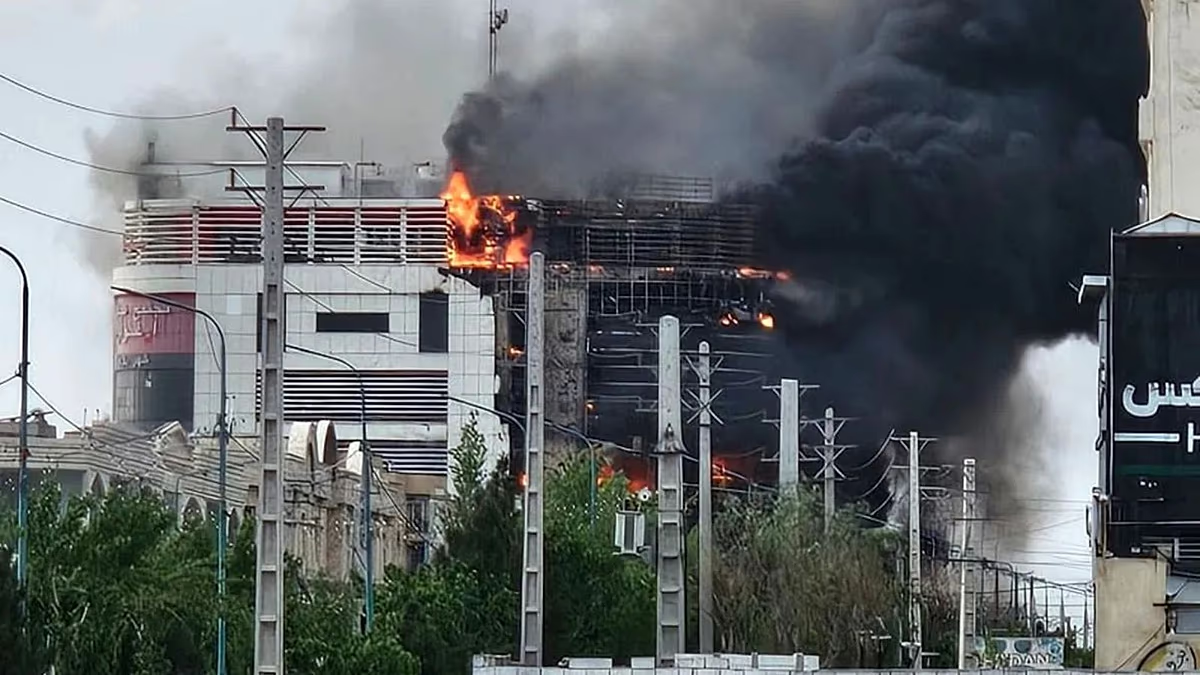
On a Tuesday in the city of Andisheh, just west of Iran’s bustling capital, a routine day was shattered by disaster. A fire, sudden and ferocious, erupted within the Arghavan commercial complex, a hub of local commerce home to over 250 shops and 50 offices. The blaze quickly transformed the structure into a towering inferno, with state television broadcasting harrowing images of flames consuming multiple storeys and thick, black smoke pouring into the sky. By Wednesday, the grim toll was clear: at least 11 lives were lost, and dozens more were wounded, with initial reports indicating 41 people suffered injuries. In the aftermath, the scale of the tragedy prompted immediate action from authorities, with the Public and Revolutionary Prosecutor’s Office of Shahriar not only calling for a full investigation to identify culprits but also issuing an arrest warrant for the building’s constructor, signaling a search for accountability in the face of profound loss.
This catastrophe, however, is not an isolated incident but a stark echo of past failures. Preliminary reports from the Andisheh fire point to a familiar and deadly culprit: the building’s composite facade. Experts have long warned that these widely used cladding materials, often chosen for their modern appearance and insulation properties, can act as a lethal accelerant in a fire, allowing flames to race up the exterior of a structure with terrifying speed. This same hazard has turned emergencies into massacres in Iran before. The community’s memory is still scarred by the 2017 Plasco building fire in central Tehran, where a 15-story shopping centre collapsed, claiming at least 22 lives, including 16 brave firefighters who were trapped inside. Just three years later, in June 2020, a catastrophic explosion triggered by ignited gas canisters at a Tehran clinic killed at least 19 people. Each event stands as a somber monument to neglected safety warnings.
Behind the stark statistics of these disasters lie profound human stories of rupture and grief. Each number represents a person—a shopkeeper who invested their life savings into a small unit, an office worker supporting their family, or a firefighter who rushed into danger while others fled. The Arghavan complex was not just a building; it was a ecosystem of livelihoods and daily routines, now reduced to charred rubble. For the families of the victims, the official announcements of death tolls mark the beginning of an agonizing journey of mourning and unanswered questions. They are left to grapple with a loss made all the more bitter by the growing sense that these tragedies are preventable, a painful cycle where public warnings seem to fade until the next emergency siren wails.
The recurring nature of such fires points to systemic issues that transcend any single contractor or inspector. While the arrest warrant for the builder is a step toward justice, it addresses only a symptom of a broader malaise involving construction codes, regulatory enforcement, and the prioritization of rapid, cost-effective development over long-term safety. The use of hazardous materials like flammable composite panels, despite known risks, suggests a failure to learn from history and to implement and enforce the strict reforms needed to protect citizens. This pattern reveals a chilling disconnect between expert recommendations and on-the-ground reality, where economic pressures and possibly corruption can undermine the very standards designed to save lives.
In the wake of the Andisheh fire, a nation is left to confront uncomfortable truths. The collective trauma of repeated, large-scale urban fires creates a climate of anxiety, where people go to work or shop with a subconscious fear that their environment might be a tinderbox. Public trust in the safety of buildings and the efficacy of oversight bodies is eroded with each new headline. The calls for investigation must now lead to tangible change: a rigorous audit of building materials, a overhaul of enforcement mechanisms, and a transparent process that holds not only individual negligence but systemic failure to account. It is a moment that demands more than condolences; it requires a unwavering commitment to reform.
Ultimately, the story of the Arghavan complex fire is a tragic chapter in an ongoing narrative about the value placed on human life within urban landscapes. The victims in Andisheh, Plasco, and the Tehran clinic join a terrible fellowship of those lost to what can only be described as foreseeable disasters. As Iran mourns another eleven souls, the hope—however fragile—is that this loss will finally break the cycle. The true memorial to those who perished will not be found solely in words of sympathy, but in the creation of a future where buildings are sanctuaries, not death traps, and where the lessons of a painful past are etched not just in reports, but in ironclad practice and a renewed culture of safety for all.