



In early March of 2026, a dramatic incident near Budapest ignited a diplomatic crisis between Hungary and Ukraine. Hungarian special services raided a convoy of cash carriers, seizing approximately $40 million, €35 million, and 9 kilograms of gold. The Hungarian authorities immediately expelled the seven Ukrainian nationals accompanying the transport and launched a money laundering investigation, holding the assets for up to 60 days under the order of then-Prime Minister Viktor Orbán. For Ukraine, this was not merely a legal procedure but an act of aggression. The state-owned Oschadbank, whose employees were involved, vehemently demanded the immediate return of the assets through its lawyers, stating the transfer was a routine operation from Austria’s Raiffeisen Bank to Kyiv. Ukrainian Foreign Minister Andrii Sybiha escalated the rhetoric, accusing Hungary of “kidnapping and state terrorism.” The seizure became a potent symbol of the deeply fractured relationship between the two nations, a relationship already strained by years of political contention.
The backdrop to this confrontation was the complex and often hostile political dynamic cultivated under Viktor Orbán’s long tenure. Orbán, widely regarded as the European Union’s most pro-Russian leader, had maintained a particularly prickly relationship with Kyiv. He repeatedly wielded Hungary’s veto power within the EU to stall crucial financial assistance to Ukraine and block its path to membership. The March seizure, therefore, was seen by Ukraine and many Western observers as another manifestation of Orbán’s adversarial stance. Hungarian Foreign Minister Péter Szijjártó framed the action as a legitimate security concern, suggesting the funds could be linked to criminal activities and questioning if it was “the money of the Ukrainian war mafia.” This narrative clash—between Ukraine’s claim of a lawful financial operation and Hungary’s suspicion of illicit activity—lay at the heart of the dispute, reflecting a profound lack of trust.
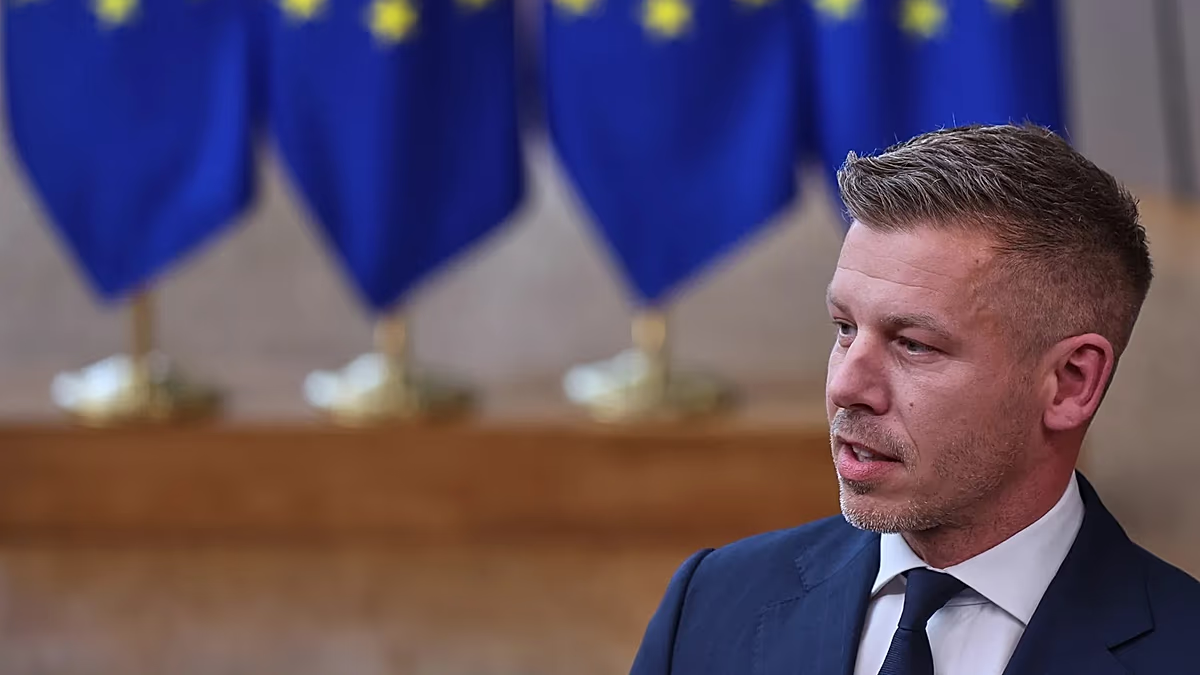
The political landscape in Hungary, however, was undergoing a seismic shift. Orbán’s government was ousted in a parliamentary election on April 12th, ending his 16-year rule. The incoming premier, Péter Magyar, signaled a desire for a dramatic reset in both domestic and foreign policy. He presented himself as a more moderate successor, aiming for friendlier relations with Brussels and all of Hungary’s neighbors, including Ukraine. Last week, he publicly offered to meet President Volodymyr Zelenskyy to “open a new chapter in bilateral relations” and address the long-standing feud over the rights of Ukraine’s ethnic Hungarian minority. This offer represented a stark departure from Orbán’s approach and created a window for diplomatic resolution.
Crucially, this shift in Hungarian leadership coincided with broader geopolitical maneuvers. Just days before Zelenskyy’s announcement regarding the seized assets, a significant EU blockade was lifted. The European Union finally granted approval to a €90 billion loan for Ukraine after Hungary, under its new political direction, withdrew its veto. This ended a two-month impasse that had outraged other EU leaders, who condemned Orbán’s last-minute blockage in February as an unacceptable act of blackmail. That veto had been directly linked to the interruption of oil flows through the Druzhba pipeline, which carries cheap Russian oil to Hungary and Slovakia. Zelenskyy’s announcement that the pipeline had been repaired and could resume operations removed a key grievance for Hungary, further paving the way for compromise.
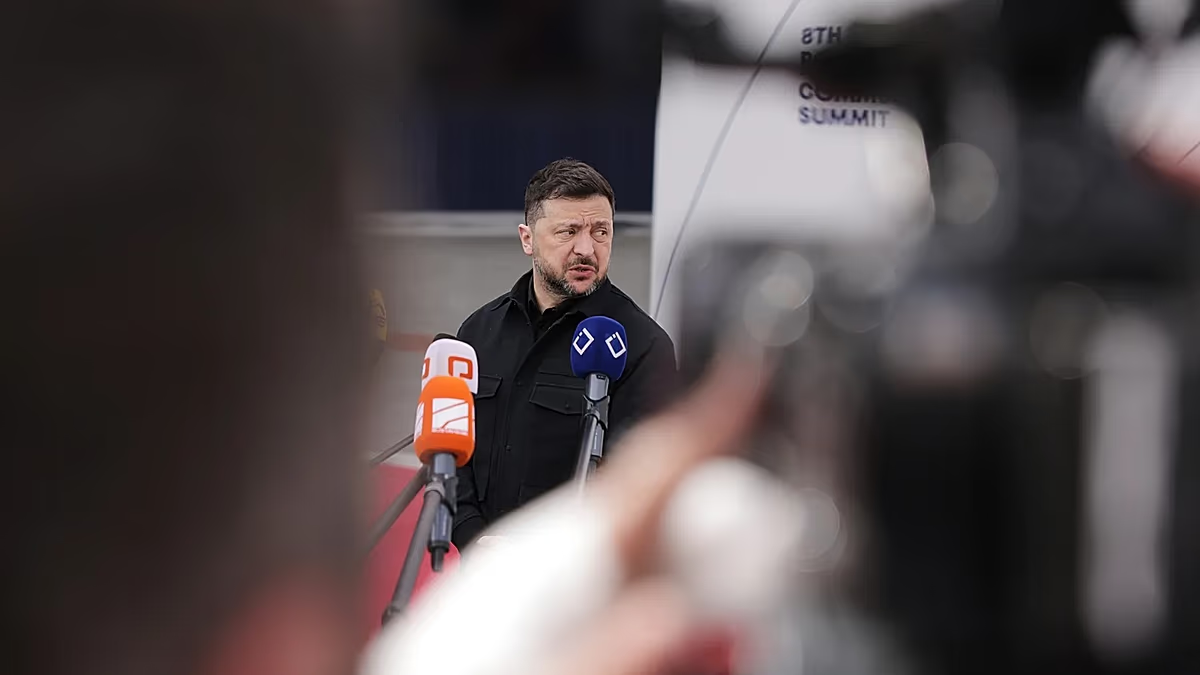
Therefore, the return of the cash and gold on June 5th was not an isolated event but the culmination of this rapidly changing political and diplomatic context. President Zelenskyy announced the recovery in a statement on social media, calling it “an important step in relations with Hungary” and expressing gratitude for Hungary’s “constructive approach and civilized step.” He also thanked the Ukrainian team who fought for the decision. This resolution serves as a tangible first fruit of the post-Orbán era. It demonstrates that with a change in Hungarian leadership, pragmatic solutions to acute disputes can be found. The return of the assets acts as a de-escalation of a tense standoff and a symbolic gesture of goodwill.
Looking forward, this episode likely marks the beginning of a cautious recalibration between Hungary and Ukraine. While deep-seated issues, such as the rights of ethnic Hungarians in Ukraine, remain to be fully addressed, the path for dialogue is now open. The combination of a new, more moderate Hungarian government, the resolution of specific economic grievances like the Druzhba pipeline, and the unlocking of EU aid for Ukraine creates a fragile but hopeful foundation. The return of Oschadbank’s assets is a concrete proof point that diplomacy can prevail over confrontation. It underscores how political transitions at the national level can directly and positively impact international relations, offering a chance to mend ties that were previously deemed nearly irreparable.