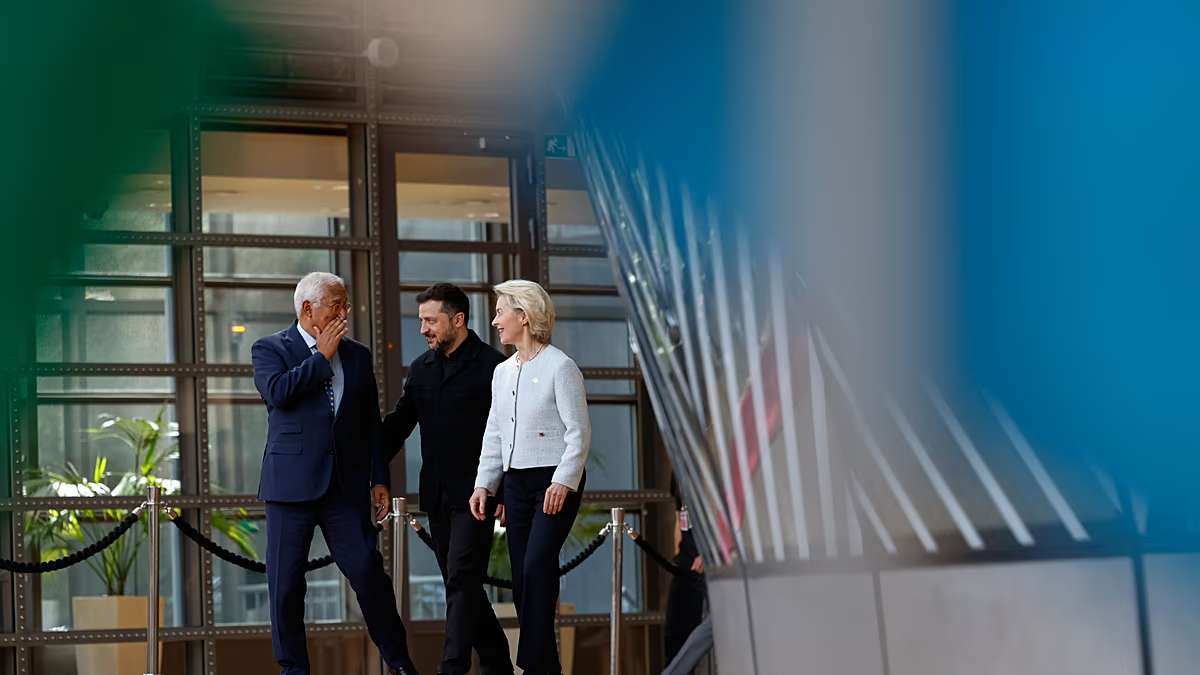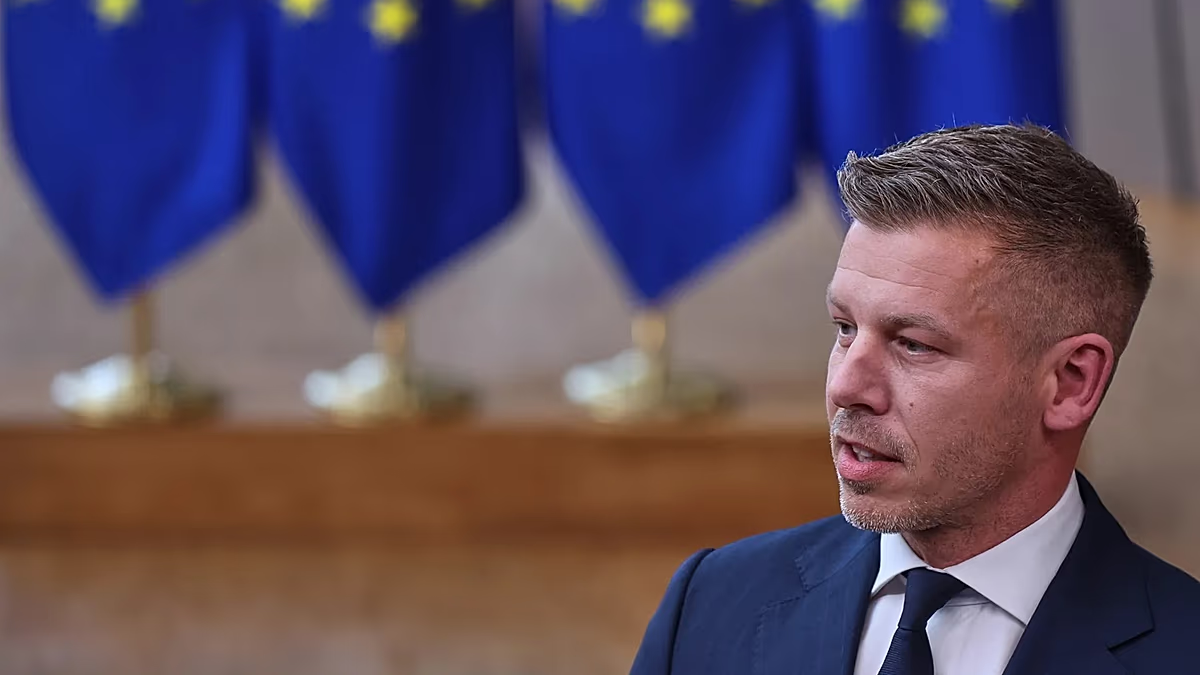


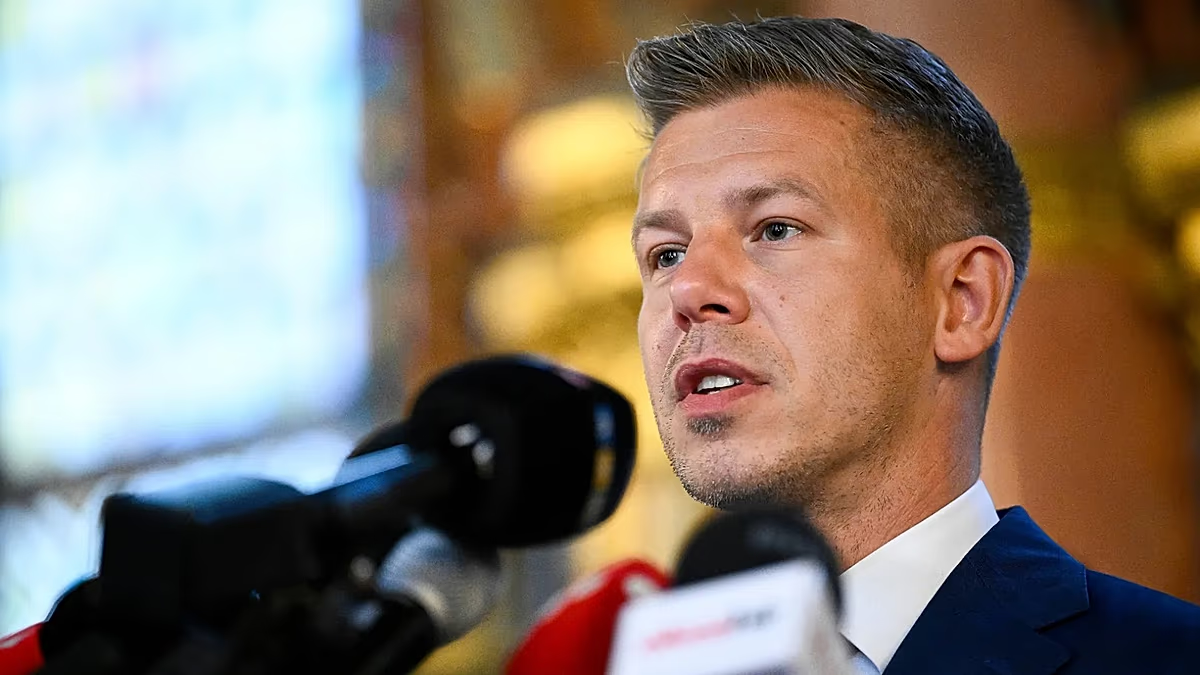
In a significant diplomatic gesture, Rome has announced that Hungary’s Prime Minister-elect, Péter Magyar, will meet with Italian Prime Minister Giorgia Meloni for talks this Thursday. The brief statement provided no agenda, leaving European observers to speculate about the substance of the discussion and the potential shift in Hungary-Italy relations following sixteen years under Viktor Orbán. This meeting, one of Magyar’s first major international engagements since his electoral victory, symbolizes a new chapter for Hungary on the European stage. The lack of detail underscores the nascent and exploratory nature of this relationship, as both leaders gauge how their political visions might align or differ in the post-Orbán era.
The context of this meeting is defined by the complex alliance that existed between Meloni and the outgoing Orbán. While both leaders are prominent figures on Europe’s political right, sharing hardline stances against immigration, their approaches to the European Union and foreign policy diverged significantly. Meloni has cultivated a more pragmatic and less confrontational relationship with Brussels compared to Orbán’s famously combative style. Most notably, a major fissure existed over Ukraine: Meloni is a staunch supporter of Kyiv against Russia’s invasion, whereas Orbán was widely regarded as the most Moscow-friendly leader in the EU. These substantive differences suggest that while the personal dynamic between leaders is changing, the foundational geopolitical tensions that characterized Italy’s relationship with Orbán’s Hungary may still require careful navigation.
Further complicating the picture are the formal political divisions within the European Parliament. Orbán’s Fidesz party sits with the “Patriots for Europe” group, having been rebuffed in an attempt to join Meloni’s “European Conservatives and Reformists” (ECR) group earlier in 2024—a move reportedly resisted by Meloni herself. Meanwhile, Magyar’s incoming governing party, Tisza, is a member of the central-right European People’s Party (EPP), a different bloc entirely. This institutional separation means that, despite the meeting, Magyar and Meloni do not share a common political home in Strasbourg. Nevertheless, there are signs that a pragmatic working relationship is possible. Notably, several of Orbán’s own international allies, including former U.S. President Donald Trump, have expressed openness to Magyar, suggesting a pathway for the new Hungarian leader to build bridges across the right-wing spectrum.
Magyar’s visit to Italy began not with statecraft, but with cinema. He traveled to the Riviera Film Festival in Sestri Levante, where a documentary detailing his political rise, Spring Wind – The Awakening, was screened. In remarks to journalists, Magyar credited the film with playing a crucial role in his election, as it allowed millions of Hungarians to see past what he called “state propaganda.” The documentary chronicles the two-year campaign that culminated in his party’s landslide victory in April, which ended Orbán’s long tenure. Magyar poignantly noted that before the film’s release, voters—including, he implied, his own children—were deprived of the chance to “meet with the truth” and understand his movement’s goals, highlighting the intense information war that characterized Hungarian politics.
The future Prime Minister described a moment of realization regarding the film’s power. After an initial limited release in Hungary, he saw the emotional impact on audiences and felt it could “have a strong impact” on the electorate. He then persuaded the filmmakers to release it more widely. The documentary was subsequently streamed on YouTube over the Easter weekend, a time when Hungarian families traditionally gather, and was viewed by an estimated 3.4 million people. Magyar described this strategic timing as intentional, hoping families would watch together and discuss the nation’s trajectory. He emphasized that the film was not merely a party political broadcast for Tisza, but a story “about the two years of our nation, the past and the possible future of our nation,” framing his movement as a national awakening rather than a simple change of government.
As Péter Magyar prepares to be sworn in as Prime Minister this Saturday, his actions this week—from the cultural forum of a film festival to the high politics of a meeting with Meloni—sketch the outline of his intended leadership style. He appears to be positioning himself as a figure who values direct communication with citizens to circumvent established propaganda, while simultaneously engaging pragmatically with European partners. The meeting with Meloni is a test case for whether Hungary, under its new leadership, can maintain alliances on the political right while recalibrating its stance on critical EU issues like support for Ukraine. The outcome will depend on whether Magyar and Meloni can find a new, sustainable pragmatic equilibrium, moving beyond the personalist diplomacy of the Orbán era to a relationship based on shared, concrete interests within a rapidly evolving Europe.