



In a high-stakes meeting in Paris, the European Union’s top trade official, Commissioner Maroš Šefčovič, delivered a direct and urgent appeal to his American counterpart. The core message was simple, yet critical for transatlantic economic stability: the United States must honor the trade deal both powers agreed to nearly a year ago. This agreement, forged in the Scottish town of Turnberry, was meant to be a ceasefire in a protracted trade conflict, establishing clear rules to prevent a mutually damaging tariff war. Commissioner Šefčovič’s discussions with US Trade Representative Jamieson Greer were therefore not merely routine diplomacy, but a necessary attempt to pull the agreement back from the brink of collapse.
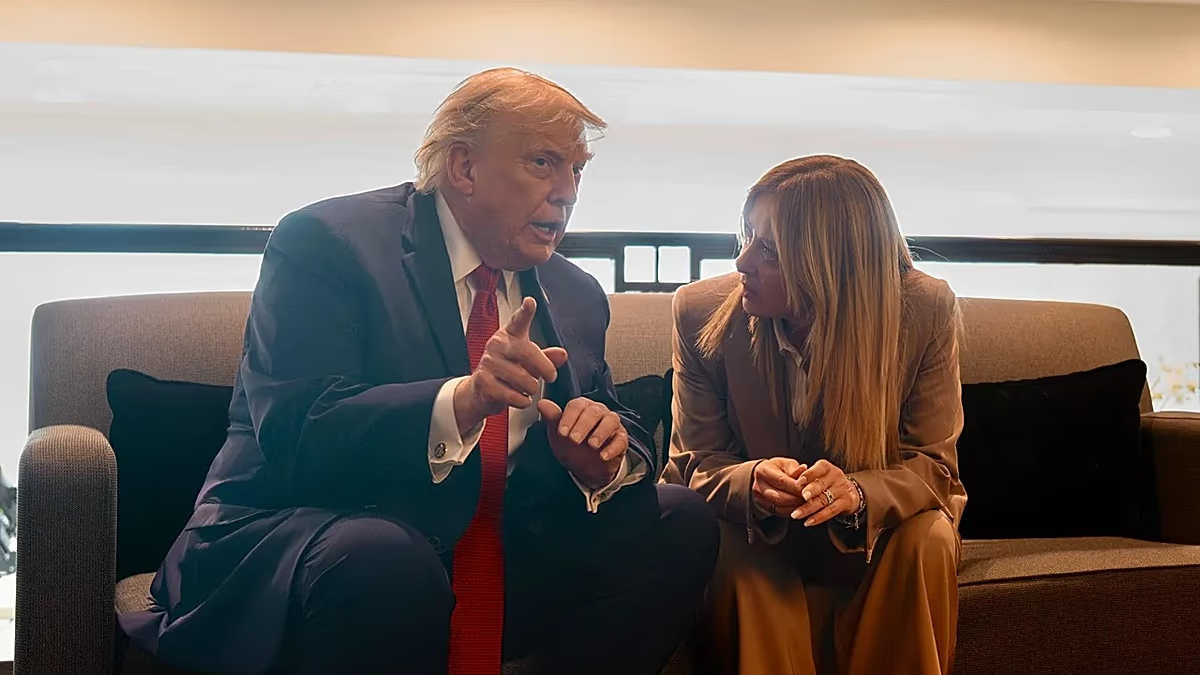
The urgency stems from a series of disruptive actions by the United States that have profoundly shaken European confidence. The situation escalated sharply when President Donald Trump recently threatened to impose a staggering 25% tariff on European automobiles—a clear and direct violation of the Turnberry pact, which explicitly capped US tariffs on EU goods at 15%. This threat was compounded by earlier moves in February, when the White House layered new tariffs atop existing ones following a domestic Supreme Court ruling. The cumulative effect is that for many European products, like specific cheeses, total US duties can now reach as high as 30%, double the agreed-upon limit. For European businesses and farmers, this isn’t a abstract policy dispute; it represents a tangible, punishing increase in the cost of reaching the American market, threatening jobs and livelihoods across the continent.
During the 90-minute dialogue, Commissioner Šefčovič was unequivocal in his demand for a “swift return” to the original terms of the deal, insisting on the 15% tariff ceiling as a fundamental pillar of the agreement. He simultaneously sought to reassure the American side by presenting a detailed update on the EU’s own implementation efforts. This was a strategic move to “clarify” the EU’s position and demonstrate that Brussels is acting in good faith, even as it confronts its own complex internal political processes. The American side, for its part, has grown impatient, pressuring the EU to accelerate the intricate legislative machinery required to fulfill its promises, particularly the commitment to reduce tariffs on US industrial goods to zero.
However, the path to implementing the deal within the EU is fraught with its own political tensions, which Šefčovič must navigate just as carefully as the transatlantic relationship. Negotiations between the EU’s member state governments and the directly elected European Parliament have become a major battleground. Many Members of the European Parliament, wary of American unpredictability, are pushing hard to build strong safeguards into the implementing legislation. Their key demands include making any EU tariff cuts explicitly conditional on the US upholding its side of the bargain and inserting a “sunset clause” that would automatically terminate the entire deal in March 2028 unless both sides actively renew it. This cautious approach reflects a deep-seated desire for leverage and a guarantee against future US unilateral moves.
This internal EU debate is further complicated by a split among the bloc’s leading powers. France stands firmly behind the European Parliament’s demand for a tougher, more conditional law, aligning with a sovereigntist view that prioritizes protective mechanisms. On the other side, Germany and several other member states advocate for a more expedient and faithful translation of the original Turnberry terms into law, seeking to preserve the delicate balance struck personally by President von der Leyen and President Trump in 2025. This divide sets the stage for a delicate political balancing act, with a crucial round of negotiations scheduled immediately following the Paris talks.
Ultimately, the meeting in Paris highlights a precarious moment for EU-US trade relations. While Commissioner Šefčovič works to hold the United States accountable to its signed commitments on the international stage, he must concurrently broker a fragile consensus at home among EU institutions and member states with divergent priorities. The success of the Turnberry deal—and the avoidance of a renewed, disruptive tariff war—hinges on overcoming this twin challenge. It requires convincing Washington to step back from its punitive tariffs while also forging a unified European position that can both satisfy parliamentary concerns for security and deliver on the EU’s promises to its American partner. The coming weeks will test whether diplomacy and shared economic interest can prevail over unilateralism and distrust.