



Paragraph 1: A Crisis at Sea
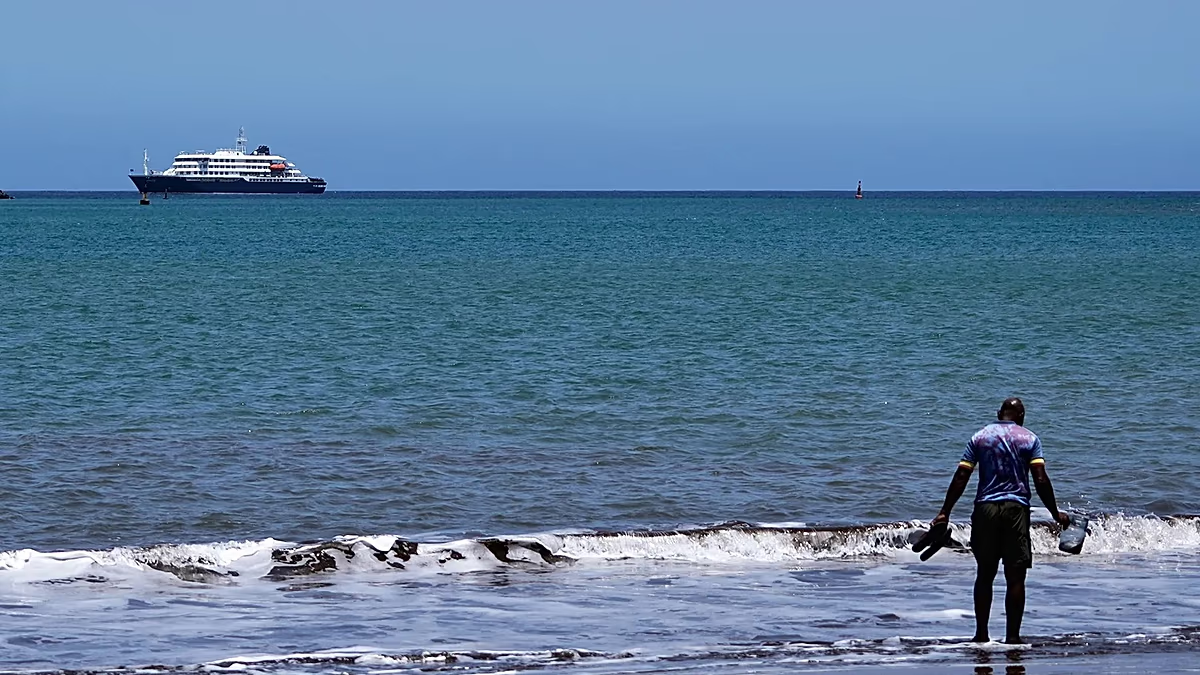
A luxury cruise expedition has been transformed into the epicenter of an international public health emergency. The MV Hondius, operated by Oceanwide Expeditions, is currently anchored off the coast of Cape Verde, grappling with a deadly outbreak of hantavirus—a rare and often severe disease typically transmitted to humans from infected rodents. The situation escalated tragically with the confirmed deaths of three passengers, casting a shadow of fear and uncertainty over the remaining souls on board. This isn’t just a story of a ship in distress; it’s a human drama involving grief, illness, and a complex international effort to contain a pathogen that has, alarmingly, appeared to spread between people in the close quarters of the vessel. The world is now watching as authorities scramble to manage the fallout, which has already stretched from the remote South Atlantic to the African mainland.
Paragraph 2: Evacuation and an Uncertain Journey Home
In response to the growing crisis, the cruise operator announced a critical medical evacuation. Two individuals who fell ill and require urgent care, along with a family member associated with one of the deceased passengers, will be airlifted from the ship using specialized aircraft dispatched to Cape Verde. Their destination is the Netherlands, where they can receive advanced medical treatment. However, in a statement that underscores the logistical and medical complexities of the situation, the company admitted, “At this stage, we do not have an exact timeline” for this delicate operation. Once this evacuation is complete, the MV Hondius itself will begin a three-day sail to a port in the Canary Islands, either Gran Canaria or Tenerife, marking the next phase of this harrowing ordeal for the remaining passengers and crew.
Paragraph 3: The Virus Takes to the Skies
The repercussions of the outbreak have extended far beyond the ship’s hull, triggering a global health alert. The World Health Organization (WHO) is now urgently tracing 82 passengers and six crew members who were on a commercial flight from the island of Saint Helena to Johannesburg on April 25th. Among them was a Dutch woman who had disembarked from the MV Hondius in Saint Helena while already experiencing gastrointestinal symptoms. Her condition deteriorated mid-flight, and she died upon arrival at a Johannesburg hospital on April 26th. Tests later confirmed she was positive for hantavirus. This development has raised grave concerns about potential exposure on the commercial flight, prompting the WHO to initiate contact tracing to prevent further community spread from this tragic incident.
Paragraph 4: A Remote Island on Alert
The connection to Saint Helena, a remote British overseas territory in the South Atlantic with a small population of around 4,400, has placed the island on high alert. Local authorities confirmed that passengers from the ill-fated cruise had come ashore, and that two individuals with minor symptoms may have had contact with residents. In response, the island’s government has initiated a full risk-based contact tracing process, asking some community members to isolate as a precaution. While striving to reassure the public by stating there is “no significant cause for concern on the island at this time” and that no cases have been identified locally, the situation has undoubtedly disrupted the quiet life of this isolated territory, illustrating how quickly a localized outbreak can ripple across the globe.
Paragraph 5: The Human Toll and Medical Mystery
The human cost of this outbreak is stark. Besides the Dutch couple, a German passenger has also lost their life to the virus. Currently, there are two confirmed cases and five suspected cases among those still on the MV Hondius. The WHO’s suspicion that the hantavirus may have spread between people on the cruise ship is particularly alarming to epidemiologists. While some hantavirus strains are known for rare person-to-person transmission, it is not the norm, suggesting the close living conditions aboard the ship may have facilitated an unusual spread. This aspect transforms the incident from a tragic accident into a significant medical mystery, one that will require thorough investigation to understand the transmission dynamics and prevent similar tragedies in the future.
Paragraph 6: A Coordinated Response Amidst Grief
The evolving situation represents a massive, multi-national coordination challenge involving cruise operators, the governments of Cape Verde, Saint Helena, South Africa, and the Netherlands, and global health bodies like the WHO. It intertwines the urgent medical needs of the sick, the logistical nightmare of evacuations and ship relocation, and the meticulous epidemiological work of contact tracing across continents. At its heart, however, are the passengers, crew, and families touched by this tragedy—individuals who embarked on an adventure only to find themselves in a nightmare of loss, illness, and quarantine. As the MV Hondius prepares for its solemn journey to the Canary Islands and the evacuated patients fight for their health, the world is reminded of the fragile balance between human exploration and the unpredictable power of nature’s pathogens.