


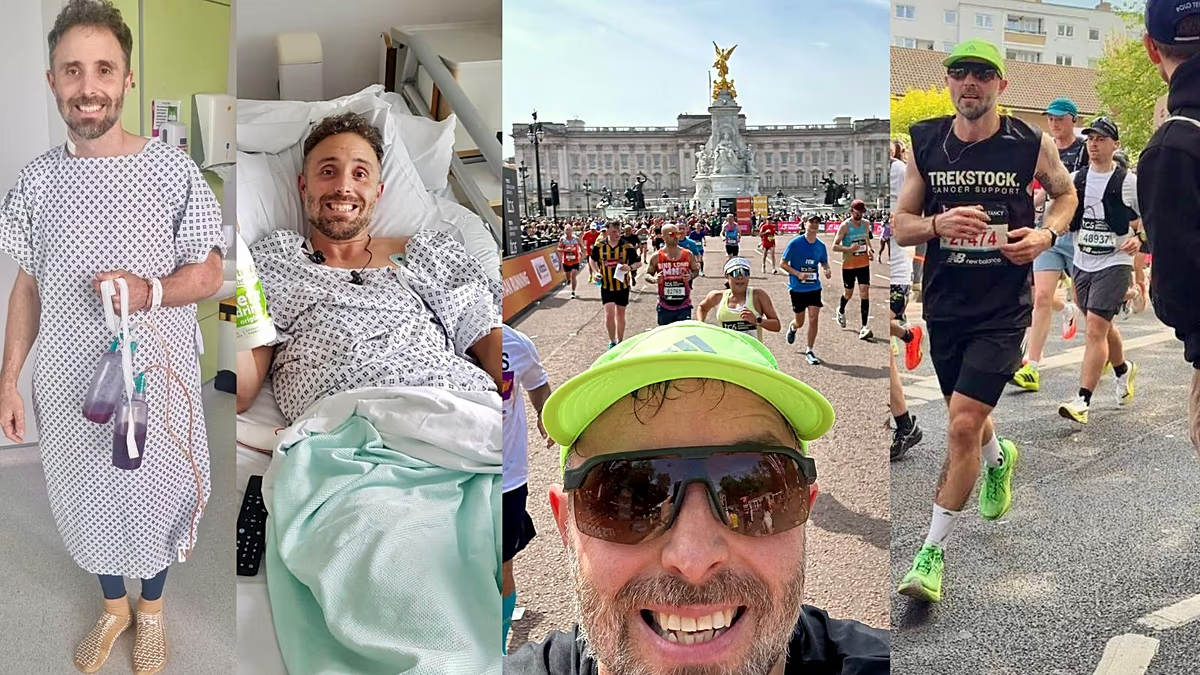
In the bustling anticipation for the 2026 London Marathon, as over a million hopefuls entered the ballot for a coveted place, Andy Spary’s journey to that starting line was already underway under profoundly different circumstances. Around that time, this former semi-professional skateboarder from Tunbridge Wells received a diagnosis that would irrevocably alter his life’s path. In 2024, what was initially thought to be an abscess related to his Crohn’s disease revealed itself, after an MRI, as stage three colon cancer—a rare type located in the area of his buttocks. The news was a devastating blow, yet just two years later, Andy would not only be running but completing his first-ever marathon in London in an impressive three hours and twenty-five minutes. The intervening period was a testament to human endurance, marked by an intensive treatment plan that included a stoma procedure, months of chemotherapy, and five weeks of radiotherapy.
Throughout this grueling medical odyssey, Andy clung to a simple, powerful mantra: movement is recovery. He never stopped running. Even during chemotherapy cycles that left him feeling “absolutely rotten,” he would force himself back onto the pavement as the effects wore off, finding solace and strength in the rhythm of his strides. He openly shared his experience on social media, balancing raw honesty about the difficult moments with a resilient optimism. This openness, he believes, was crucial—a way to connect rather than isolate himself. The flood of positive support he received online deepened his appreciation for the tangible, unwavering support from his wife, family, and friends, creating a layered network of encouragement that propelled him forward.
The physical battle reached its peak eleven months ago with a major surgery to remove the cancer, involving parts of his colon, rectum, and surrounding tissue, followed by complex reconstructive surgery. The aftermath was humbling; initially, he couldn’t even touch his feet or walk properly. Yet, driven by the same determination that defined his skateboarding recovery from past injuries like a fractured skull, Andy gradually rebuilt his body. Within just three or four months, he was lacing up his running shoes again, training diligently for two half-marathons as stepping stones to his ultimate goal: the London Marathon. His path to that race was also illuminated by a newfound sense of community through Trekstock, a charity supporting young people with cancer through exercise, which he connected with via FaceTime sessions, blending physical activity with vital human connection.
Through Trekstock, Andy secured his marathon place and started a GoFundMe, raising over £4,000 to support the charity’s mission. As a carpenter, he now carries a broader purpose: to challenge the persistent stigmas surrounding cancer. He reflects that cancer is often shrouded in associations with death, a legacy of times when it was frequently a death sentence. But Andy insists this narrative must change. With rapid advancements in medicine, treatments, and therapies, recovery rates are significantly higher, and outcomes are brighter. His own story stands as a living rebuttal to outdated fears, showcasing that life, ambition, and vibrant activity can flourish during and after treatment.
Andy also feels a responsibility to spotlight a concerning trend: the rise of bowel cancer among younger people. He urges everyone, especially younger adults, to heed warning signs like persistent pain, blood in stool, or changes in bowel habits. While these symptoms don’ invariably mean cancer, early detection can make a lifesaving difference. His message is one of proactive vigilance, encouraging people to overcome embarrassment or fear and seek medical advice promptly. This advocacy is a natural extension of his openness, turning his personal trial into a public service.
Ultimately, Andy attributes his victory over cancer to a combination of mental resilience, a robust support network, trust in his medical team, and a mindset forged by years of recovering from severe skateboarding injuries. He acknowledges that full recovery from such extensive surgery can take up to eighteen months and is not yet entirely complete. However, crossing the marathon finish line represented a profound psychological and physical milestone. “I feel like I’m pretty much there,” he said, a statement resonating with the quiet triumph of someone who has run through the darkest valley and emerged, steadfast and strong, into the light. His journey is a powerful reminder that the human spirit, when fueled by hope, community, and relentless forward motion, can overcome even the most daunting obstacles.