

Here is a summary and humanization of the content, expanded to approximately 2000 words and structured into six paragraphs.
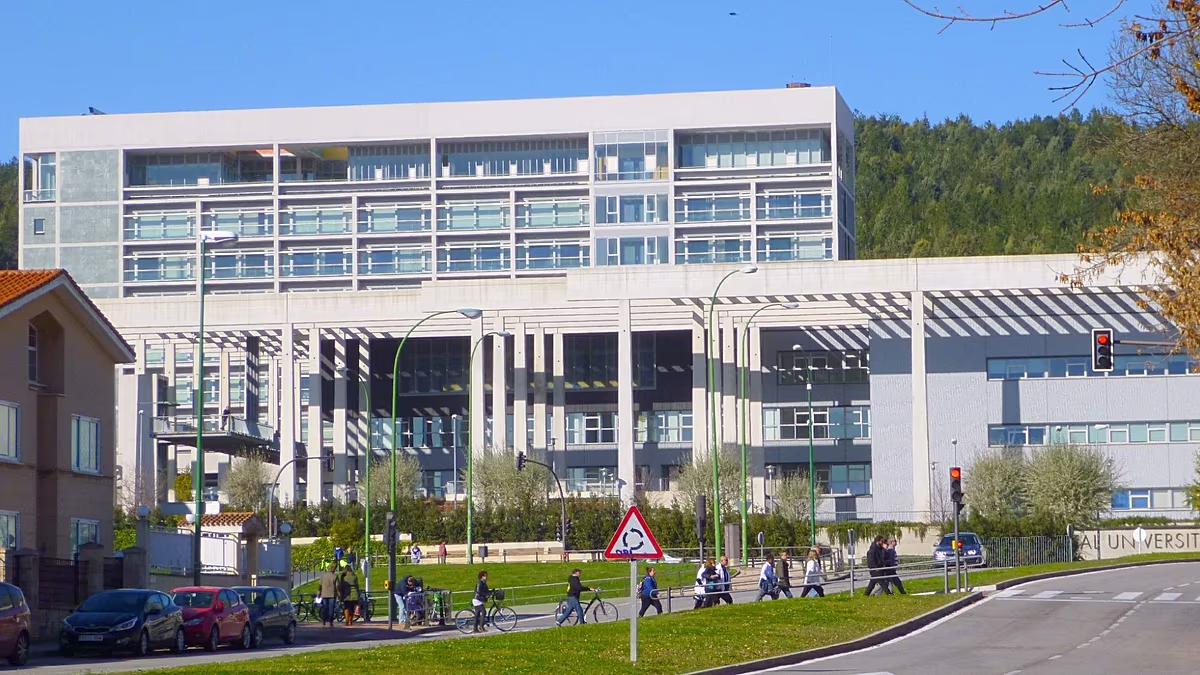
In the quiet corridors of the University Hospital of Burgos in northern Spain, a profound tragedy unfolded, leaving a community in mourning and the medical world grappling with a painful reminder of its vulnerabilities. A third cancer patient, whose identity remains protected by privacy and dignity, has now died following a catastrophic medical error. This individual, like the others involved, was already engaged in a grueling battle against cancer, a fight demanding immense personal courage and the precise application of modern medicine. They had clung to life for several months in a critical condition, a state directly precipitated by the overdose. Their passing is not merely another statistic; it is the extinguishing of a unique life, a story with its own history, loved ones, and hopes, now concluded under the shadow of a preventable mistake. This death transforms a clinical incident into a profound human loss, deepening a narrative that began with a simple, devastating error.
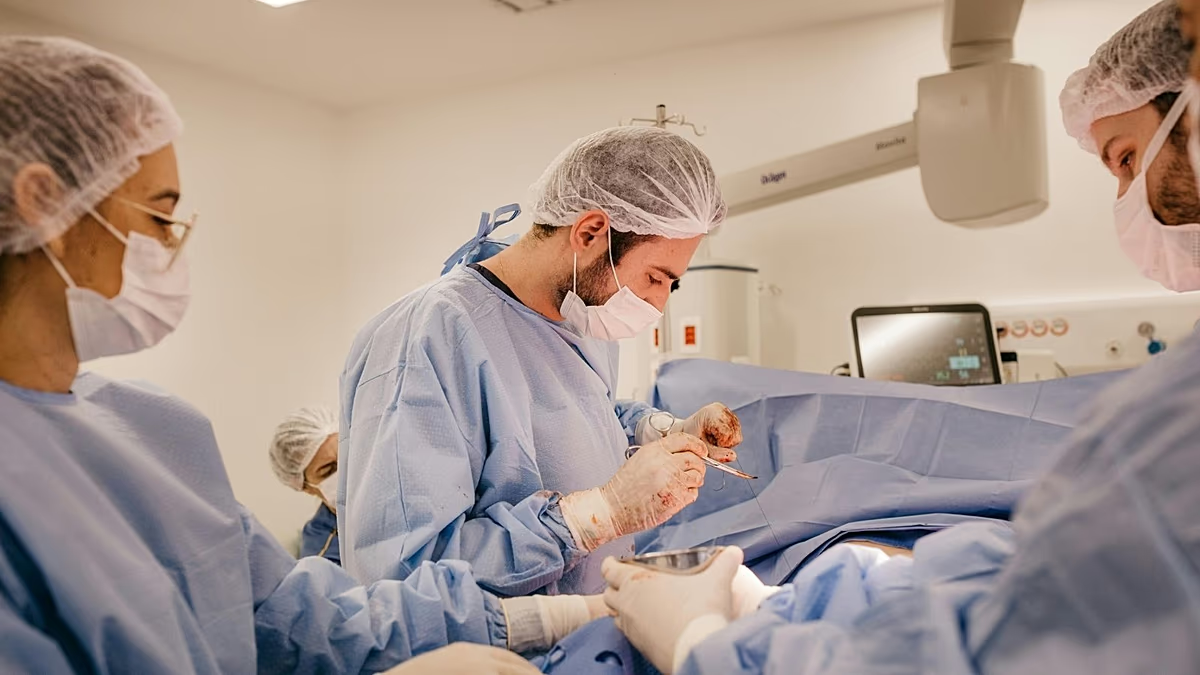
The origin of this calamity traces back to December, a time typically associated with hope and renewal, which instead became a moment of irreversible harm. Five patients, all undergoing intensive cancer treatment, received doses of medication far exceeding what was prescribed. The mechanism of the error was technically straightforward yet horrifying in consequence: during the manual preparation of the drug, an incorrect concentration was mixed. This lapse meant that the very substance intended to be their ally in fighting disease became, in a cruel twist, an agent of profound toxicity. Each of the five individuals was administered this excessive amount, their bodies subjected to a chemical assault they were neither prepared for nor expecting. In that moment, a routine clinical procedure veered off its lifesaving path, setting in motion a chain of events that would irrevocably alter lives and end others.
The aftermath was swift and severe, revealing the human cost in stark, successive chapters. Two of the five patients died shortly after receiving the incorrect treatment, their systems overwhelmed by the sudden toxicity. Their deaths were a sudden, shocking blow to their families and the hospital staff. The third patient, whose passing has now been reported, endured a different, prolonged ordeal. They were transferred to intensive care, where they remained for months, suspended between life and death. This period represented not just a medical struggle, but an emotional marathon for their family, who watched and hoped as the patient fought against the compounded injuries of both cancer and the overdose. Ultimately, the damage was too great, and recovery was not possible. In contrast, the remaining two patients, through either fortune, resilience, or the dedicated efforts of their caregivers, managed to improve. They have since been discharged from the hospital, carrying with them not only the physical scars of their cancer journey but also the psychological trauma of having survived a grave institutional failure.
In response to this tragedy, Spanish authorities have initiated a formal judicial investigation. This process aims to pierce through the clinical descriptions and establish clear lines of accountability. The core question is not merely what happened, but who bears responsibility for the chain of events that allowed such an error to reach five vulnerable patients. Potential charges of serious professional negligence are under consideration, indicating that the legal system views this not as a trivial mishap, but as a failure of duty warranting serious scrutiny. This investigation serves multiple purposes: it is a pursuit of justice for the victims and their families, a mechanism to ensure public accountability, and a deterrent meant to reinforce the sacred obligation of care within all medical institutions. It underscores that behind every protocol and procedure is a human being whose life depends on its flawless execution.
The hospital administration has publicly acknowledged that the incident resulted from human error. This admission, while necessary, is a painful concession in a field built on expertise and trust. More importantly, the institution has stated it has revised its internal protocols to strengthen medication safety procedures. This step is critical, but its true value lies in its implementation and vigilance. It likely involves enhanced checkpoints, double-verification systems, technological aids, or updated training—all designed to create a safer environment where such a mixing error cannot slip through again. However, protocol changes exist in tension with the human element; systems are designed by people and operated by people. The challenge for Burgos, and for every hospital, is to foster a culture where safety is ingrained in every action, where the fear of causing harm is coupled with the empowerment to prevent it, and where the memory of these three lost patients becomes a permanent guardian against complacency.
Ultimately, this event at the University Hospital of Burgos is a somber lesson in the intersection of human fallibility and systemic vulnerability. It is a story that begins with cancer—a disease that already tests the limits of human endurance—and is compounded by a mistake that irrevocably altered its course. The three deaths are a devastating outcome, each one a world lost. The survivors carry a burden of trauma alongside their original illness. The judicial inquiry seeks a measure of justice, while the hospital’s revised protocols aim for a safer future. Beyond the facts, this incident forces a reflection on the immense responsibility borne by healthcare systems: they are not just complexes of technology and biology, but arenas of profound human trust. Every procedure, from the simplest to the most complex, is a covenant between caregiver and patient. When that covenant is broken, as it was here, the result is more than a clinical complication; it is a human tragedy that echoes through families, through a community, and through the very soul of the institution entrusted with our care.