



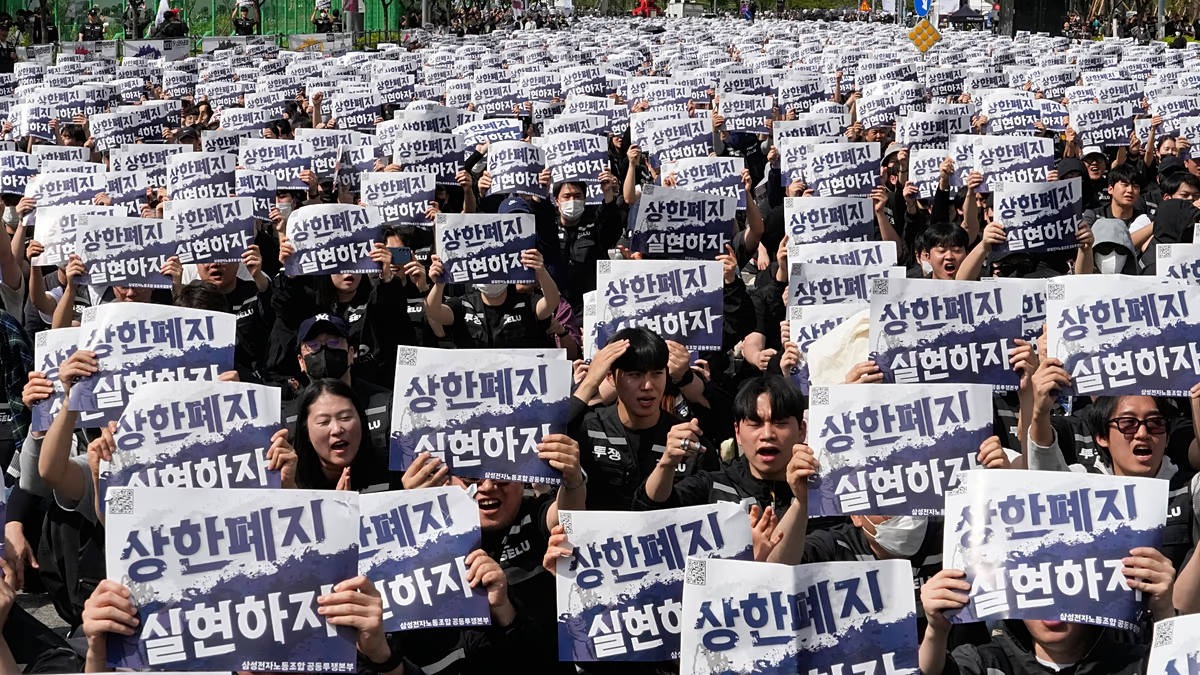
The Chasm Between Record Profits and Worker Pay
On a Thursday morning in April 2026, the sprawling, futuristic chip complex in Pyeongtaek, South Korea—a symbol of the nation’s technological might—became the stage for a very human drama. Thousands of Samsung Electronics workers gathered not to celebrate, but to protest. Holding signs and waving banners, their chants cut through the orderly hum of industry: “Make compensation transparent and remove maximum limits on bonuses!” The scene was a stark contrast to the sterile precision of semiconductor manufacturing; it was filled with the palpable energy of collective frustration. A heavy police presence underscored the tension, as the workers, represented by a union boasting around 40,000 attendees, made their discontent visible. This was not a minor grievance; it was a fundamental demand for fairness, erupting at a moment when Samsung and the entire Korean chip industry are riding an unprecedented wave of profitability.
The AI Gold Rush and the Workers Left Behind
The timing of the protest was profoundly symbolic. It unfolded on the very day that Samsung’s main competitor, SK Hynix, announced its best-ever quarterly results, crediting record revenue and operating profit to the global AI boom. This surge, driven by massive investment in data centers and AI infrastructure, has created a gold rush for memory chips. Samsung itself forecast a record first-quarter operating profit of approximately 57.2 trillion won (€33 billion). Yet, for the company’s union, representing about 74,000 workers, these staggering numbers have not translated into commensurate rewards. They argue that management has failed to offer adequate compensation despite this historic performance. The union rejected a proposal for bonuses in the form of restricted stock and is demanding the removal of caps on bonuses—a system they see as limiting their rightful share in the success they help build.
The Stakes Rise: A Threat to the Global Supply Chain
The dispute has escalated beyond rhetoric to a direct threat to global technology supply chains. The union has threatened an 18-day strike beginning May 21 if talks break down, estimating the action would cost Samsung over 1 trillion won (€578 million) per day. Such a strike would not be a mere internal affair. Samsung and SK Hynix together produce about two-thirds of the world’s memory chips, essential components for everything from smartphones to AI servers. A prolonged work stoppage could ripple through global markets, delaying products and exacerbating shortages. Union leader Choi Seung-ho, speaking from atop a crane-mounted structure, declared, “We won’t stop this fight until our fair demands are met.” This statement frames the conflict not as a negotiation, but as a principled struggle for equity, placing immense pressure on Samsung management.
A Landscape of Contrasts and Uncertainties
The protest exists within a complex economic landscape. While the AI boom has been a windfall, other geopolitical factors cloud the future. The war in the Middle East has disrupted supplies of key materials like helium—crucial for chipmaking—and pushed up energy costs, introducing uncertainty into a period of spectacular growth. Interestingly, SK Hynix’s chief financial officer stated on the same day that the company is monitoring the conflict but does not expect a meaningful impact on production. This contrast highlights the dual reality for Korean chipmakers: navigating global instability while managing internal labor relations strained by disproportionate profit distribution. The workers’ grievance is that the risks and efforts they bear are not reflected when the rewards are distributed.
The Human Core of a High-Tech Industry
This confrontation ultimately humanizes the often-invisible backbone of the tech world. The narrative of AI advancement, record profits, and global supply chains is usually told through data points and stock prices. The protest in Pyeongtaek reminds us that this industry is built by people—engineers, technicians, and plant workers—who have expectations and demands. Their call for transparent and uncapped bonuses is a demand for recognition, for a tangible link between their daily labor and the company’s extraordinary financial results. It challenges the notion that workers are merely a cost in a capital-intensive industry; they are asserting their role as partners in success.
A Turning Point for Corporate Culture and Global Markets
As the deadline for a potential strike looms, this standoff represents a potential turning point. It tests Samsung’s corporate culture in a period of peak performance and could set a precedent for labor relations across South Korea’s critical semiconductor sector. The outcome will answer a fundamental question: in an era defined by artificial intelligence, how do we ensure that the human intelligence and effort that power it are justly valued? The resolution will affect not only the lives of thousands of workers and the fortunes of a corporate giant, but also the stability of a technology supply chain that the entire world depends upon. The protest in Pyeongtaek, therefore, is more than a local labor dispute; it is a microcosm of the larger struggle to balance the relentless drive for technological profit with the fundamental principles of economic fairness.