

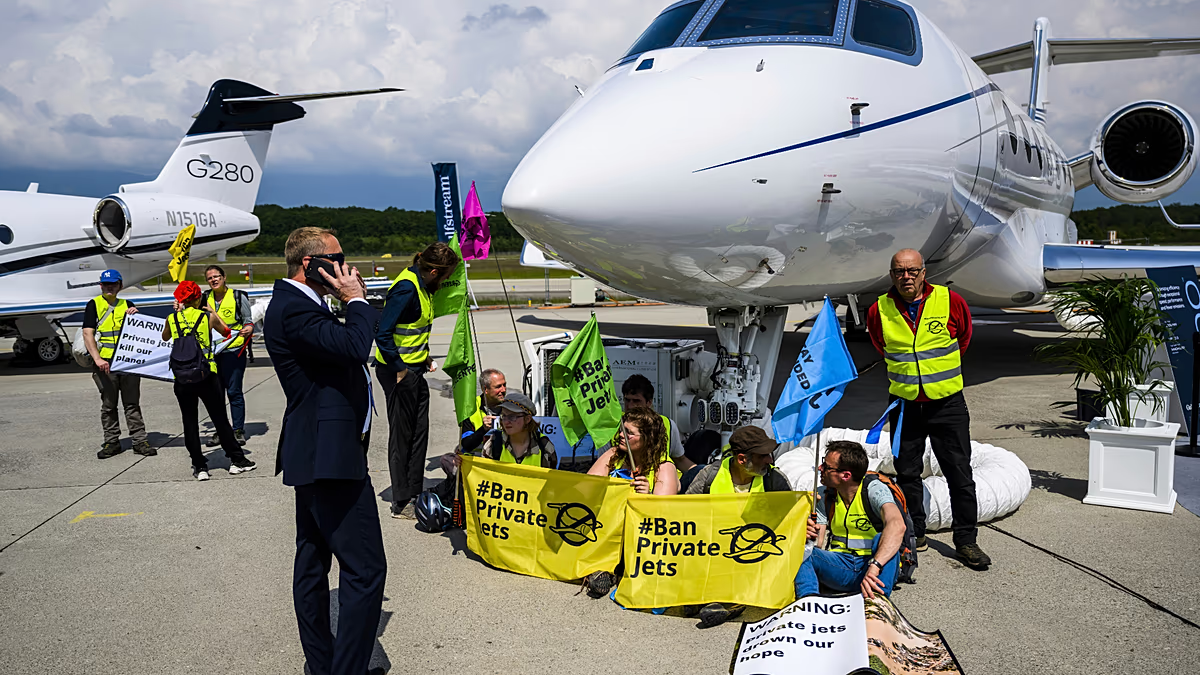
Paragraph 1: The Call for Restraint
In a striking move that underscores the deepening energy and climate crisis in Europe, a group of Green Members of the European Parliament has issued a direct challenge to the European Commission. They are demanding an immediate, temporary, EU-wide ban on non-essential private jet travel. This call to action is not born from abstract environmental ideology, but from a pressing, tangible emergency: a severe global oil price shock following the blockade of the critical Strait of Hormuz. This disruption has sent fuel costs soaring to levels not seen since the early days of the Ukraine war, placing immense strain on energy supplies across the continent. The aviation sector is already bracing for a turbulent summer, anticipating widespread flight cancellations due to jet fuel shortages. Against this backdrop of collective anxiety and anticipated sacrifice, the MEPs point to the continued, unhindered operation of private jets as a symbol of profound unfairness, a luxury that persists while the foundations of everyday life and travel for millions grow unstable.
Paragraph 2: A Question of Equity and Shared Sacrifice
The core of the argument, powerfully articulated by Austrian MEP Lena Schilling, revolves around equity and the social contract during a crisis. “While millions of people are wondering how they will afford their commute, private jets continue to take off as if nothing is happening,” Schilling stated, framing the issue in stark, human terms. In their formal letter to EU leaders, the MEPs label private aviation as “one of the most carbon-intensive and socially inequitable forms of transport.” They highlight a painful contradiction: while households and small businesses are being urged to curtail their energy use, a wealthy minority continues to consume fuel at a vastly disproportionate rate. This isn’t merely about economics; it’s about perceived justice. The crisis, they argue, reveals exactly “who is expected to pay for this crisis and who is not,” creating a dangerous rift between the everyday citizen feeling the pinch and an elite seemingly insulated from the consequences.
Paragraph 3: Proposing Concrete Measures for Fairness
Moving beyond rhetoric, the Green MEPs have outlined specific, actionable proposals to translate the principle of shared burden into policy. Their primary request is a temporary ban on private flights deemed non-essential for the duration of the energy crisis. Recognizing that some travel is unavoidable, they also call for the establishment of strict, transparent criteria to define “essential use,” limiting it to true emergencies, critical medical transport, and vital state functions. Furthermore, they propose tightening regulations to restrict private jets arriving from outside the EU from refueling, preventing the bloc’s scarce resources from facilitating luxury travel for global elites. Schilling summarizes the moral imperative: “If the burden falls only on ordinary people, that is not solidarity, it is plain injustice. If we are serious about saving energy, we must start where consumption is most extreme.”
Paragraph 4: The Broader Political and Social Stakes
This proposal is strategically timed to intersect with broader EU crisis response efforts. The Commission has just announced a package focused on providing short-term relief to vulnerable consumers through social tariffs and VAT cuts—measures that, while helpful, ultimately place the onus of adaptation on individuals. The MEPs are demanding their private jet ban be included in a wider set of energy-saving measures slated for discussion by EU energy ministers in mid-May. They frame this not just as a fuel-saving tactic, but as a crucial test of the EU’s political integrity. “Moments of crisis demand political clarity and fairness,” their letter warns, suggesting that allowing a privileged few to operate outside the collective effort risks eroding public trust and fracturing social cohesion. In their view, credible leadership means leading by example and ensuring sacrifices are distributed fairly.
Paragraph 5: Symbolism and the Defense of European Values
The push for this ban transcends practical energy conservation; it is deeply symbolic. The MEPs contend that “allowing a privileged few to continue business as usual weakens the credibility of European values” like solidarity and equality. In a period of economic strain and geopolitical uncertainty, visible acts of fairness become paramount. A decisive move to curb the most extravagant form of transport would, according to the signatories, demonstrate that EU institutions are not only capable of managing a crisis but are committed to doing so with moral consistency. It would send a powerful message that in Europe, shared challenges demand shared responses, and that no one, regardless of wealth, is entirely above the collective need for restraint.
Paragraph 6: Awaiting a Response in a Time of Crisis
As of now, the European Commission has acknowledged receipt of the letter, offering the standard bureaucratic response that it will answer “in due course.” This polite acknowledgement belies the significant pressure and high-stakes debate the proposal ignites. It forces a confrontation between the urgent need for universal sacrifice and the powerful interests and lifestyles of the affluent. The coming weeks will reveal whether EU leaders view this as a necessary, fair step in navigating a turbulent period, or an overly symbolic gesture. Regardless of the outcome, the MEPs have successfully framed a complex energy policy issue in fundamentally human terms—as a litmus test for fairness, solidarity, and the true meaning of shared responsibility in an era of compounding crises.