



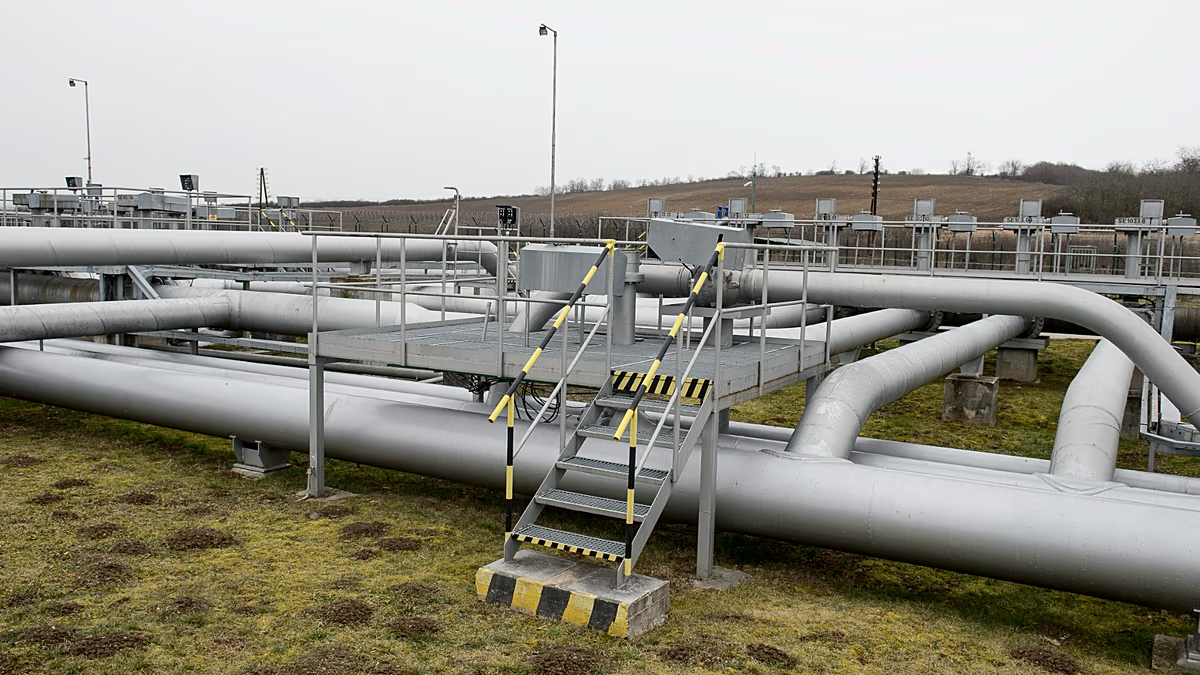
The resumption of oil flows through the Druzhba pipeline in the early hours of Thursday morning represents a critical de-escalation in a tense, months-long regional standoff. Slovak Economy Minister Denisa Saková’s official confirmation that Slovakia once again began receiving oil at 2 AM brings a fragile relief to a situation that had entangled energy security, wartime logistics, and high-stakes European Union politics. This single pipeline, a literal and symbolic “friendship” link from the Soviet era, had become an unlikely nexus of conflict between allies, its silence straining diplomatic relations and holding vital financial aid hostage. The simple act of oil beginning to move again ends a damaging stalemate, but the path to this point reveals a complex tapestry of interdependent needs and conflicting narratives that will likely shape future relations long after this particular crisis has passed.
The disruption began in the bitter cold of late January, when a Russian drone strike targeted Ukrainian energy infrastructure, damaging the Druzhba pipeline. This immediately halted the flow of Russian crude oil to landlocked Hungary and Slovakia, both of which remain significantly dependent on this relatively cheap supply. What followed, however, was not a unified front against the aggressor, but a fractious blame game. Ukraine, fighting for its survival, stated the halt was a forced necessity for urgent repairs to the pipeline’s infrastructure. From the perspectives of Budapest and Bratislava, this explanation was insufficient; they publicly accused Kyiv of deliberately withholding transit, weaponizing the flow of oil to exert political pressure. This accusation placed Ukraine in a profoundly difficult position, forced to balance its own sovereign security needs against the energy and economic stability of neighboring EU states, even as it defended itself from the very nation supplying the oil.
The pipeline’s silence quickly transcended a mere energy dispute, becoming a powerful geopolitical lever. Hungary and Slovakia, both of which have maintained a more nuanced stance toward Russia compared to other EU members, used the situation to veto a massive €90-billion loan package for Ukraine that had been painstakingly agreed upon in December. Their blockade, initiated in February, directly linked the restoration of oil flows to the release of these crucial funds. This move created a stark dilemma for the European Union, pitting the urgent need to support Ukraine’s war effort against the principle of member state consensus and the practical energy needs of two of its own. The frozen pipeline thus froze European solidarity, creating a deadlock where Ukraine’s battlefield needs were held contingent on the repair of infrastructure it was actively defending from Russian attack.
The breakthrough came with a quiet notification from the Ukrainian pipeline operator, Ukrtransnafta, to Hungary’s energy giant MOL, stating that the receipt of crude oil from Belarus had resumed at noon on Wednesday. This technical message was the first crack in the ice. It signaled that repairs, whether they were purely physical or involved more complex logistical and security assessments, had been completed to a point where Ukraine felt transit could safely restart. The confirmation from the Slovak minister hours later made it official. This sequence suggests a behind-the-scenes resolution, likely involving intense diplomatic channels, where assurances were exchanged and a face-saving path was found for all parties. The resumption acknowledges the pragmatic reality that, for now, this pipeline remains a vital artery for Central European energy, even as the war rages around it.
With oil flowing, the logjam on Ukraine’s financial support is set to break. The disbursement of the blocked €90-billion loan is now scheduled to begin between late May and early June, providing a desperately needed infusion for Ukraine’s economy and military defense. This outcome underscores a harsh lesson in interdependency: in a globalized world, even a war between two nations creates ripple effects that can constrain the options of bystanders. Hungary and Slovakia achieved their immediate, tangible goal—restored energy flows—while Ukraine secures the funds for its long-term survival. The European Union, in turn, regains a semblance of unified action, though the fractures revealed will not heal overnight. The episode highlights how infrastructure, especially energy corridors, becomes a strategic pawn in modern conflict, with its control granting disproportionate influence.
Ultimately, this chapter closes with a return to an uneasy and fragile status quo ante. The Druzhba pipeline will once again carry Russian oil to EU refineries, funding Moscow’s war chest even as the EU sends billions to arm Ukraine against it—a paradox of modern geopolitical economics that no one can comfortably resolve. The underlying tensions—between Ukraine’s security prerogatives and its neighbors’ energy dependencies, between European unity and national interests—are merely patched over, not solved. Trust has been eroded, and the precedent of linking transit to political vetoes has been set. While the immediate crisis is resolved, the fundamental vulnerabilities it exposed remain. The pipeline’s flow may have resumed, but the currents of distrust and strategic contention it revealed will continue to shape the difficult path ahead for all nations caught in its path.