



The Escalation: A Summary of the Iranian Attack on Israel
The long-simmering tensions between Iran and Israel erupted into a dramatic, direct confrontation on the night of June 7, 2026. In a significant escalation of their shadow war, Iran launched a missile attack against Israeli territory. The strike was framed by Tehran as a direct response to recent Israeli military actions in Beirut, which Iranian leadership declared had crossed “all red lines.” This event marked a dangerous pivot from years of proxy conflict and covert operations, bringing the two adversaries into open, albeit initially contained, military engagement.
The Iranian Justification and Warning
Iran’s Revolutionary Guard publicly claimed responsibility for the attack, stating it had been authorized by the country’s Supreme Leader. The Iranian narrative centered on Israel’s offensive in southern Lebanon and, crucially, strikes on the suburbs of Beirut. A senior Iranian military commander articulated a clear ultimatum: Israel must cease its attacks in Lebanon, or face “more crushing and regrettable blows.” The statement extended the threat not only to Israel itself but also to its supporters, signaling a broader warning to the international community. This rhetoric framed the missile launch not as an unprovoked aggression, but as a retaliatory measure enforcing previously stated “red lines.”
Israel’s Response: The Iron Dome in Action
As Iranian missiles streaked toward Israeli airspace, air raid sirens wailed across northern Israel and other parts of the country. The Israeli military swiftly activated its multi-layered air defense systems, most notably the Iron Dome. According to initial reports from Israeli media, the interception was successful; all incoming projectiles were neutralized before reaching their targets. This technological shield, a cornerstone of Israel’s defense strategy for over a decade, performed its function, preventing any immediate reports of casualties or significant material damage on the ground. The attack, while symbolically potent, was militarily thwarted at its conclusion.
The Broader Context: A Fragile Ceasefire Shattered
The attack was particularly jarring because it ruptured a relative calm. A ceasefire had been in effect since April 8 of that year, making this the first major offensive action by Iran against Israel since that understanding. The strike underscored the fragility of such arrangements in the region, where deep-seated animosities and conflicting security doctrines can quickly override diplomatic pauses. The Iranian action demonstrated a willingness to shift tactics from supporting proxy forces like Hezbollah to assuming a more direct, albeit still deniable, combat role, calculating the risks of a larger confrontation.
The Human Dimension: Anxiety Under the Sirens
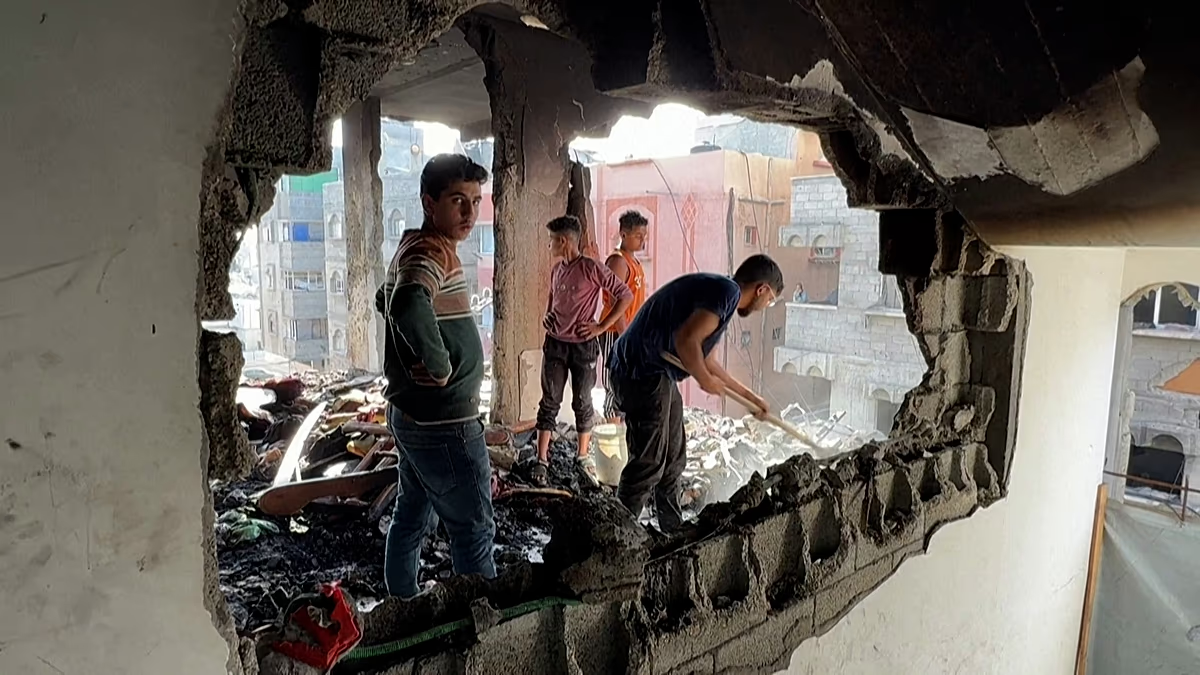
Beyond the statements and missile trails, the event had a profound human impact. For citizens in northern Israel, the sounding of sirens is a visceral, frightening experience, forcing families into shelters and disrupting the night with the palpable fear of imminent attack. Similarly, in Iran and across the Middle East, populations awaited news, aware that a single missile landing could trigger an unpredictable and devastating cycle of retaliation. This moment of crisis was a stark reminder that geopolitical conflicts are ultimately measured in human anxiety, disrupted lives, and the pervasive shadow of potential war hanging over everyday existence.
An Uncertain Future: Contained Strike or Prelude to War?
As the dust settled—both literally from intercepted debris and figuratively in the immediate aftermath—the critical question shifted from what happened to what comes next. The attack was a calibrated demonstration of Iranian capability and resolve, but Israel’s successful defense provided it with options. Would Jerusalem treat the interception as a sufficient response, or feel compelled to launch a counter-strike to re-establish deterrence? The world watched nervously, understanding that this event, while contained in its physical damage, had dramatically raised the stakes. The path forward balanced on a knife’s edge between a return to uneasy stalemate and a perilous descent into a wider, more destructive conflict that could engulf the entire region.