



Paragraph 1
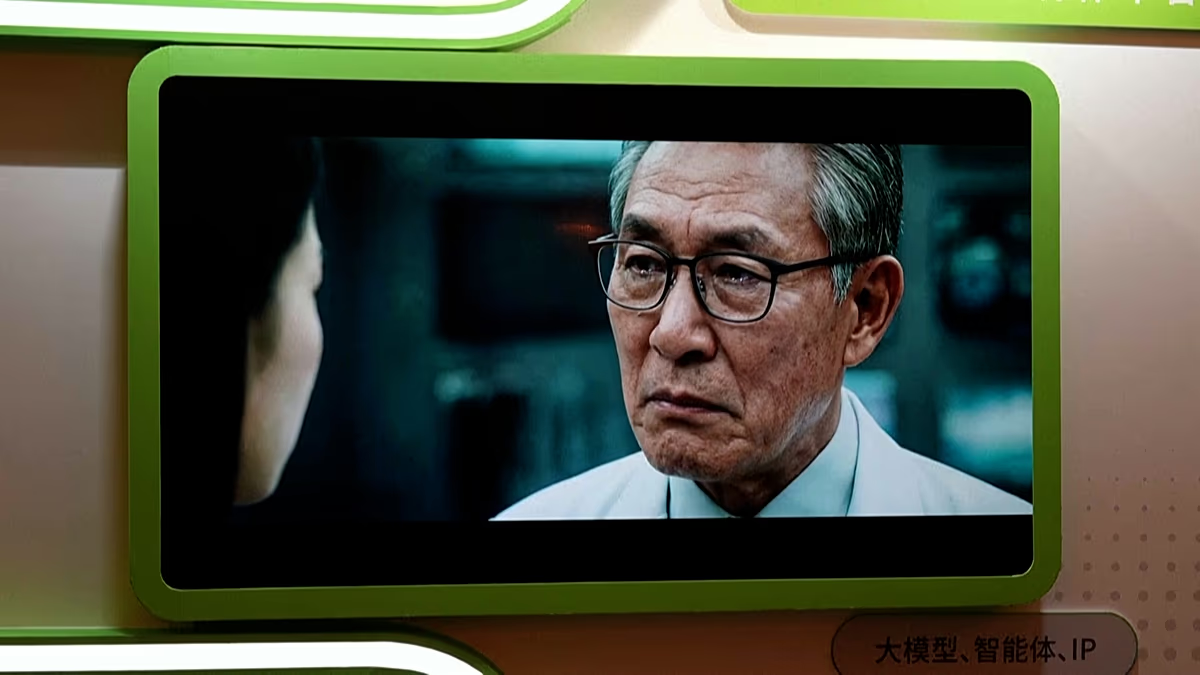
In a move that has sent shockwaves through the global entertainment industry, the Chinese streaming behemoth iQIYI has unveiled a groundbreaking and deeply contentious new platform: an AI “actor database.” Launched in late April 2026, this initiative is designed to function as a digital casting agency of the future, directly connecting film and television producers with actors who have pre-consented to having their digital likenesses—their faces, bodies, and performances—used to generate artificial characters through AI technology. This is not merely about de-aging an actor or cleaning up a stunt; it represents a fundamental shift toward creating entirely synthetic performances, potentially without the actor’s physical presence on set. The announcement has ignited a fierce and urgent debate, crystallizing the profound ethical, creative, and economic questions that have been simmering since the first inklings of generative AI. It forces us to confront a new reality where an actor’s image can become a reusable, malleable asset, separate from their living, breathing craft.
Paragraph 2
To humanize the concept, imagine a seasoned character actor, respected for their unique expressive eyes and weathered voice. In the traditional system, they are hired for a role, bring their lifetime of experience to the set, and collaborate with directors and fellow actors in a dynamic, human process. Under iQIYI’s proposed model, that same actor could license their “digital twin.” A producer, perhaps working on a sprawling fantasy series with a tight budget and schedule, could then use this twin to populate a crowd scene, play a minor villain, or even stand in for the actor in dangerous sequences—all while the actor is elsewhere. For some actors, particularly those struggling to find consistent work or those in stunt and background roles, this presents a tantalizing opportunity: a new revenue stream, a form of digital immortality, and a chance to “work” on multiple projects simultaneously in markets they could never physically access. It is framed, by its proponents, as an expansion of opportunity and a logical evolution of tools like motion capture.
Paragraph 3
However, the human cost and creative dilution form the core of the opposition. The most immediate fear is the erosion of artistry and the soul of performance. Acting is not merely the replication of facial movements; it is an empathetic, spontaneous, and deeply human exchange. It is the unscripted glance between actors that sparks magic, the physical exhaustion that lends authenticity to a scene, and the collective energy of a crew working toward a shared vision. Replacing this with an algorithm, no matter how sophisticated, risks creating technically flawless but emotionally hollow spectacles. Furthermore, for the vast majority of actors not at A-list superstar level, this system threatens to commodify them into mere data points. Their unique humanity—the very thing they sell—becomes a standardized product, potentially depressing wages and making it harder to argue for fair pay when a studio can simply license a cheaper, compliant digital replica. The guild strikes of the 2020s in Hollywood were fought precisely over these protections, and iQIYI’s database feels like an end-run around such hard-won safeguards.
Paragraph 4
The ethical labyrinth deepens when we consider consent and control. While iQIYI emphasizes that participation is voluntary, the power dynamics are fraught. Could a young, unknown actor, desperate for a break, feel truly free to refuse signing over their digital identity when offered a contract? Once an actor’s likeness is digitized, who controls its use? Could a “performance” be edited into a scene or genre the original actor finds morally objectionable? Could their digital twin be used to advertise products they would never endorse? The nightmare scenario of a deceased actor’s estate licensing their likeness for perpetuity, creating new “performances” indefinitely, moves from science fiction to a tangible business model. This system doesn’t just change how content is made; it challenges our very understanding of identity, legacy, and the right to own one’s own face and persona in the digital age.
Paragraph 5
The launch also underscores the divergent paths being taken by different global entertainment ecosystems. While Western industries, following seismic labor strikes, are cautiously implementing AI with strict guardrails and consent requirements, iQIYI’s move suggests a more aggressive, integration-focused approach in China. This could create a significant competitive imbalance. Productions utilizing such a database could operate with unprecedented speed and scale, potentially lowering costs and outpacing international competitors. This raises the specter of a “race to the bottom,” where pressure mounts on all global productions to adopt similar, cost-cutting AI labor solutions to remain competitive, thereby forcing actors worldwide into a system they may fundamentally oppose. The cultural implications are also vast, as it places a powerful Chinese tech and media giant at the forefront of defining the aesthetic and ethical norms for a key aspect of future storytelling.
Paragraph 6
Ultimately, iQIYI’s AI actor database is more than a new product; it is a catalyst. It forces a long-overdue conversation about what we, as a society, value in our art and our artists. Do we prioritize limitless, inexpensive content generation, or do we preserve the irreplaceable human collaboration at the heart of meaningful storytelling? The technology itself is neutral, but its application is not. The path forward must be navigated with extreme care, ensuring that innovation does not come at the expense of human dignity, artistic integrity, and fair labor. The answer likely lies not in outright rejection, but in building robust frameworks—informed by actors, writers, ethicists, and audiences—that ensure AI serves as a tool to augment human creativity, not replace it. The database is now live, but the most important script—the one governing how we coexist with this technology—is still being written, and its outcome will define the soul of entertainment for generations to come.