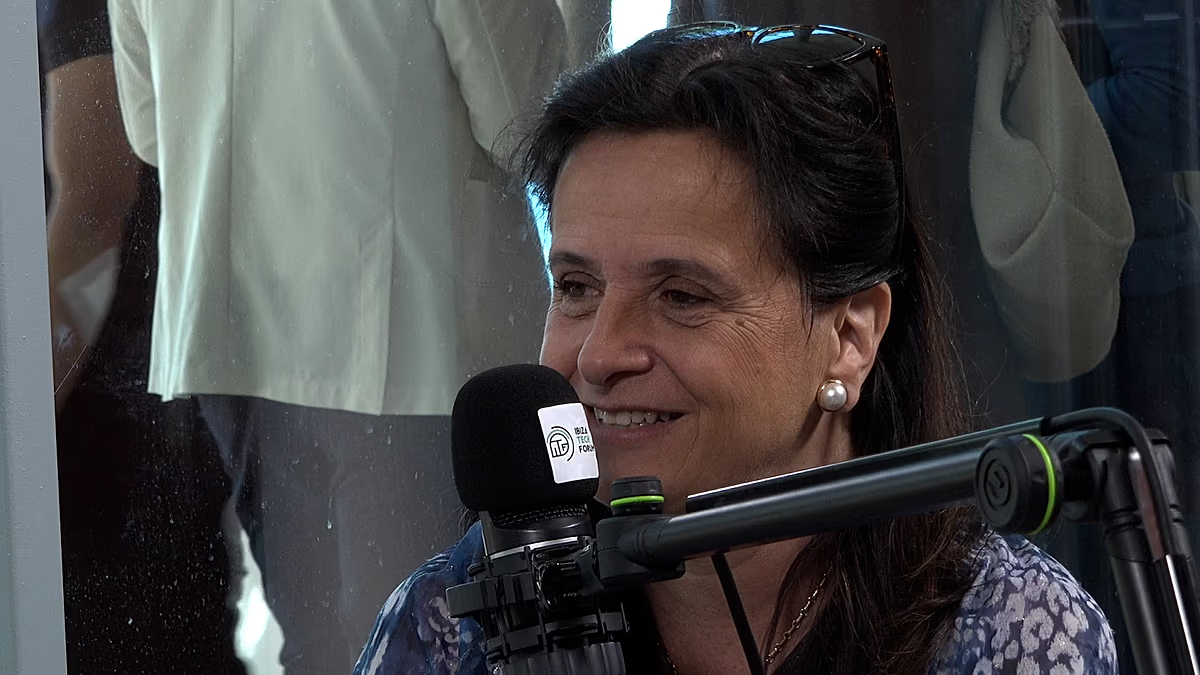

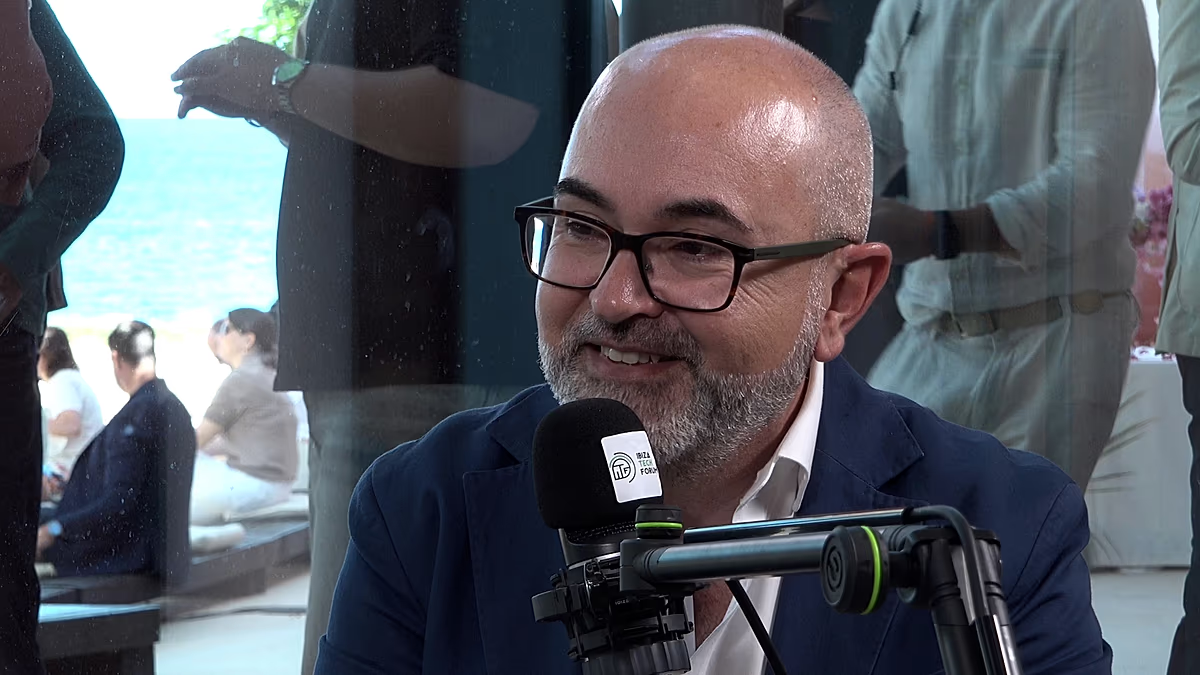


The fourth edition of the Ibiza Tech Forum has powerfully redefined the island’s global identity, moving far beyond its famed reputation as the world’s party capital. Held in the spectacular Caló de s’Oli Auditorium, the event has taken both a qualitative and quantitative leap, establishing itself as the definitive meeting point where the present and future of technology converge. This gathering signals a profound transformation, showcasing Ibiza’s ambition to become a serious player on the global tech map. The discussions and presentations illuminated how this Mediterranean island is leveraging innovation to address complex modern challenges, proving that its potential is as vibrant and dynamic as its legendary nightlife.
A central theme emerged from the forum, articulated by Sant Josep de sa Talaia Mayor Vicent Roig: the critical need for governance powered by empirical data. In a compelling institutional panel, Roig drew a clear distinction between decision-making driven by political belief and that guided by hard evidence. He envisions a municipality intricately wired with sensors, transforming local government from a reactive body into a proactive force for improving citizens’ daily lives. Real-time alerts for full rubbish containers, immediate detection of water leaks to prevent supply cuts, and the use of drones and cameras to monitor crowd flows for public safety or wildfire containment—these are not futuristic concepts but actionable applications of artificial intelligence and technology. For Roig, this sensorisation is the essential foundation for smarter, more responsive, and ultimately more trusted public administration.
This data-driven approach is particularly vital for managing Ibiza’s most precious yet challenging asset: tourism. The forum engaged deeply with the universal island dilemma of balancing economic vitality with preserving local quality of life against overcrowding. Mayor Roig offered a nuanced perspective, suggesting that the “feeling of congestion” can often outpace the reality. The true culprit, he argues, is not regulated tourism but the illegal, shadow economy—unlicensed transport, illicit tourist accommodations, and clandestine parties that operate outside any measurable framework. This “piracy” in tourism, impossible to track with traditional tools, creates the genuine sense of saturation that erodes the community’s fabric and the “Ibiza product” itself. The council’s proposed shield is technological: deploying advanced camera and drone systems to gain control over this uncontrolled activity, protecting the island’s image and ensuring its sustainability.
To secure its tech future, Ibiza must also attract global talent and investment, a task for which it holds a compelling card: an unbeatable blend of innovation and unparalleled quality of life. Sant Josep is increasingly becoming a year-round base for international families and professionals seeking safety, stability, and well-being within a creatively charged environment. However, Mayor Roig was candid about the roadblocks. The path to full digitalisation is strewn not with a lack of funds or political will, but with frustrating bureaucratic and infrastructural barriers. He pointed to the ironic yet telling example of a top-tier technology forum needing to rely on generators due to insufficient power supply. Additionally, the regulatory maze surrounding the rollout of essential fibre-optic networks poses a significant challenge. Overcoming these foundational obstacles is crucial for the island to fully harness its potential.
Far from diminishing its iconic character, Ibiza’s tech ambition is deeply intertwined with its global brand. The forum itself acts as a powerful shop window, attracting tech leaders, investors, and institutions from around the world. Mayor Roig emphasizes that the island’s nightlife and leisure expertise are not a contradiction to innovation but a parallel expression of it. The cutting-edge management of major events, the world-leading sound and lighting design, and the logistical prowess born on Ibiza’s shores are all exportable innovations. The island becomes a unique testbed—a condensed, 542-square-kilometre microcosm of the modern world where new technologies can be trialed in real-world conditions before being scaled nationally and internationally. This fusion of hedonistic energy and technological rigor creates a uniquely fertile ground for innovation.
In conclusion, the message from the Ibiza Tech Forum is clear and confident. Ibiza, and Sant Josep in particular, is open for business as a serious tech hub, offering legal certainty, an exceptional lifestyle, and a territory perfectly scaled for experimentation. The island is proactively tackling the dual mandate of the 21st century: building intelligent, data-responsive governance while sustainably managing its global appeal. By confronting issues like tourism “piracy” with smart technology and dismantling infrastructural barriers, Ibiza is not just hosting a forum about the future; it is diligently constructing that future. It aims to prove that a destination known for its ephemeral parties can also build a lasting legacy of resilience, innovation, and intelligent growth.