


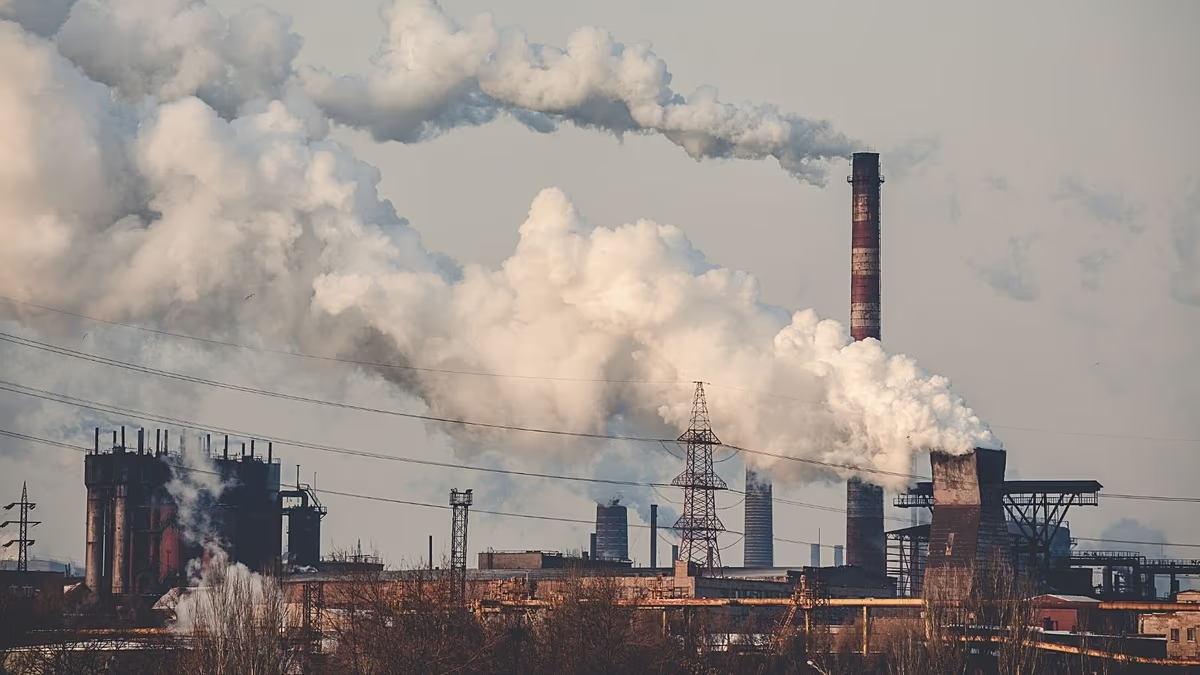
The air we breathe is no longer just an environmental concern; it has become a profound and pervasive public health crisis, directly linked to the global burden of cancer. A landmark new report from The Union for International Cancer Control (UICC), supported by the Clean Air Fund, synthesizes a vast body of recent scientific evidence to deliver a stark warning: air pollution significantly increases the overall risk of developing and dying from cancer, with its deadly reach extending far beyond the lungs. This analysis, drawing from 42 major studies published between 2019 and 2024, reframes clean air from a mere ecological goal to what Helen Clark, former Prime Minister of New Zealand, calls “a fundamental human right—one that underpins health, equity, and sustainable development.” The findings make it unequivocally clear that tackling air pollution is not only an environmental priority but a critical cancer prevention strategy, an economic investment, and an urgent act of social justice.
The report identifies fine particulate matter, known as PM2.5, as the most dangerous culprit. These microscopic particles, small enough to penetrate deep into the bloodstream, pose a grave systemic threat. Populations exposed to high levels of PM2.5 face an 11% increase in their overall risk of developing cancer compared to those in cleaner environments. While the link to lung cancer is well-established, the data reveals sharp increases in risks for cancers of the liver, colorectum, kidney, and bladder. Perhaps even more alarming are the mortality figures: long-term exposure to high PM2.5 levels is associated with a 12% increase in the overall risk of dying from cancer. This risk spikes to a 20% higher chance of death from breast cancer, 14% from liver cancer, and 12% from lung cancer. Larger pollutants (PM10) also contribute significantly, linked to a 10% higher overall cancer risk and increased death rates from lung and breast cancers. This evidence dismantles the old notion that air pollution only harms our respiratory systems, revealing it as a catalyst for oncogenic processes throughout the body.
Tragically, the dangers of this polluted air are not borne equally. The report highlights a profound and disturbing inequality in exposure and vulnerability. Women and children in many parts of the world are disproportionately exposed to toxic smoke from solid fuels used for cooking and heating indoors. As a result, women facing this household air pollution endure a staggering 69% higher risk of lung cancer, alongside increased risks for cervical cancer. Furthermore, the heaviest burden falls on people in low- and middle-income countries, who experience the highest pollution levels while having the fewest resources to mitigate it or access timely, quality cancer care. This inequity is not confined to national borders; even within wealthier regions like Europe, the poorest communities are consistently the most affected by polluted air. As Cary Adams, CEO of the UICC, powerfully states, “It is a risk people cannot opt out of, and one that disproportionately affects women, children, and people living in poverty.” This creates a vicious cycle where poverty increases exposure, and the resulting health burdens deepen poverty.
In the face of this clear and present danger, the report issues a compelling call for stronger, more coordinated action from governments, health systems, and the global community. While recognition of the air pollution-cancer link is growing, it has not yet translated into the comprehensive policies required. The authors, including Dr. Elisabete Weiderpass of the International Agency for Research on Cancer (IARC), acknowledge that more research is needed—to better quantify risks for cancers beyond the lung, to understand the role of non-particulate pollutants, and to unravel the precise biological mechanisms at play. However, they issue a crucial caveat: the cancer community and policymakers cannot afford to wait for perfect evidence. “The harms of air pollution are already clear, and the benefits of reducing exposure are well documented,” Weiderpass emphasizes, noting proven benefits for cardiovascular health, childhood development, and conditions like dementia alongside cancer prevention.
The path forward requires a multi-pronged approach rooted in the precautionary principle. The report advocates for a significant expansion of scientific evidence, specifically tracking air pollution’s role in a wider array of cancers. Concurrently, it calls for the establishment of more robust, widespread air quality monitoring networks and the strengthening of air quality standards to align with the latest World Health Organization guidelines, which many nations currently fail to meet. Public awareness must also be elevated so that individuals understand this invisible risk, and healthcare systems must be equipped to consider environmental factors in patient care and advocacy. Ultimately, this means integrating clean air strategies directly into national cancer control plans and viewing investments in renewable energy, clean transportation, and sustainable urban planning as direct investments in public health and cancer prevention.
This report serves as a crucial turning point in our understanding of cancer etiology. It moves the discussion of air pollution from the periphery of environmental health to the center stage of oncology. The data presents an irrefutable case: every breath of polluted air carries a measurable, and inequitably distributed, carcinogenic risk. Addressing this is not a distraction from the fight against cancer, but a vital front in that very battle. By championing the right to breathe clean air, we are taking a monumental step toward preventing countless cases of cancer, alleviating untold human suffering, and building a more just and healthy world for all. The science is clear, the injustice is glaring, and the time for decisive action is now.