


The ongoing Ebola outbreak in the eastern Democratic Republic of the Congo, while still a serious public health crisis, is now understood to be significantly smaller than initial assessments suggested. As of late May, the World Health Organization confirmed 321 confirmed cases and 116 suspected cases, a striking revision downward from earlier estimates that had exceeded 1,000 potential infections. This adjustment is not a sign of the outbreak magically vanishing, but rather a result of rigorous laboratory testing. As WHO spokesperson Christian Lindmeier explained, many suspected cases have been “cleared out” after testing revealed other illnesses, or simply fevers unrelated to Ebola. This more precise picture, while sobering, allows health authorities to focus their resources more effectively. Tragically, the human toll remains severe, with 48 deaths reported in the DRC and a further nine cases and one death in neighboring Uganda, highlighting the ever-present risk of cross-border spread.
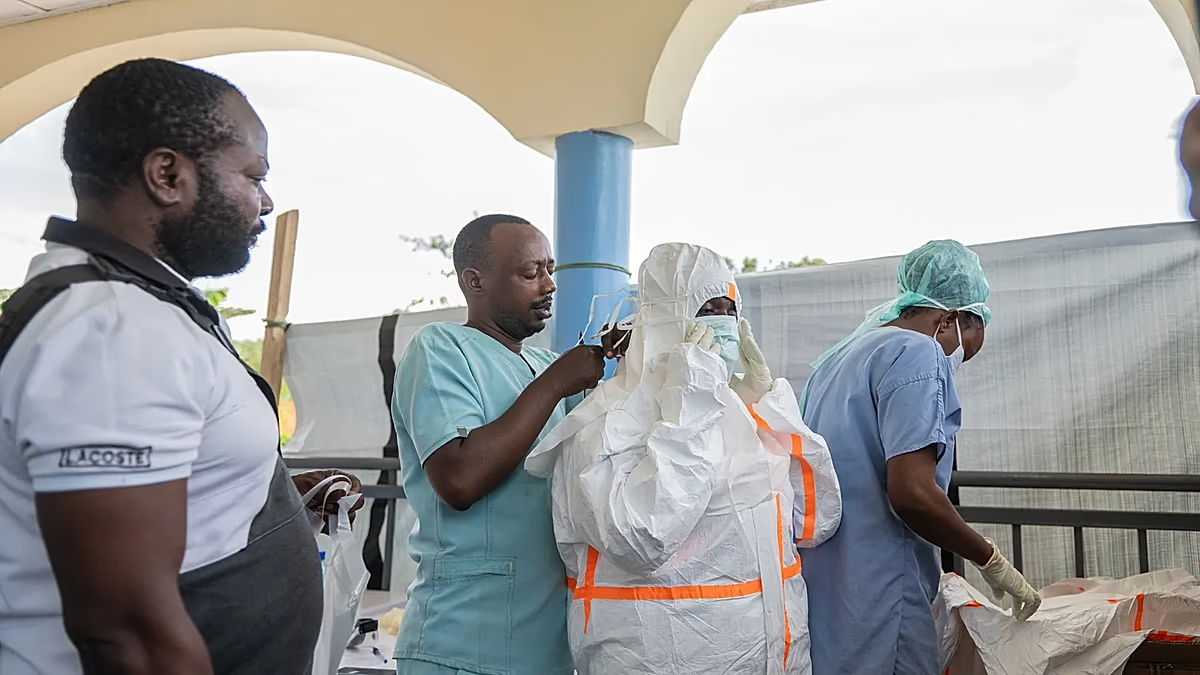
However, this outbreak presents a unique and formidable challenge because it is caused by the Bundibugyo virus, a rarer strain of Ebola. Unlike the more common Zaire ebolavirus, for which effective vaccines and treatments now exist, there are no approved, targeted medical countermeasures for the Bundibugyo strain. This absence complicates the response enormously, forcing reliance on foundational public health measures. The Congolese health ministry has emphasized that containing the virus hinges on core principles: the early detection and rapid isolation of cases, meticulous tracking of everyone who had contact with a patient, ensuring safe burial practices to prevent transmission from the deceased, and strengthening infection control in often-remote health facilities. These tasks are monumental in the best circumstances, but in a region marked by instability and limited infrastructure, they become a Herculean effort.
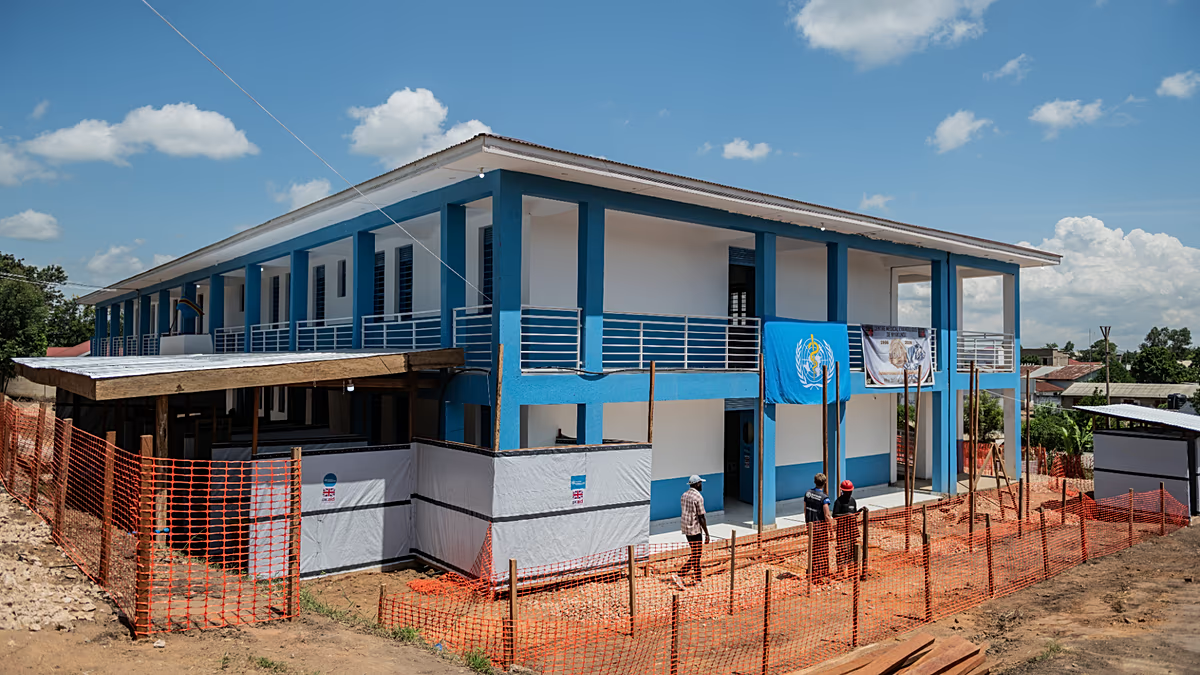
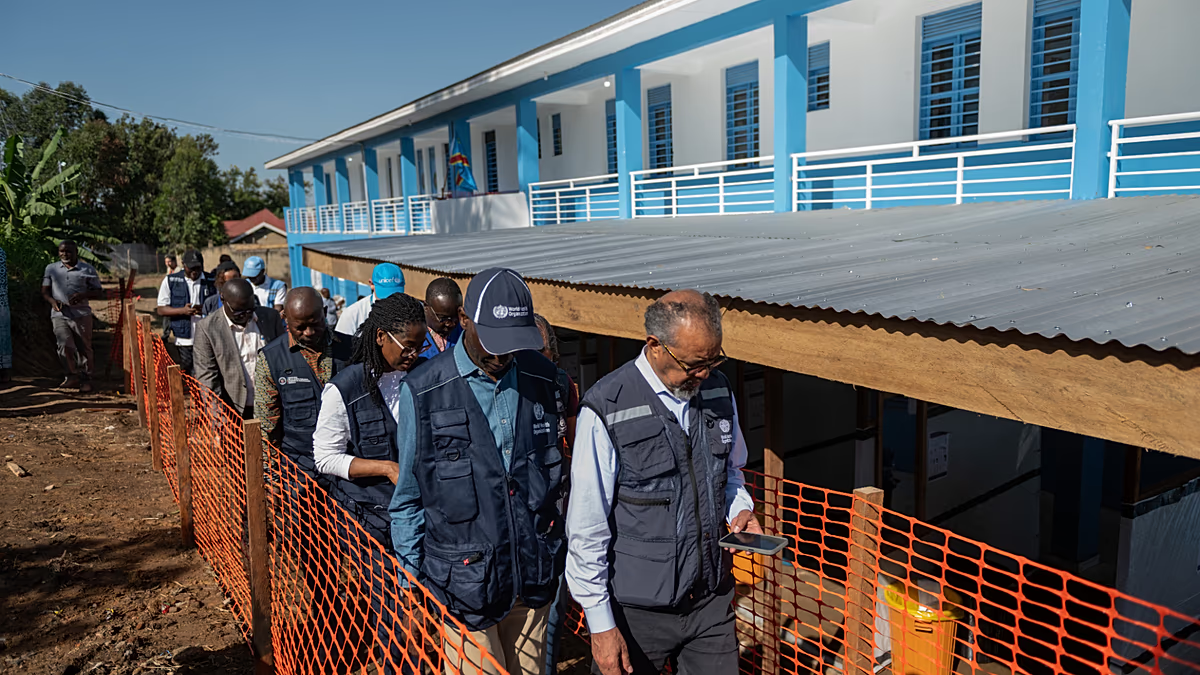
Amidst the grim statistics, there are powerful glimmers of hope demonstrating that an Ebola diagnosis is not an inevitable death sentence. During a visit to the city of Bunia, at the heart of the outbreak, WHO Director-General Dr. Tedros Adhanom Ghebreyesus celebrated the recovery of five patients. “Of course, we’re still working on vaccines and treatments, but that doesn’t mean that people cannot recover from Ebola,” he stated, underscoring the critical importance of supportive medical care. The opening of a new Ebola treatment center in Bunia is a vital step in providing that care. These recovery stories are profoundly human victories, offering tangible proof to affected communities that seeking treatment early can lead to survival, thereby building essential trust between responders and a justifiably fearful population.
Recognizing the strategic gap posed by the lack of a Bundibugyo-specific vaccine, the global health community is mobilizing with urgency. The Coalition for Epidemic Preparedness Innovations (CEPI) recently announced it will “urgently accelerate” the development of three promising investigational vaccines, committing up to €53 million to the effort. These candidates, being developed by The International AIDS Vaccine Initiative, Moderna, and the University of Oxford, and slated for manufacture at the Serum Institute of India, represent the most advanced prospects identified by the WHO. This accelerated portfolio approach spreads the risk and increases the chances of success, aiming to have a deployable tool against future outbreaks of this specific virus strain.
The revised, lower case numbers, while encouraging, must not lead to complacency. They reflect a more accurate snapshot, not necessarily a rapidly declining trend. The core challenges of containing any Ebola outbreak—especially one caused by a rare strain in a difficult environment—remain fully in place. Each recovered patient is a success, but each new case represents a potential chain of transmission that must be meticulously broken. The simultaneous focus on immediate, on-the-ground public health action and longer-term vaccine development illustrates the dual-track strategy required to manage both the current emergency and future threats.
Ultimately, the story of this outbreak is one of nuanced reality. It is a tale of a slightly less overwhelming scale than first feared, yet one complicated by the specific nature of the virus involved. It is a narrative of loss and grief for dozens of families, but also of resilience and recovery for others. It highlights both the vulnerabilities of our global health systems when faced with rare pathogens and the remarkable speed at which scientific and humanitarian alliances can form to address them. The path forward demands sustained international support for the DRC’s heroic health workers, continued vigilance at borders, and unwavering commitment to the research that will one day equip us with the vaccines to prevent such tragedies altogether.