



A Mask of Gentleness, A Heart of Darkness: The Chilling Double Life of YouTuber Stephen McCullagh
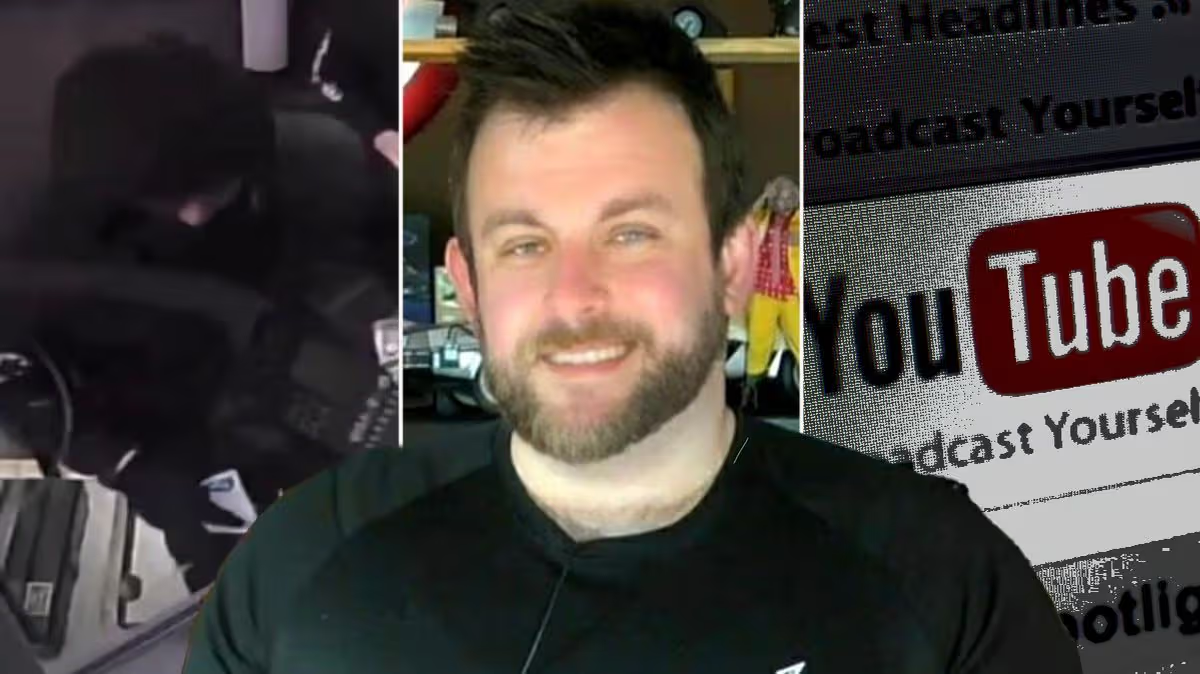
In the curated world of online fandom, Stephen McCullagh presented himself as the ultimate harmless enthusiast—a nerdy, self-described “man-child” whose passion for Doctor Who and Robot Wars endeared him to over 40,000 subscribers. His videos, particularly those detailing the intricacies of Sonic Screwdrivers, were a beloved touchstone for a tight-knit community. To his followers, he was gentle, pedantic, and softly spoken; a figure they delighted in meeting at Comic-Con. This carefully constructed persona made the horrific truth all the more devastating. In December 2022, the 36-year-old Northern Irish YouTuber meticulously plotted and executed the “savage” and “prolonged” murder of his pregnant girlfriend, 32-year-old Natalie McNally, brutally shattering the illusion of the kind-hearted creator his fans thought they knew.
McCullagh’s crime was distinguished by a coldly calculated and duplicitous scheme to manufacture an alibi. In the week before Christmas, he pre-recorded a six-hour gaming video, chillingly titled “Violent Night,” which he later advertised across his social channels as a live stream. As unsuspecting fans, including Natalie herself from her home in Lurgan, tuned in to watch him seemingly play a violent video game, McCullagh was actually traveling by bus to her residence, wearing a disguise. The pre-recorded stream was laced with secret, sinister references to Natalie and to killing women within the game—a dark foreshadowing of his real-world actions. That night, he took the life of Natalie, who was 15 weeks pregnant with their child, in a sustained attack. He then leveraged his fabricated digital presence to initially mislead police, claiming the stream proved he could not have been at the scene.
The revelation of McCullagh’s double life sent shockwaves of disbelief and betrayal through his online community. Followers like Aidan, who had grown up watching every video, expressed utter shock upon learning the news, scrolling past a news article with a sense of surreal denial that the friendly figure from their screen was capable of such brutality. Another viewer, who had watched the faked stream, noted that McCullagh’s claims of “technical glitches” preventing interaction had seemed plausible given his known issues with equipment. The collective sentiment was one of profound violation; this was a person many felt they almost knew, and his actions felt like a personal betrayal. As one former fan summarized, the emotional journey was one of “shock, denial, kind of betrayal as well.” Notably, the community united in condemnation, with no one rushing to his defense, a small solace amidst the horror.
Behind McCullagh’s benign online facade lay a pattern of controlling and abusive behavior, as revealed during his five-week trial at Belfast Crown Court. An ex-girlfriend, whom he had left just weeks before meeting Natalie on a dating app, testified that he had beaten her and, after she suffered a stillbirth, secretly recorded her private counseling sessions—recordings later found by police on his computer. This profile of a man obsessed with control and surveillance extended to his actions after Natalie’s murder. Having “discovered” her body the next day and performed for friends by being “inconsolable,” he was welcomed by Natalie’s grieving family, even being allowed private time with her body at the wake. In a grotesque act of manipulation, he later pretended to forget his phone in their home, leaving it behind to record their conversations and gauge their suspicions.
McCullagh’s web of lies and performative grief extended to his public social media posts. Mere days after the murder, he posted a black-and-white photograph to Instagram, the same platform used to advertise the “Violent Night” stream, captioned with a dramatic declaration of unparalleled suffering and loss. “2022 was the worst year of my life… I’ve just lost too much,” he wrote, presenting himself as a victim while knowing he was the perpetrator. This calculated performance continued as he allegedly posed as a journalist to probe police about the investigation. Forensic psychologist Dr. Ruth Tully analyzed this behavior, suggesting the extreme planning and fantasy evident in the crime, coupled with a history of recording partners and alleged assaults, pointed to “extreme antisocial and callous personality traits” and a jealous need for control.
Ultimately, the digital forensics that once served his alibi became his undoing. Experts proved the “Violent Night” stream was recorded days in advance, dismantling his fabricated timeline. In March 2024, Stephen McCullagh was convicted and sentenced to life imprisonment, with a minimum term of 31 years. For Natalie McNally’s family and friends, and for the fans who once found joy in his content, the sentence closes a legal chapter but cannot erase the trauma or the chilling reminder of how a mask of ordinary gentleness can hide monstrous cruelty. The case stands as a stark testament to the devastating reality of fatal domestic abuse and the profound violation felt when a trusted figure is revealed to be a predator.