


Paragraph 1
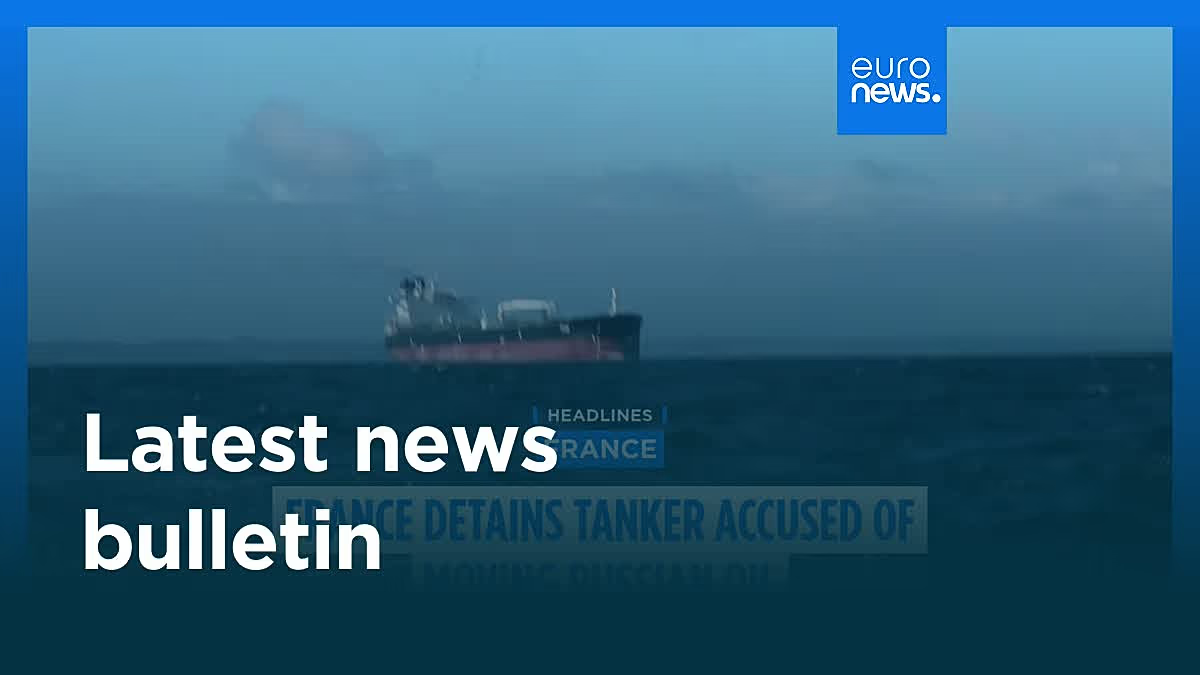
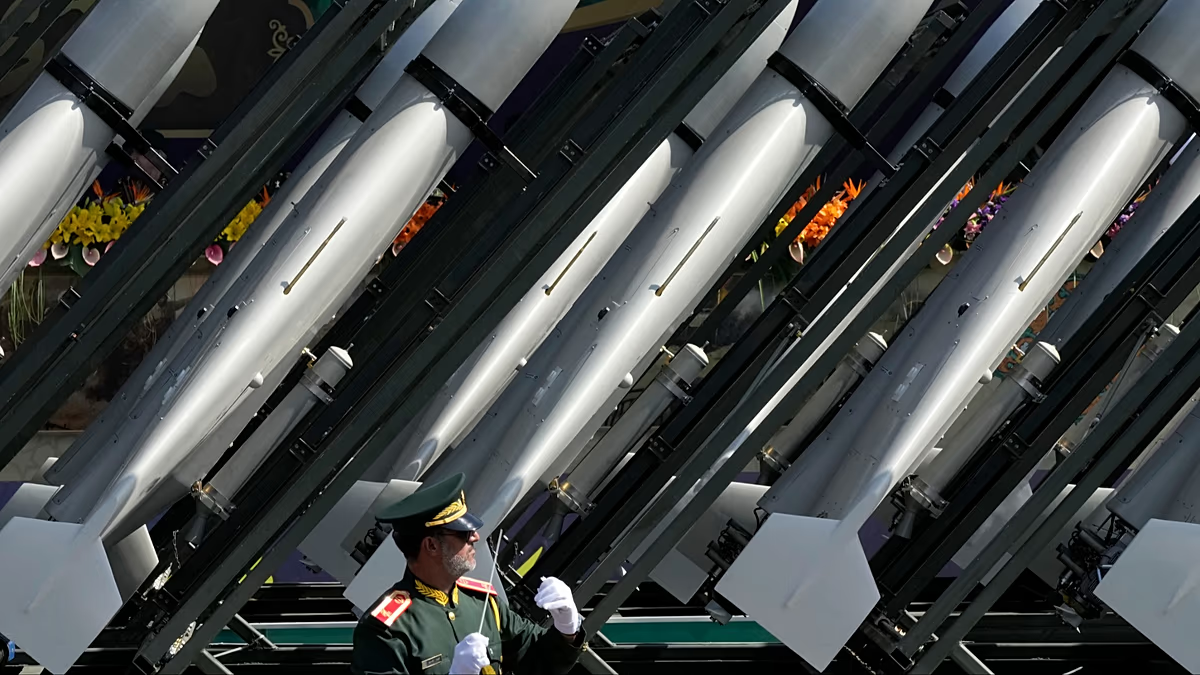
Tensions in the Persian Gulf escalated sharply this week, triggering a direct exchange of military strikes between the United States and Iran. The cycle of violence began when Iran’s paramilitary Revolutionary Guard launched missile attacks targeting U.S. allied nations, specifically aiming for the headquarters of the U.S. Navy’s 5th Fleet in Bahrain and another location believed to be in Kuwait. According to the U.S. military, this offensive was largely ineffective; missiles aimed at Kuwait reportedly malfunctioned and fell apart in flight, while those headed for Bahrain were successfully intercepted by combined U.S. and Bahraini defense forces. Iran stated its attack was a retaliatory measure for an earlier U.S. strike that damaged an oil tanker attempting to reach Iranian shores, highlighting the ongoing, volatile tit-for-tat dynamics in these crucial shipping lanes.
Paragraph 2
In response to the Iranian barrage, the U.S. military carried out its own retaliatory strike, targeting an Iranian military facility on Qeshm Island in the strategic Strait of Hormuz. This U.S. action, described as a precise strike on a ground control station, underscores the immediate and heightened risk of a broader confrontation. The exchange occurred against a deeply troubling backdrop: a breakdown in diplomatic communications regarding a ceasefire in the ongoing, larger conflict between Iran and a U.S.-Israeli coalition. Media reports indicated Iran had cut off talks with international mediators, a move allegedly fueled by recent escalations in Lebanon involving Iranian-backed Hezbollah and Israel. This suggests Iran is deliberately linking the different regional conflicts, insisting that any truce must address hostilities across the board.
Paragraph 3
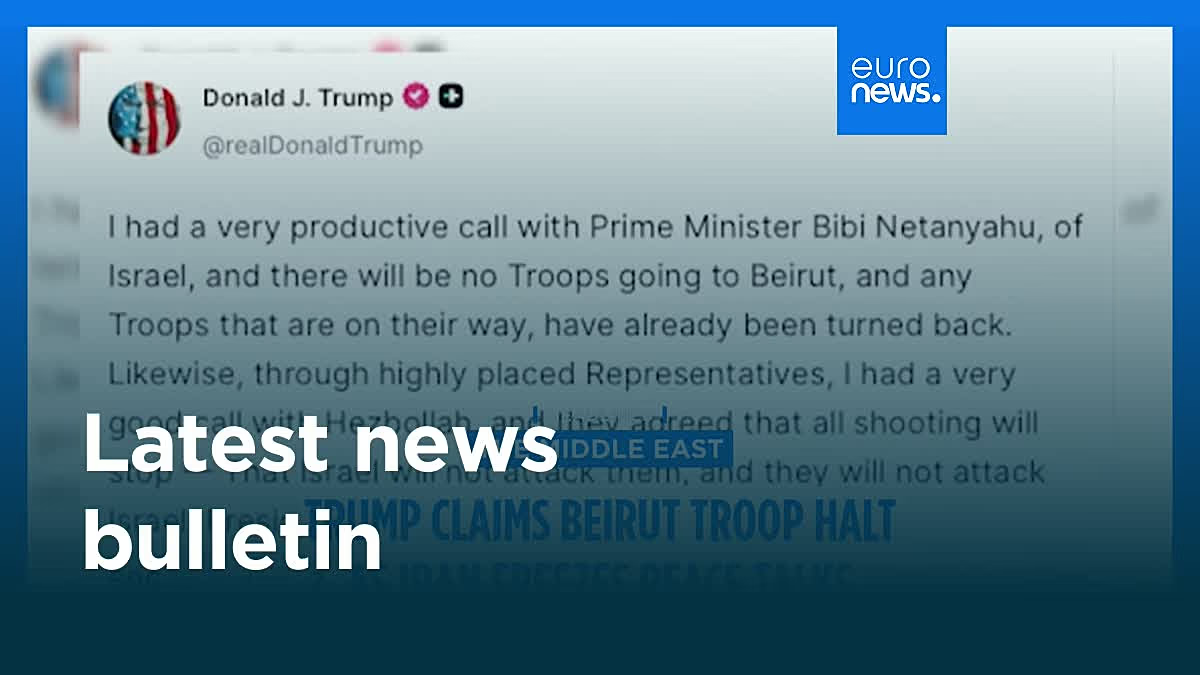
The reported diplomatic freeze, however, was publicly and vehemently denied by U.S. President Donald Trump. Dismissing the claims as “false and erroneous,” Trump asserted that conversations with Iranian officials were ongoing continuously. In a social media statement, he framed the dialogue as persistent but uncertain, directly addressing Iran with a blunt ultimatum: “It’s time, one way or another, for you to make a deal.” This contradiction between reported actions and public statements reveals the fragility and opacity of the diplomatic process. While U.S. Secretary of State Marco Rubio expressed cautious optimism about nuclear negotiations during congressional testimony, he acknowledged no guarantee of an acceptable outcome, pointing to the steep challenges ahead.
Paragraph 4
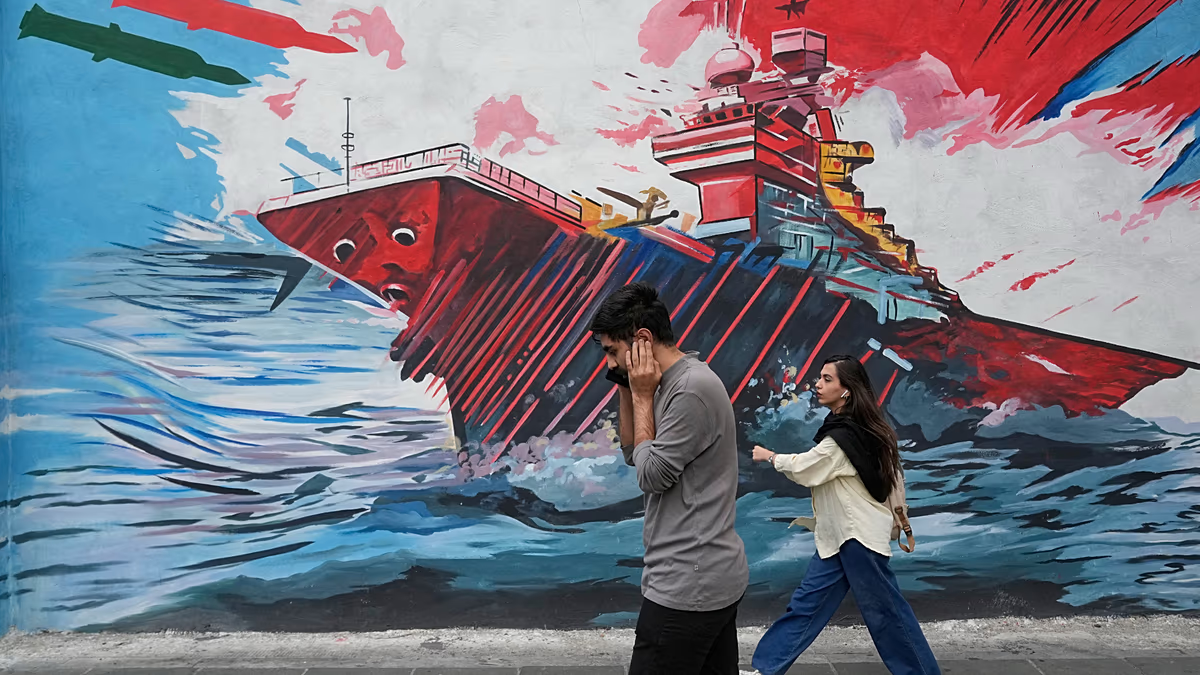
Iran’s strategy appears to be one of mounting multifaceted pressure on the United States. By launching military strikes and allegedly suspending ceasefire talks, Tehran seeks leverage in negotiations aimed at ending the wider war and, critically, loosening its “chokehold” on the Strait of Hormuz. This vital waterway is the conduit for a significant portion of the world’s seaborne oil, and control over it represents Iran’s most powerful geopolitical card. The latest hostilities demonstrate how Iran uses kinetic action to underscore its capacity to disrupt global energy markets and regional stability, thereby attempting to force diplomatic concessions from the U.S. and its allies.
Paragraph 5
Complicating the situation further is the interconnected nature of regional conflicts. The fighting between Israel and Hezbollah in Lebanon, while technically a separate theater, has become inextricably linked to the Iran-U.S. war. Iran explicitly demands that any ceasefire must also calm the front in Lebanon, directly tying the fate of its negotiations with Washington to the actions of its ally and Israel. This linkage creates a perilous domino effect, where an escalation in one zone automatically impacts the other. Reports of a tense phone call between President Trump and Israeli Prime Minister Benjamin Netanyahu, in which Trump allegedly used strong language to criticize Israel’s military advances deeper into Lebanon, highlight the strain this connection places on the U.S.-Israel alliance and the overall coherence of the coalition’s strategy.
Paragraph 6
We are now witnessing a dangerous convergence of military posturing and fractured diplomacy. The direct U.S.-Iran strikes mark a serious intensification, moving beyond proxy engagements to targeted attacks on each other’s assets. Simultaneously, the diplomatic channels meant to contain the wider war are under severe stress, with conflicting messages about their status. Iran’s tactic of weaving together the Gulf war and the Lebanon conflict creates a complex knot that is immensely difficult to untangle, requiring synchronized de-escalation on multiple fronts. The coming days will be critical in determining whether the parties can step back from the brink through renewed dialogue, or if the cycle of attack and counter-attack will pull the region into a wider, more devastating confrontation. The stability of the Middle East and the security of global energy supplies hang in the balance.