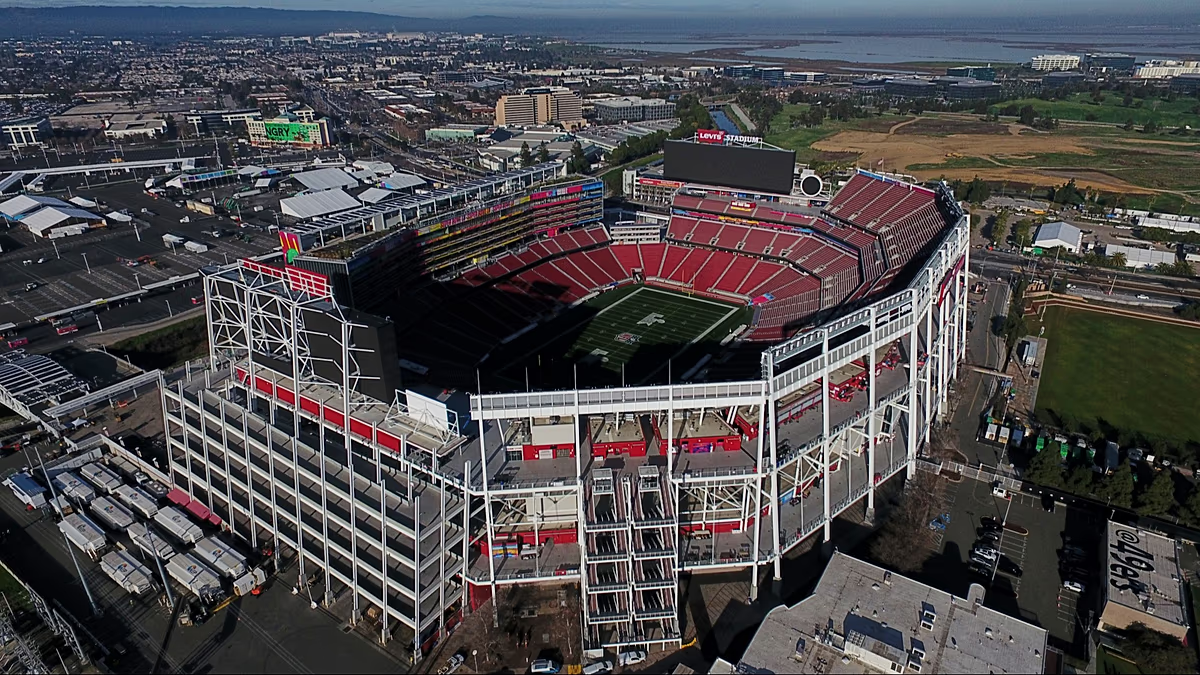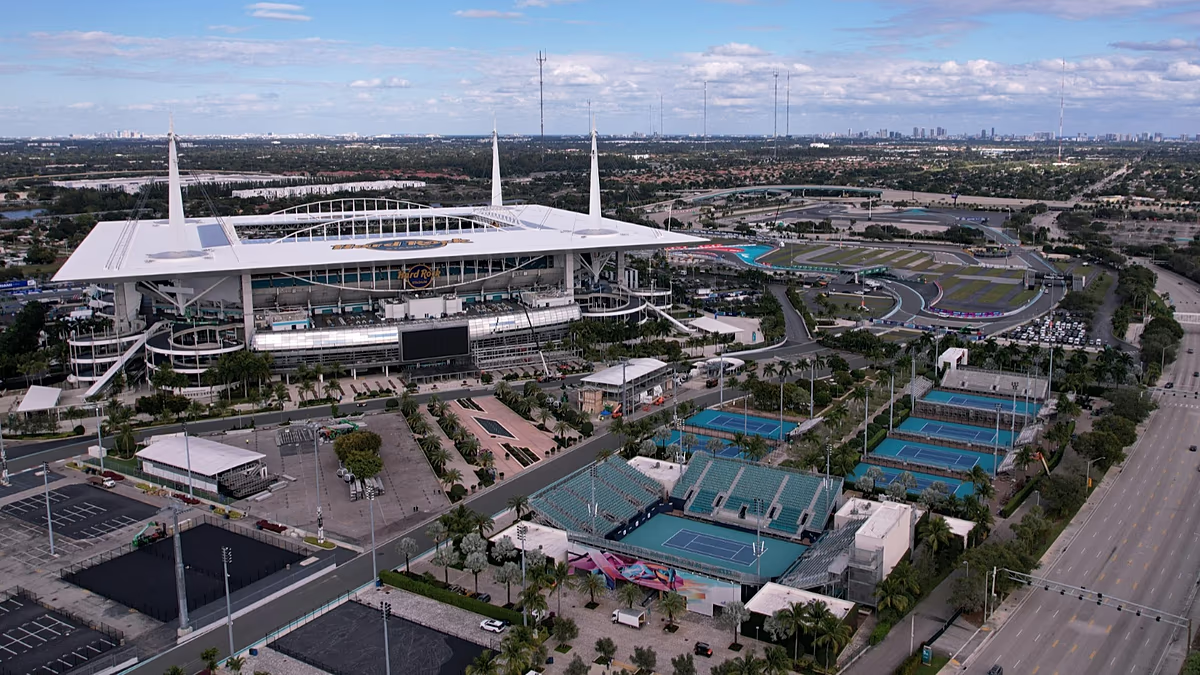
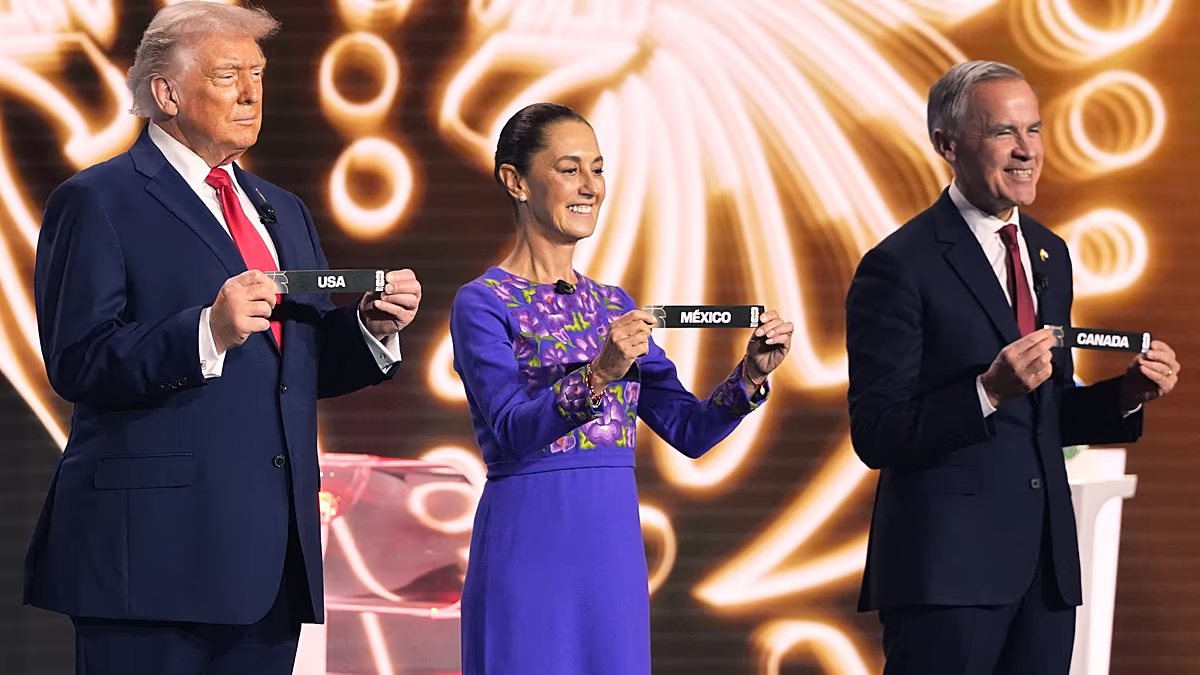



The 2026 FIFA World Cup, set to be hosted across Canada, Mexico, and the United States, is poised to become a monumental catalyst for tourism across North America. According to a comprehensive analysis by the World Travel & Tourism Council (WTTC), the tournament is expected to deliver a powerful and sustained boost to the travel economies of all three nations, further solidifying the continent’s position as a premier global destination. The event is forecasted to significantly increase tourism’s contribution to the overall GDP of the region, with projections indicating particularly strong growth for Canada at 6.4%, followed by Mexico at 2.4% and the United States at 2.1%. Beyond the immediate influx of fans, the WTTC frames the World Cup as a strategic, once-in-a-generation opportunity to accelerate long-term development, enhance air connectivity between host cities, and foster unprecedented cross-border cooperation in crafting seamless travel experiences.
The WTTC emphasizes that realizing this potential requires more than just hosting the games; it demands sustained investment and forward-thinking policy. Gloria Guevara, President and CEO of the WTTC, calls the event a “unique opportunity for North America to accelerate tourism growth, strengthen connectivity and showcase the region to millions of travellers around the world.” To capitalize on this moment and maintain international competitiveness long after the final match, the council highlights critical areas needing attention. These include continued development of aviation capacity, modernization of tourism infrastructure, embracing digital innovation for smoother visitor experiences, and streamlining border entry processes to handle the expected surge in international travelers efficiently and welcomingly.
Interestingly, as the region looks ahead to the World Cup boost, recent performance data reveals Mexico as the current frontrunner in North American tourism growth. The WTTC’s 2026 Economic Impact Report shows that in 2025, Mexico outperformed its neighbors across key metrics. Its tourism sector GDP expanded by 1.8%, surpassing growth in the U.S. (0.9%) and Canada (1.2%). More strikingly, Mexico saw a 3.5% increase in spending by international visitors, while both the U.S. and Canada experienced declines of 4.6% and 3.5%, respectively. International arrivals also surged in Mexico by 6.1%, contrasting with decreases in the U.S. and Canada. This strong positioning provides Mexico with a robust foundation upon which to build its World Cup strategy.
The anticipated impact of the tournament extends far beyond national economies into the vital realm of job creation. The WTTC estimates that in 2026, the travel and tourism sector will support a staggering 30.9 million jobs across North America. This figure represents 12.7% of total employment in the region, underscoring the industry’s role as a major employer that sustains families and communities. From hospitality and transportation to retail and event management, the World Cup is expected to generate a wide array of employment opportunities, creating a lasting economic legacy that will benefit host cities for years to come. This human element—the careers and livelihoods supported—is a central part of the tournament’s promised value.
This North American boom is set against the backdrop of a powerful global recovery for travel and tourism. The WTTC projects that in 2026, the sector will contribute nearly $12 trillion to the world economy, an amount approaching 10% of global GDP. Furthermore, it is expected to sustain 376 million jobs worldwide. The 2026 World Cup, as one of the planet’s most-watched sporting events, will be a significant driver of these figures, channeling global attention and spending towards the host continent. It symbolizes a peak moment in the sector’s resurgence, demonstrating its enduring power to connect cultures, generate prosperity, and create shared international experiences on a massive scale.
Ultimately, the 2026 FIFA World Cup represents far more than a football championship; it is a transformative economic and cultural project for North America. The collaboration between Canada, Mexico, and the United States presents a unique model of shared hosting, with the potential to redefine regional travel and create a cohesive, world-class destination corridor. By leveraging this spotlight, investing wisely in infrastructure and visitor experience, and building on the current strengths demonstrated by leaders like Mexico, the continent can ensure the tournament’s legacy is not confined to the pitch. The goal is to convert the fleeting energy of the games into enduring growth, stronger connections, and a vibrant, welcoming tourism landscape that attracts visitors for decades to follow.