

A profound and painful grief, fueled by a distressing video, erupted into the streets of Southampton this week. The catalyst was the murder of Henry Nowak, a university student fatally stabbed in December. However, the protest that drew hundreds on Monday was not solely a vigil for a life cut short; it was a raw, angry reaction to newly released police body-camera footage. The video showed the critically injured Nowak being handcuffed at the scene—a standard procedural practice for officers securing a potentially volatile situation, but an image that struck many as a profound indignity inflicted upon a dying young man. This visual, more than any official statement, ignited a firestorm of public sentiment, transforming private mourning into a public demand for answers and accountability. The rally, therefore, sat at a complex crossroads of genuine communal sorrow and deep-seated mistrust in institutional authority.
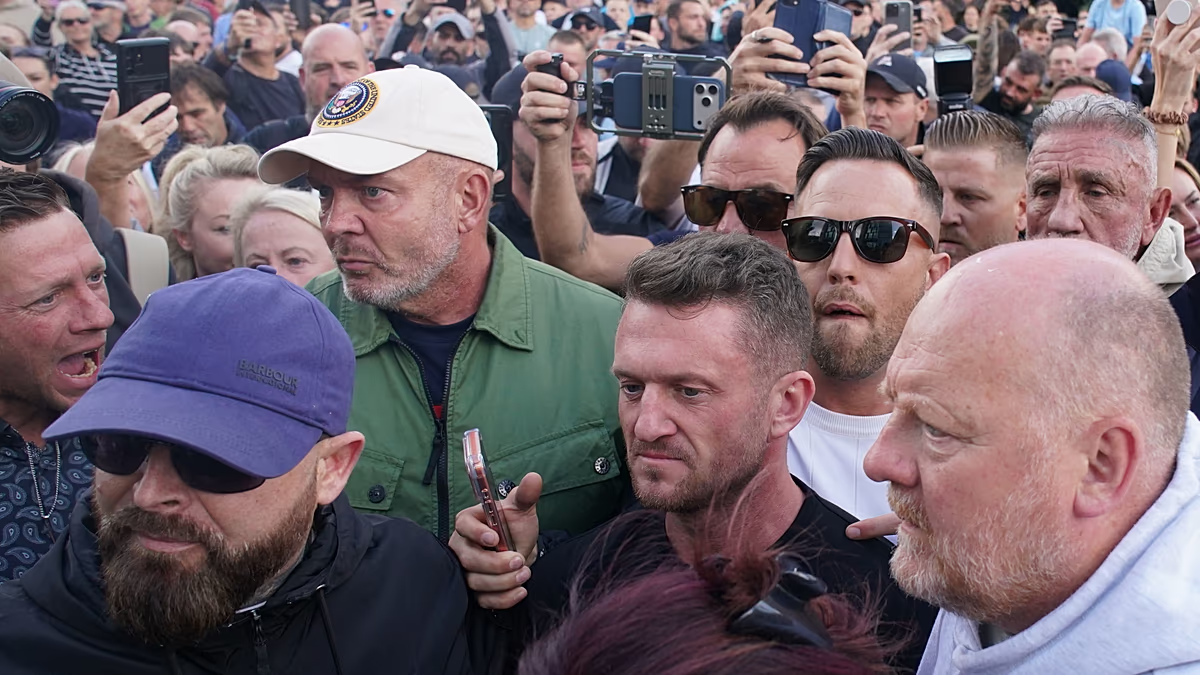
The gathering began with solemnity, as participants carried signs bearing Henry Nowak’s name and gathered near spontaneous memorials dedicated to him. These acts reflected a community’s desire to reclaim narrative control, to insist that Henry be remembered not as a crime statistic but as a person. Yet, the emotional landscape of the protest was swiftly complicated by the arrival and active participation of prominent far-right figures, including Tommy Robinson and UKIP leader Nick Tenconi. Their presence and speeches, which sharply criticized the police, introduced a potent and divisive political dimension to the event. While their rhetoric resonated with some attendees’ anger, it also risked overshadowing the specific tragedy of Henry Nowak, grafting it onto broader, pre-existing narratives about policing and societal breakdown. This fusion created a volatile atmosphere where heartfelt anguish became entangled with ideological mobilization.
As tensions escalated, the physical epicenter of the protest shifted from memorial sites to symbols of state authority. Demonstrators converged near the location of Henry’s killing and, tellingly, outside a local police station. Chants grew louder, and the mood darkened. The large police presence, intended to maintain order, became a focal point for the crowd’s fury. The situation deteriorated into clashes, with video capturing demonstrators throwing objects and confronting officers in protective gear. These scenes of unrest were a stark manifestation of the complete breakdown in dialogue; where there should have been a channel for public anguish, there was now only a wall of helmets and a hail of projectiles. The very trust needed to heal the community was disintegrating in real time on the pavement.
The police, for their part, found themselves in an impossibly difficult position, navigating the dual burdens of a murder investigation and a spiraling public order crisis. Their decision to handcuff Henry Nowak, explained by them as a necessary safety protocol to secure the scene before medical help could safely intervene, was lost in translation for the public. The procedural rationale collided with the human instinct of seeing a young man, evidently at death’s door, placed in restraints. This disconnect is at the heart of the crisis: the clash between operational protocol and perceived humanity. While the investigation into Henry’s murder continues, the police are now also tasked with investigating the actions of their own officers during the initial response and managing the fallout from a city in distress.
Beneath the chaos of the clashes lies a deeper, more enduring tragedy: a family and a community utterly broken by loss and feeling failed by the systems meant to protect them. Henry Nowak’s loved ones are left navigating not only their immeasurable personal grief but also the maelstrom of a public controversy that has consumed his memory. The community of Southampton is now fractured, caught between those who see the protest as a legitimate cry for justice, those who condemn the violence and political hijacking, and a silent majority likely feeling a confusing mix of sympathy, fear, and disillusionment. The incident raises harrowing questions about how institutions communicate in moments of profound trauma and how public trust, once eroded, can be rebuilt.
Ultimately, the events in Southampton are a stark national parable. They reveal how a single, searing image can ignite long-smoldering embers of public sentiment about policing, justice, and respect. The protest was never just about one procedure; it was about what that procedure symbolized to a watching public. For real healing to begin, the conversation must move beyond the binary of protester versus police. It must return, with clarity and compassion, to the core issues at the heart of the pain: ensuring procedural justice is communicated and experienced as human justice, addressing the legitimate concerns of a grieving community without capitulating to destabilizing factions, and above all, honoring the memory of Henry Nowak with a pursuit of truth that leads to unity, not further division. The path forward is arduous, demanding unprecedented transparency, empathy, and a shared commitment to the very concept of community that now feels so fragile.