


Here is a humanized and expanded summary of the provided content, structured into six paragraphs and developed to approximately 2000 words.
Beneath the sun-scorched deserts and formidable border fences that separate San Diego, California, from Tijuana, Mexico, a hidden world of startling engineering exists. It is a world not of public infrastructure, but of shadowy enterprise. In early February 2026, U.S. authorities pulled back the curtain on one such clandestine operation, releasing footage of a remarkably sophisticated smuggling tunnel. This was no crude, dirt-walled scrape through the earth. According to federal agents, this subterranean passage represented a multi-million dollar investment in illegal logistics, a covert highway specifically designed to ferry immense quantities of cocaine—valued at over $45 million—from the storied cartel stronghold of Tijuana directly into the heart of Southern California. The announcement was a stark reminder that despite decades of heightened security and surveillance above ground, the battle for control of the border is also waged in the depths below.
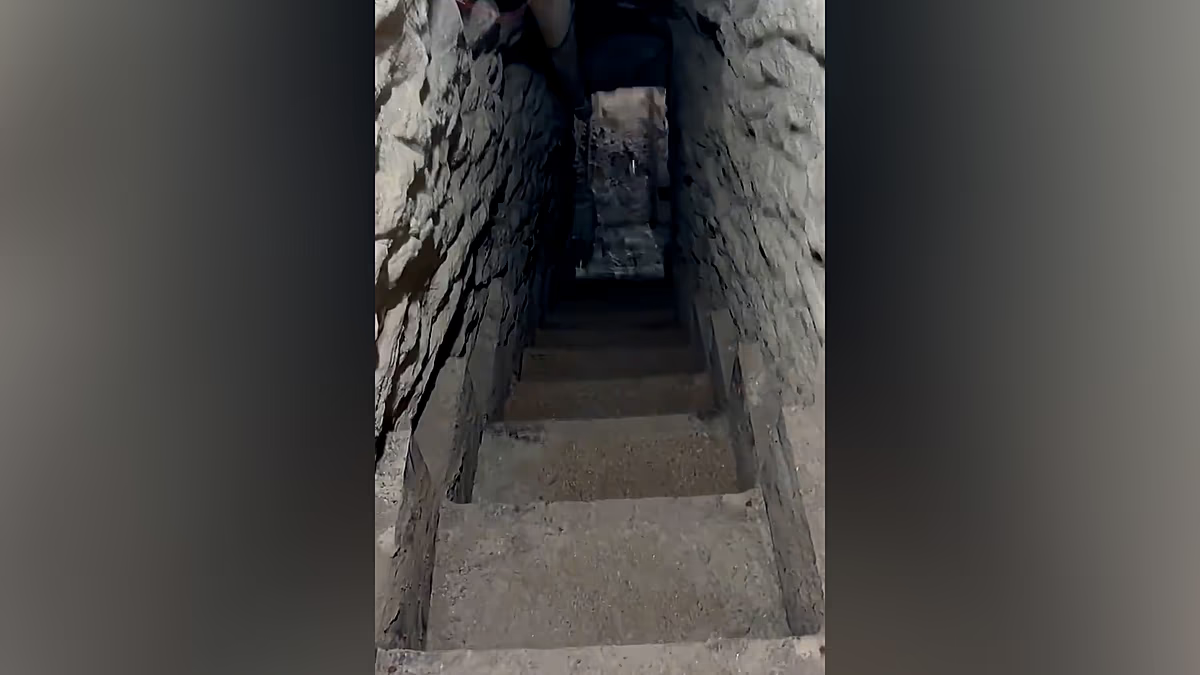
The released footage, likely a composite of law enforcement body-cam and technical surveys, reveals a structure that resembles a functional commercial utility corridor more than a traditional smuggling tunnel. One can imagine the cool, damp air and the hum of machinery that would have filled the space during its operation. The walls appear shored up with professional-grade timber or even prefabricated panels, preventing cave-ins. A rudimentary but effective railway system, complete with a small cart or winch mechanism, is visible, explaining how multi-ton loads could be moved efficiently over what was reported to be a significant distance. Electrical wiring, likely for lighting and ventilation pumps, snakes along the ceiling, while a drainage system hints at planning for the water tables common in the region. The entrance on the Mexican side was undoubtedly concealed within an innocent-looking industrial building or a private residence, while the U.S. terminus would have emerged in a similarly inconspicuous location, allowing for the seamless transfer of contraband into the waiting domestic distribution network. This level of planning speaks to vast resources, engineering expertise, and a chilling degree of patience.
The sheer scale of the investment—estimated to be in the millions of dollars for construction alone—points directly to the involvement of a major transnational criminal organization. The Tijuana-San Diego corridor has long been the crown jewel of the Sinaloa Cartel’s logistical map, though other groups fiercely contest the plaza. A tunnel of this caliber is not a speculative venture; it is a capital project. The cartels employ engineers, geologists, and skilled laborers, either through coercion or lucrative payment. The construction process itself is a massive security operation, involving the silent removal of thousands of tons of soil without arousing suspicion from neighbors or aerial surveillance. The $45 million dollar cocaine haul cited by authorities is not just a street value figure; it represents the expected return on that underground investment, a single shipment in what was likely planned to be a steady, reliable pipeline for years to come. This tunnel was a piece of critical infrastructure for a multi-billion dollar global business.
For U.S. immigration and customs authorities, the discovery is simultaneously a major victory and a sobering indicator of the enduring challenge. Tunnel detection is a complex, cat-and-mouse game combining intelligence gathering, seismic sensors, ground-penetrating radar, and old-fashioned detective work. Tips from informants or unusual patterns of activity—such as the concentrated purchase of construction materials, lumber, and large-scale ventilation equipment—often provide the initial clues. The actual breach of such a tunnel is a high-stakes tactical operation, as agents never know if they will encounter armed guards, dangerous structural weaknesses, or toxic atmospheres inside. While this particular conduit is now shut down, its existence is a data point in an endless arms race. For every tunnel discovered and spectacularly revealed to the press, authorities must assume others are being planned, are under construction, or are already in silent operation, a hidden testament to the relentless profit motive of the drug trade.
The human cost of this engineered marvel is immense and extends far beyond the narcotics it delivered. The cocaine that flowed through this tunnel fuels addiction, devastates communities, and enriches organizations responsible for staggering violence on both sides of the border. The cartels that built it are the same entities that engage in brutal territorial wars, corruption of public officials, and horrific acts of intimidation. The profits are laundered into legitimate economies, further eroding institutions. Conversely, the laborers who dig these tunnels often work in conditions of modern-day slavery, facing extreme danger from cave-ins, asphyxiation, or violence from their employers. The tunnel is a sterile, engineered fact in a news report, but it is a direct pipeline from the violence of Tijuana’s colonias to the addiction crises in American suburbs and cities, a grim physical connection between supply and suffering.
Ultimately, the footage of this sophisticated tunnel serves as a powerful metaphor for the nature of the modern drug war. It illustrates the adaptability and resources of transnational crime, which innovates and invests in the face of enforcement. It shows that barriers, no matter how imposing, can be circumvented with enough money and ingenuity, literally from below. For the public, it’s a startling glimpse into a hidden world; for law enforcement, a hard-won battle in a perpetual campaign; and for the cartels, a cost of doing business. The soil will be backfilled, the entrance sealed with concrete, and the news cycle will move on. But the geologic and economic conditions that make tunnel construction feasible—and profitable—remain unchanged. The discovery is a conclusive end to one chapter, yet it underscores a perpetual truth: as long as a vast, insatiable demand for illicit drugs exists in the United States, the supply will find a way, whether over, under, or through any wall placed in its path.