
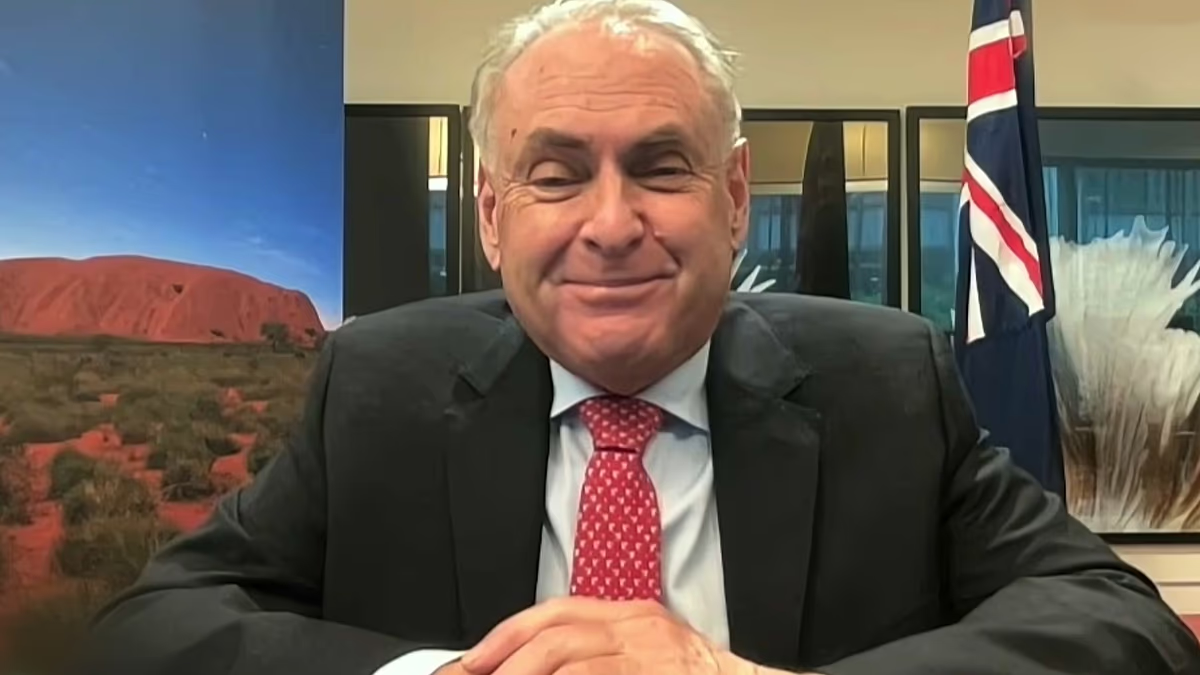


In the complex and often tense arena of international trade, Australian Trade Minister Don Farrell has offered a succinct piece of advice to Europe as it navigates its own economic relationship with China: “patience.” Speaking to Euronews, Minister Farrell emphasized that this virtue is a crucial starting point when dealing with Beijing. As a self-described middle power in the Asia-Pacific region, Australia’s primary focus, he explained, is on projecting policies that ensure a peaceful and stable environment. This strategic patience has paid tangible dividends for Australia recently. Amidst global turbulence, the country has managed to maintain its vital trade relationships almost without interruption—a state of affairs it is deeply keen to preserve. This counsel arrives at a pivotal moment for the European Union, which is actively grappling with defining its trade stance toward both China and the United States.
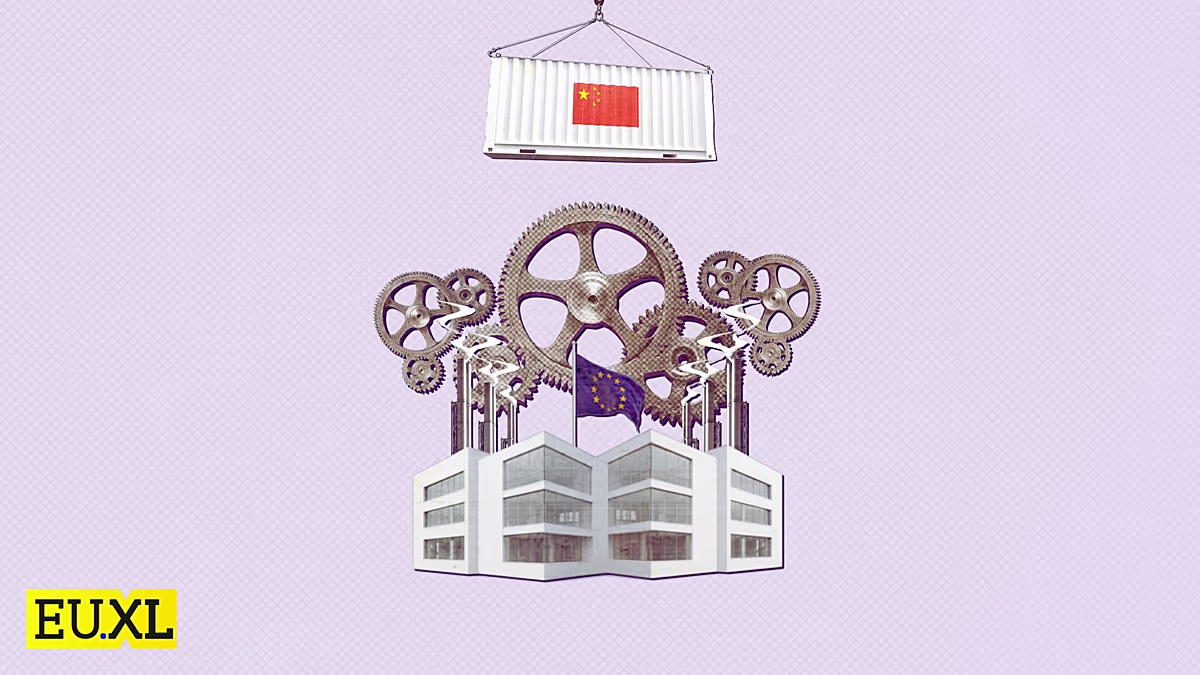
The EU’s challenge is underscored by stark economic figures. Last year, the bloc registered a record trade deficit of nearly €360 billion with China. In response, European Commissioners recently convened to deliberate on a path forward, reiterating a strategy of “de-risk, not decouple.” The goal is to reduce critical dependencies on China without severing economic ties altogether. However, the shadow of a potential full-scale trade war looms larger than ever, making the EU’s balancing act extraordinarily delicate. Australia’s experience serves as a potent, real-world case study in this high-stakes environment. From 2020 to 2022, Canberra found itself embroiled in a bitter and costly trade dispute with its largest trading partner, China—a conflict that provides a cautionary tale but also, ultimately, a blueprint for resolution.
The Australian trade crisis was triggered when then-Prime Minister Scott Morrison called for an international inquiry into the origins of COVID-19. Beijing’s retaliation was swift and severe, imposing bans and punitive tariffs on key Australian exports like barley, wine, beef, and lobsters. These measures affected an estimated AUD$19 billion worth of goods, causing significant pain for Australian industries. The relationship had reached a frosty nadir. However, a change in government brought a shift in tone. Under Prime Minister Anthony Albanese, Australia adopted a more diplomatic and persistent approach. As Minister Farrell noted, the issues were not “fixed overnight,” but through sustained engagement, all Chinese trade impediments were lifted by 2024. This diplomatic patience allowed normality to return to a fundamentally important economic partnership.
This successful de-escalation did more than just reopen the Chinese market; it revitalized Australia’s broader trade strategy. With the immediate crisis resolved, Canberra was able to shore up its economic security by securing new and lucrative trade agreements with partners including the United Kingdom, India, and the United Arab Emirates. Most significantly, after eight arduous years of negotiation, Australia finally concluded a free trade agreement with the European Union. Minister Farrell highlighted this as perhaps “the hardest of them all,” a deal signed just months ago in Sydney. This flurry of diplomatic activity underscores a key lesson: resolving a major trade dispute can unlock momentum and credibility elsewhere, allowing a nation to diversify its economic relationships and build resilience against future shocks.
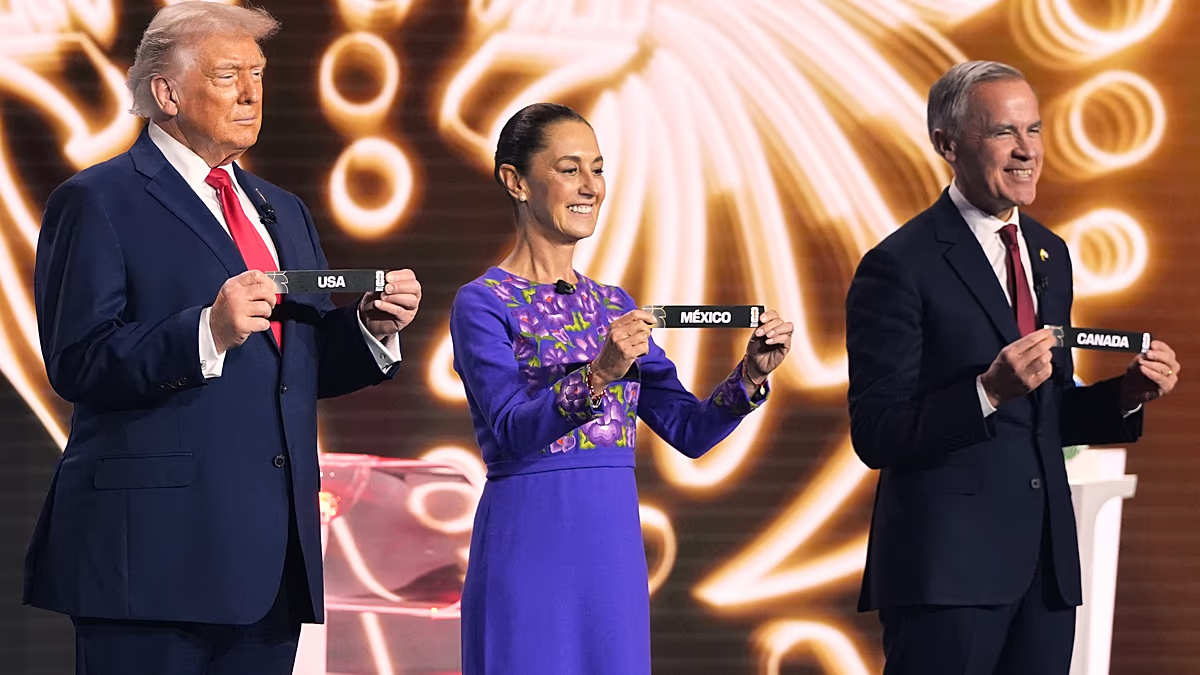
Yet, just as one storm cloud cleared, another has gathered on the global horizon, dramatically altering the calculus for both Australia and the EU. The re-election of US President Donald Trump has upended the international trade order. In early 2025, he announced sweeping import levies on numerous partners, including allies in Europe and Australia. These threats were concretized recently with the declaration of new tariffs ranging from 10 to 12.5 percent on imports from 60 countries. This aggressive unilateralism from Washington creates a daunting new layer of complexity, forcing nations to simultaneously manage fraught relations with China and an unpredictably protectionist United States. In this volatile climate, the patient, steady diplomacy that served Australia well with Beijing may become equally essential in navigating the challenges posed by its American ally.
Therefore, Minister Farrell’s simple message of “patience” transcends the specifics of the EU-China relationship. It encapsulates a broader philosophy for navigating an increasingly fragmented and transactional world order. Australia’s journey from a costly trade war to the restoration of ties and the securing of pivotal new agreements demonstrates that strategic calm and persistent dialogue, even when progress is slow, can yield stability and prosperity. For the European Union, which now faces a two-front challenge of de-risking from China while responding to American protectionism, the Australian example is instructive. It suggests that in an era of escalating tariffs and geopolitical posturing, the disciplined and patient pursuit of open communication and diversified partnerships may be the most reliable path to securing long-term economic peace.