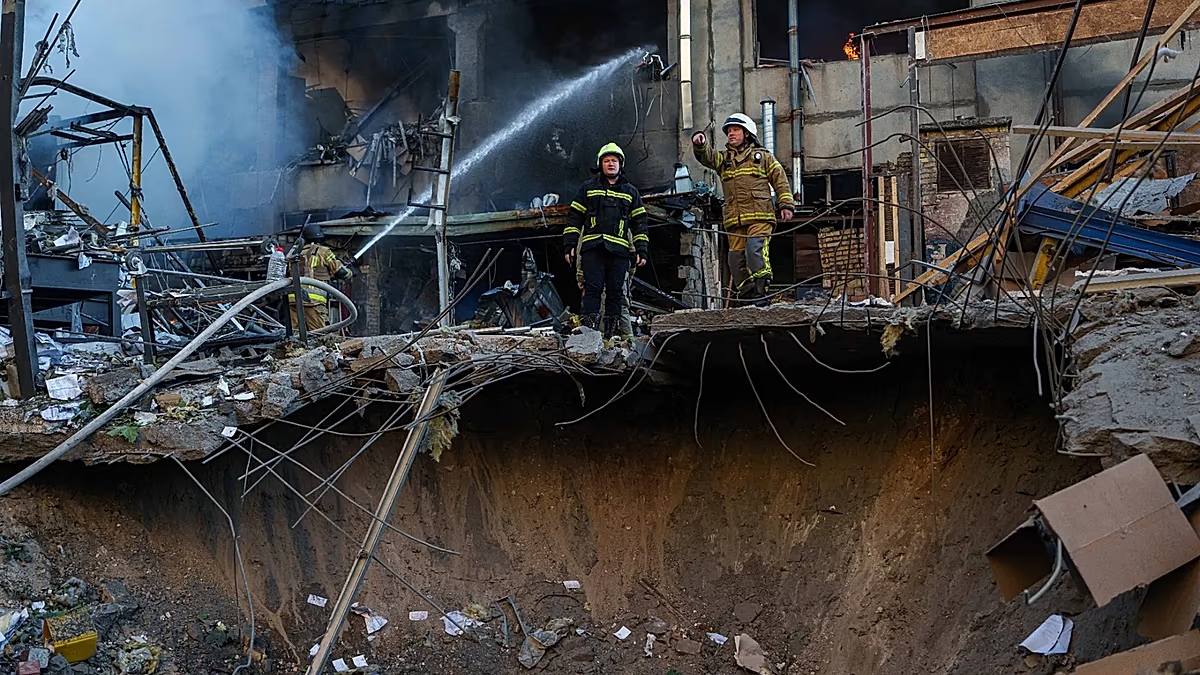
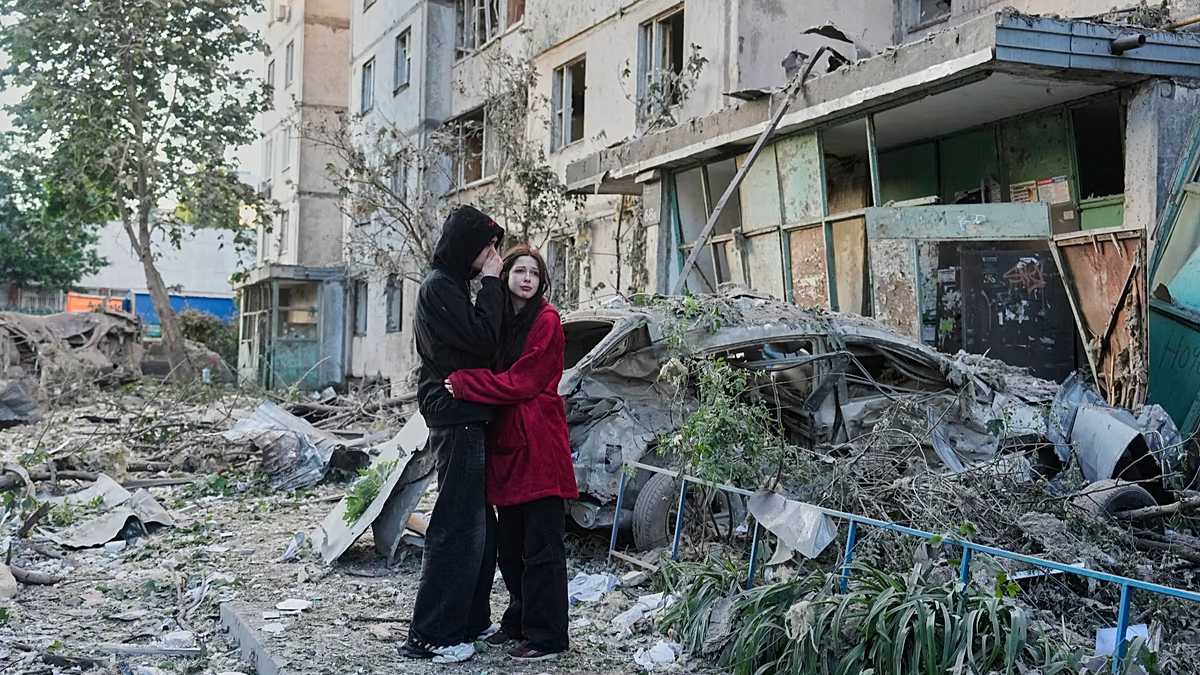



President Volodymyr Zelenskyy addressed the nation on Tuesday evening, his words carrying the heavy weight of a country under relentless siege. Just hours after Russia unleashed one of its largest combined assaults of the war—a barrage of over 70 missiles and 650 drones that claimed at least 22 lives—the Ukrainian leader delivered a grim warning: the next attack was already being prepared. Intelligence indicated another large-scale strike could come that very night. Zelenskyy’s message was twofold: a direct plea to his citizens to heed air-raid sirens and seek shelter, and a stark appeal to Ukraine’s Western allies. He argued that the very architecture of Russia’s war machine, from Kalibr missiles to attack drones, is built with thousands of imported components, making continued weapons production a form of international complicity in the killing of Ukrainians.
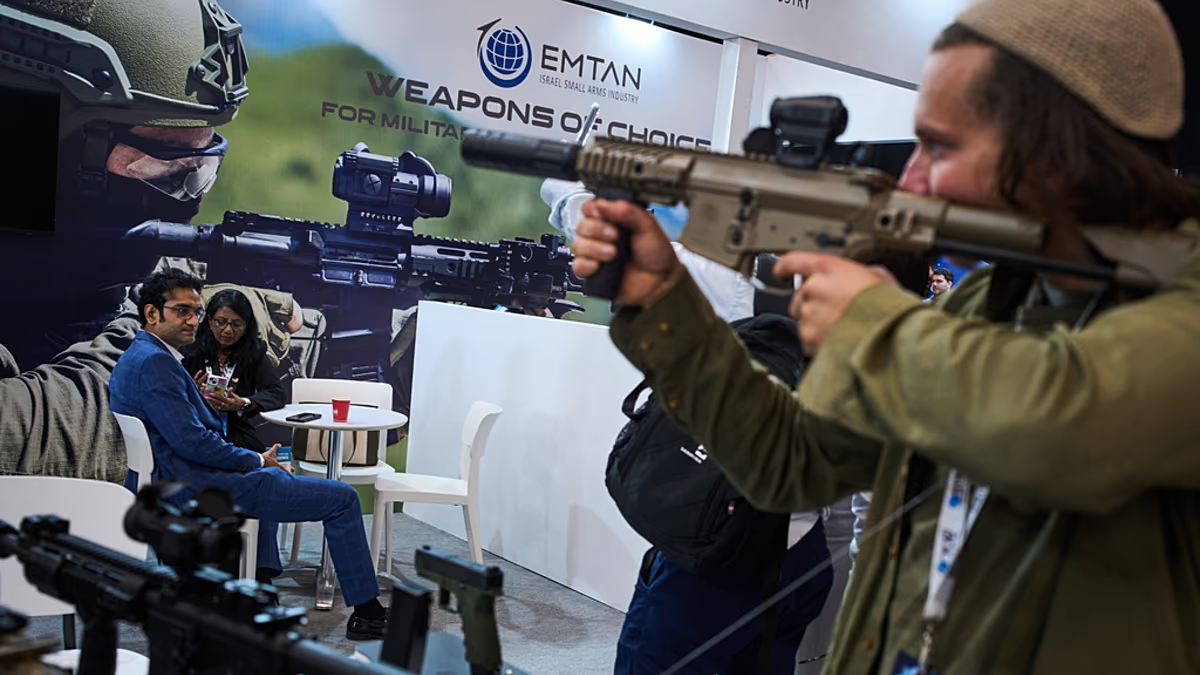
The sheer scale of the technological dependency Zelenskyy outlined is staggering. He provided precise, damning figures: five Kalibr missiles require 145 foreign components, 33 Iskander ballistic missiles need 1,122, and 650 attack drones rely on over 17,000 imported parts. These numbers reveal a critical vulnerability in the sanctions regime intended to cripple Russia’s military-industrial complex. According to Zelenskyy, large-scale schemes to circumvent these sanctions are thriving, allowing Moscow to sustain its production of missiles and drones. His conclusion was unequivocal: every nation or entity that facilitates this supply chain, whether through loopholes, inaction, or clandestine deals, shares responsibility for the devastation raining down on Ukrainian cities. “This constitutes absolutely real complicity in killings,” he stated, framing the conflict not just as a bilateral war but as a global test of accountability.
While Ukrainian air defenders performed heroically to intercept a significant portion of the incoming drones, the battle highlighted a dire and growing asymmetry. The most severe threat comes from Russia’s ballistic missiles, which travel at hypersonic speeds on parabolic trajectories, making them extremely difficult to counter. Zelenskyy admitted with painful candor that Ukraine’s current air defense capabilities are insufficient to stop a substantial percentage of these weapons. The linchpin of Ukraine’s defense against this specific threat is the American-made Patriot surface-to-air missile system. It remains the only system in Ukraine’s arsenal proven effective against ballistic missiles, making each Patriot battery not just a piece of military hardware, but a guardian of entire regions and a deterrent against strategic terror.
However, a global shortage of the interceptor missiles for these Patriot systems is creating a perfect storm. The supply crisis has been exacerbated by conflicts beyond Ukraine’s borders. The recent hostilities between the U.S., its allies, and Iran led Gulf states to fire over 1,100 Patriot interceptors, depleting nearly a third of the collective stockpile. The manufacturing pipeline cannot keep pace with this sudden, massive global demand. Lockheed Martin produces approximately 600 interceptors per year, a rate that pales in comparison to the expenditure. Zelenskyy noted that monthly production is, at best, 60-65 missiles. This industrial math becomes terrifying when applied to the battlefield: in just the past ten days, Russia launched over 60 ballistic missiles at Ukraine—a number that matches the entire estimated monthly production output of the system meant to stop them.
This disparity between Russian launch rates and Western production rates creates an unsustainable equation for Ukraine. Every intercepted ballistic missile represents a monumental financial and logistical victory for Russia, which can produce and launch them faster than the West can supply the means to shoot them down. It forces Ukrainian commanders into agonizing calculations, deciding which cities, critical infrastructure, or military installations are worth protecting with their precious, dwindling supply of interceptors. The situation grants Russia a perverse strategic advantage, allowing it to probe and overwhelm Ukrainian defenses through sheer volume, knowing that each successful missile that gets through causes catastrophic damage and deepens the strain on Ukraine’s partners to resupply a system that is itself becoming scarce.
In his address, Zelenskyy therefore wove together the immediate terror of impending attacks with the systemic challenges that enable them. His call was not merely for more weapons, but for a coherent and urgent strategy to break the cycles that sustain the war. This strategy must include dramatically accelerated interceptor production, more effective and enforced sanctions to sever Russia’s access to critical components, and the timely provision of other advanced air defense systems to complement the Patriots. The alternative is a protracted attritional battle where Russia’s ability to inflict terror outpaces the world’s ability to help Ukraine defend itself. Zelenskyy’s nightly addresses have become a chronicle of resilience; this one served as a sobering audit of a conflict where technological supply chains and industrial capacity are as decisive as the courage of soldiers on the front lines.