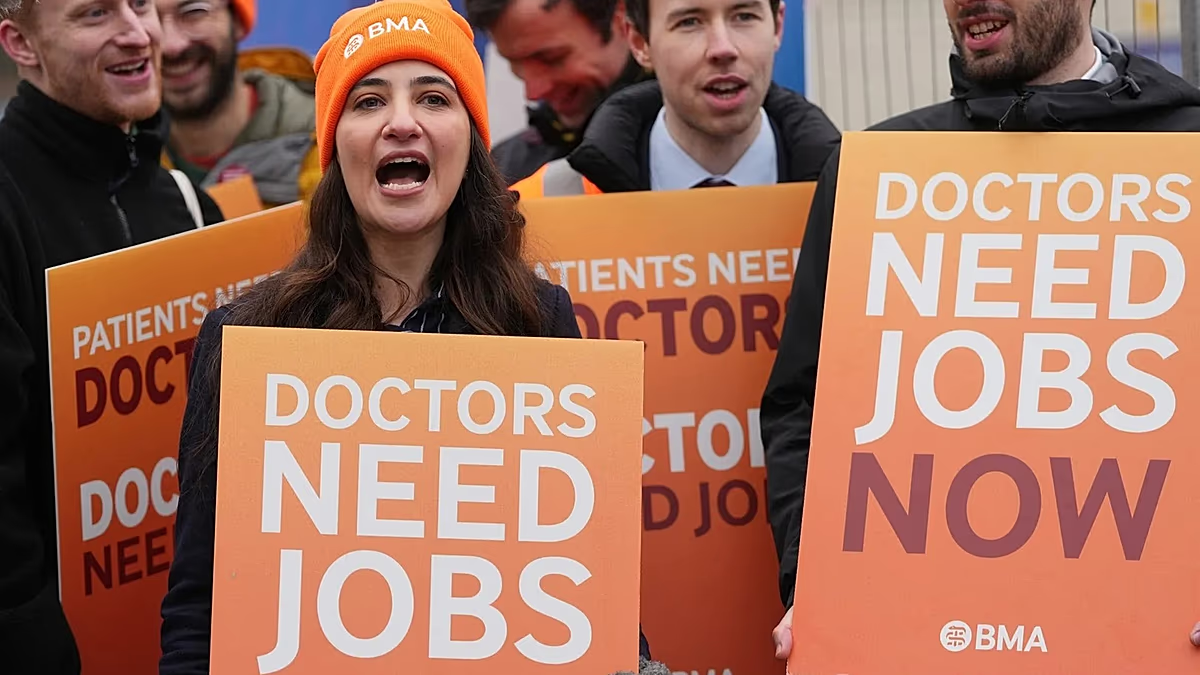
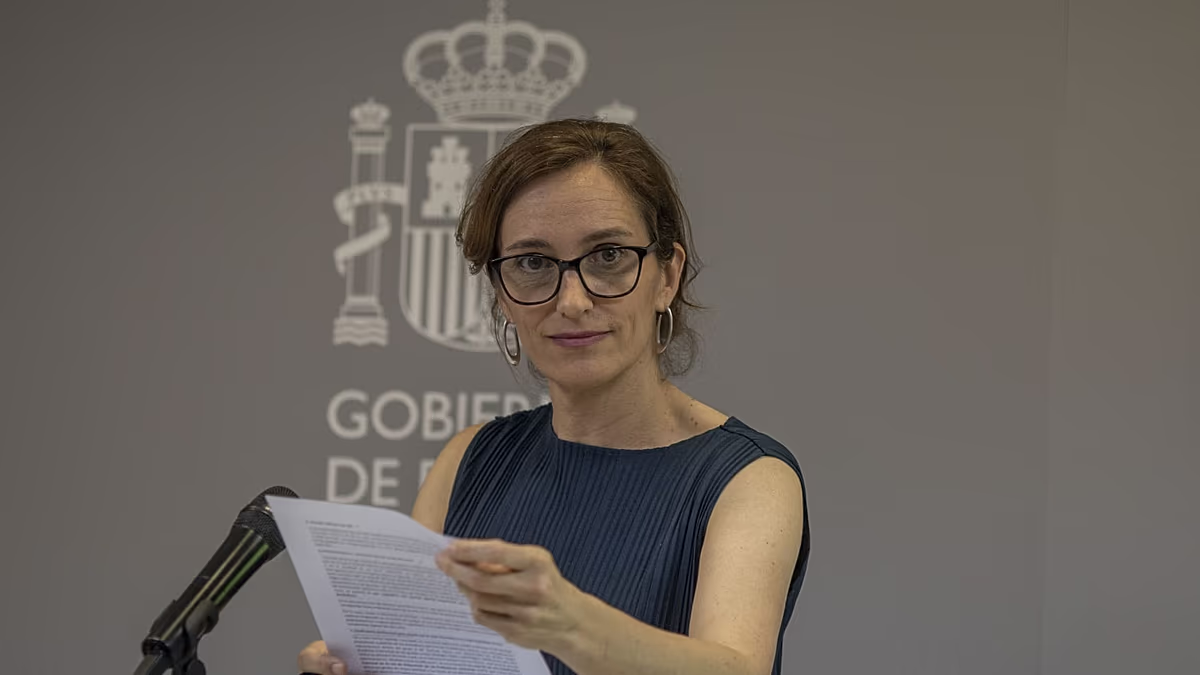


After months of sustained and remarkably unified protests by doctors and healthcare workers across Spain, a new Framework Statute for the sector has finally been unveiled by the government. However, the atmosphere surrounding its announcement was one of palpable tension and disconnect. Notably absent from the press conference was Health Minister Mónica García herself, an anaesthetist and member of the minority Sumar party. In her stead, the government spokesperson, Socialist minister Elma Saíz, was left to defend a proposal that has already been met with significant hostility from the very professionals it aims to regulate. This symbolic absence spoke volumes, suggesting the minister was acutely aware of the bitter reception awaiting a reform that fails to address the core grievances that have filled streets and squares nationwide. Saíz sought to frame the statute as a product of dialogue, backed by “main trade unions” like SATSE, CC.OO., UGT, and CSIF, but this only highlighted a deep schism within the sector’s representation, pitting those unions against the more militant professional associations leading the protests.
The heart of the conflict lies in a profound gap between the government’s legislative offering and the concrete, urgent demands of healthcare staff. These professionals, who have seen their ranks stretched to breaking point, are not asking for marginal adjustments but for a fundamental revaluation of their work and well-being. Their list is specific and born of daily hardship: they demand that the long, grueling hours of on-call shifts finally count toward their Social Security pensions, a critical point for future financial security. They insist on proper compensation for night work and mandated rest after consecutive shifts, protections already enjoyed by other state employees like the National Police. Furthermore, they call for the creation of a top-tier professional category (A1) for doctors, a reduction of their standard working week to 35 hours, a guarantee that all overtime is both voluntary and paid, the introduction of viable early retirement options, and a ban on forced transfers between regions. These are not minor requests; they are a blueprint for rebuilding a sustainable career in public health.
Against this backdrop, the government’s statute presents a mixed bag of incremental progress and perceived shortcomings. Its headline measure is a reduction of the maximum working week to 45 hours, which, while a step down, remains far above the 35-hour week demanded and is merely brought below the European average. The text also addresses the notorious 24-hour on-call shifts, ostensibly capping “effective work” during them at 17 hours. However, a critical loophole in Article 97 undermines this limitation, stating that if “adequate continuity of care” cannot be guaranteed due to organizational needs, the maximum can be exceeded. For many exhausted professionals, this clause renders the cap meaningless, as chronic understaffing is the very norm that forces these extreme hours in the first place. The statute does contain positive elements, such as creating statutory research positions and work-life balance measures, but these are seen as insufficient consolation for failing to tackle the structural issues of compensation, involuntary overtime, and career dignity.
The immediate and unequivocal response from the protesting unions—including CESM, AMYTS, and Metges de Catalunya, among others—has been one of rejection and renewed mobilization. Accusing the Health Ministry of a strategy of “delay, paralysis and a total lack of proposals,” they have already called for a new nationwide rally on June 15th. This reaction underscores that the statute is viewed not as a compromise, but as a dismissal of their core campaign. The government’s argument, as articulated by Spokesperson Saíz, adds another layer of political complexity to the dispute. She pointed out that many of the unmet demands, particularly relating to pay, staffing levels, and service organization, fall under the jurisdiction of Spain’s autonomous communities, not the central ministry. While technically correct, this defense is politically fraught, as it risks being perceived by frontline workers as passing the buck and failing to use the state’s leverage to orchestrate a nationwide solution for a nationwide crisis.
Consequently, the new Framework Statute has landed not as a peace treaty, but as a new battleground. It attempts to modernize a two-decade-old framework but does so without securing the buy-in of a large and vocal segment of the workforce it governs. The central government finds itself caught between its legislative ambitions, the fiscal and political autonomy of the regions, and the escalating desperation of healthcare professionals. The result is a proposal that satisfies few: militant unions see it as a betrayal, supportive unions may view it as a starting point, regional governments await the fine print, and the public is left witnessing a debilitating stalemate in a vital service. The absence of Minister García at the announcement podium ultimately mirrored a broader absence: the absence of a solution perceived as credible and respectful by those who keep the hospitals running.
The path forward is shrouded in uncertainty. The statute must still navigate its passage through Congress, where it could be amended, while protests are set to intensify. The coming months will test whether this framework can evolve through parliamentary negotiation into a text that genuinely addresses the burnout and demoralization plaguing the Spanish health system, or if it solidifies into a symbol of a dialogue that has broken down. The fundamental question remains whether the political will exists to bridge the chasm between bureaucratic reform and the human reality of care—a reality defined by exhausted professionals simply asking for a sustainable professional life in return for their indispensable service. The June 15th protests will be the next loud indicator of how wide that chasm still is.