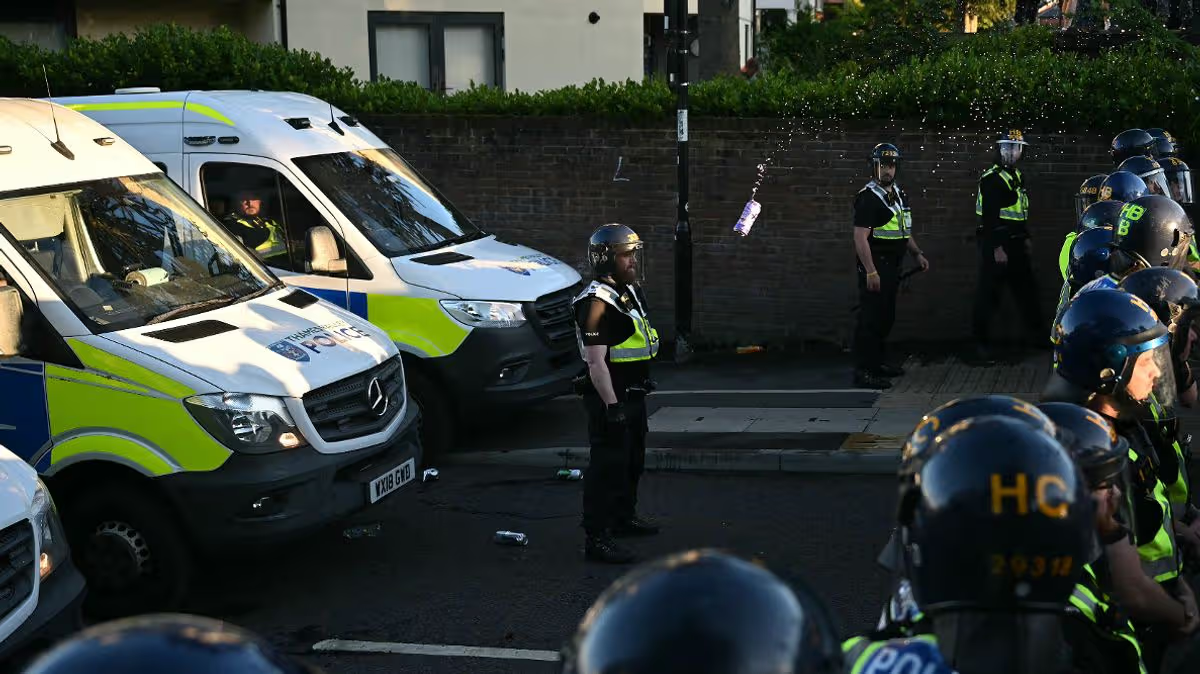



The discovery of an unexploded World War II bomb on a construction site in Coventry this week is a stark and sobering reminder that the past is never truly buried. On Tuesday evening, June 3rd, the routine work of builders at the Sandy Lane Business Park in the Radford area came to an abrupt halt when their machinery unearthed a potentially lethal relic from the 1940s. The immediate response was a major, coordinated emergency operation led by West Midlands Police. To ensure public safety, a substantial 100-meter exclusion zone was swiftly established around the site, necessitating the evacuation of 96 homes. With Explosive Ordnance Disposal (EOD) experts called to the scene, authorities warned residents that the delicate assessment and disposal process could last through the night and into the following morning, a testament to the enduring danger posed by the device.
This incident forces a collective pause, a momentary disruption in modern life that serves as a direct portal to the city’s traumatic history. The location itself is layered with significance; the bomb was found where 250 new homes are planned, on the former site of the Daimler automotive factory. Factories like this were the very heart of Coventry’s contribution to the Allied war effort, making the city a prime target for the Nazi Luftwaffe. The discovery here is tragically logical. It connects the future—a new housing development—with a violent past that still has the physical power to intrude upon the present. For the evacuated families, this was not a history lesson from a book, but a real and unsettling event that required them to leave their homes, relying on the support of Coventry City Council and the professionalism of the emergency services.
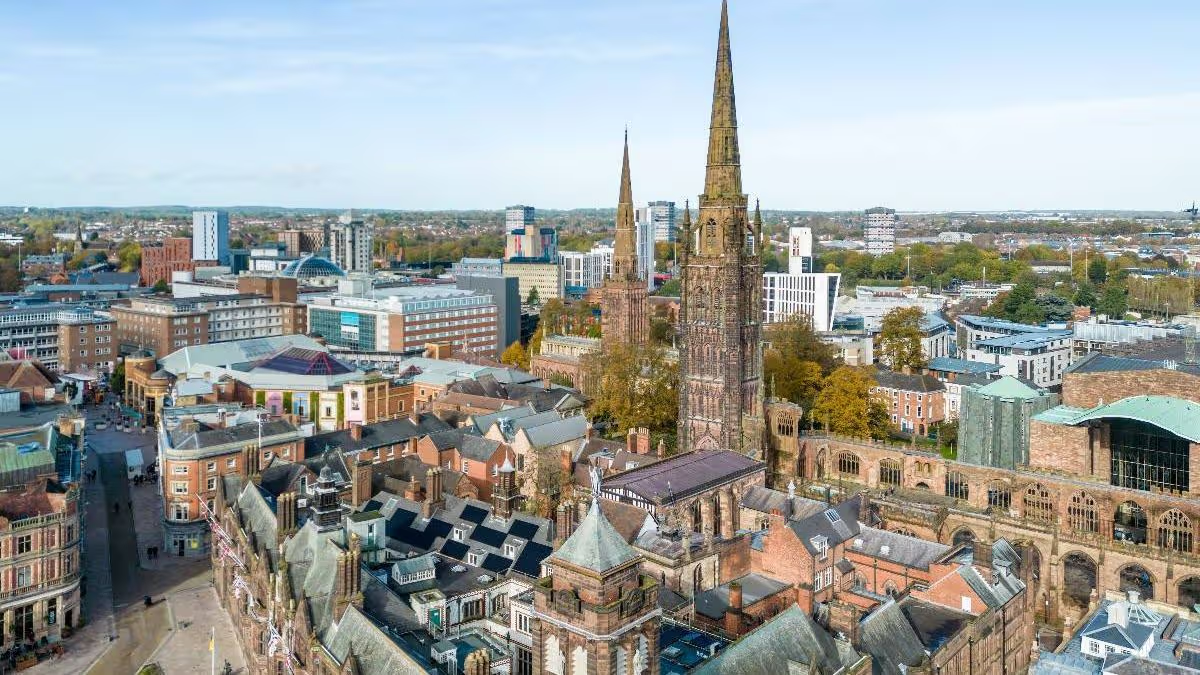
The shadow cast by the Coventry Blitz remains long and deep. The city endured numerous raids, but the most devastating occurred on the night of November 14th, 1940. In a single, brutal assault, Hitler dispatched 515 bombers with the intent of systematically obliterating Coventry’s industrial capacity and breaking the spirit of its people. The attack was so ferocious that it was reported the glow from the resulting firestorm could be seen 100 miles away. The city centre and its historic cathedral were reduced to smouldering ruins. Today’s discovery is a chilling confirmation that the aftermath of that night, and others like it, is not fully concluded. As one astute resident noted on social media in response to the police alerts, there are likely multiple buried UXBs (unexploded bombs) all over Coventry, their decades-old mechanisms quietly corroding but still perilously unstable.
The public reaction to the police operation highlighted a community guided by both concern and resilience. While understandably worried, residents largely responded with cooperation and gratitude towards the authorities for their transparent communication and swift action. This communal spirit echoes the famed “Blitz spirit” of their grandparents’ generation, a practical resolve in the face of disruption. The evacuation, while inconvenient and anxious, was undertaken with a collective understanding of the necessity. It is a powerful reflection of how a city that has risen from the ashes maintains a sober respect for the hidden dangers left behind, trusting in the expertise of the EOD teams to carefully neutralize a threat from a conflict that ended nearly eight decades ago.
The work of the Explosive Ordnance Disposal experts is a high-stakes profession that operates at the intersection of historical archaeology and immediate peril. Their task on that Coventry site was to assess the type of bomb, its condition after over 80 years underground, and the safest method to render it inert. This process is methodical and cannot be rushed, as the decay of explosives and firing mechanisms over time makes them increasingly unpredictable. The extended timeline communicated to residents—that work would continue through the evening and into the next morning—underscored the meticulous care required. Each decision carries the weight of protecting the entire neighborhood, a silent and expert battle against a dormant enemy from the past.
Ultimately, this event is more than a local news story about a disrupted building site; it is a poignant metaphor for living with history. Coventry, a city rebuilt and reinvented in the postwar decades, continues to literally unearth the physical scars of its darkest chapter. The unexploded bomb is a tangible, hazardous link to a night of profound destruction and loss. Its discovery is a reminder that the landscape is a palimpsest, with stories of war written just beneath the surface of new developments and daily life. As the city moves forward, it does so with the knowledge that echoes of the Blitz can still be found, requiring respect, expert handling, and a continued appreciation for the peace and safety that now stands, sometimes precariously, above it.