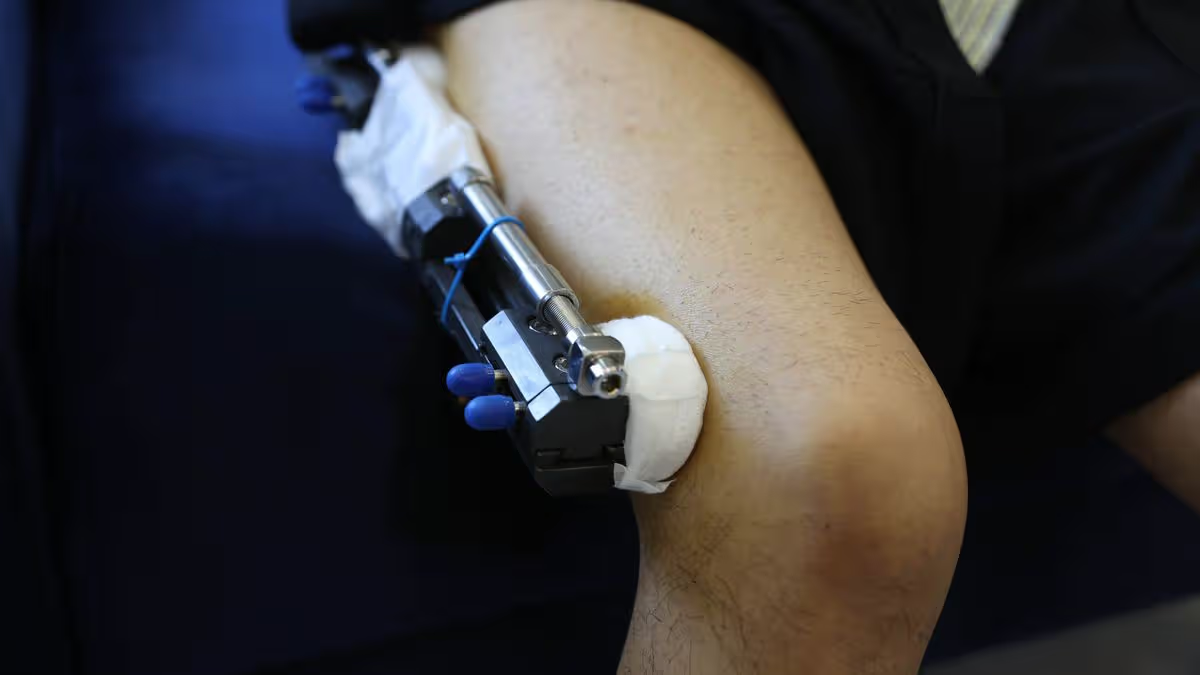



In a world increasingly driven by image and perceived perfection, a controversial medical procedure is capturing the attention of hundreds, particularly British tourists, who travel abroad in pursuit of a fundamental change: increased height. The Royal College of Surgeons of England has issued a stark warning, accompanied by alarming case studies, about the dire consequences of so-called cosmetic limb lengthening surgery. This complex operation involves surgically cutting the leg bones, inserting adjustable metal devices, and gradually separating the segments over months to stimulate new bone growth in the created gap. While clinics, notably the Wannabetaller Clinic in Istanbul, promote the promise of gaining up to six inches in height, the reality often involves severe complications that the NHS must subsequently address, at significant human and financial cost.
The motivation for undergoing such a radical and painful procedure is deeply personal, often rooted in lifelong psychological distress. Individuals who have spoken about their decisions describe histories of being teased about their height during school years or facing difficulties in personal relationships, such as struggling to find a partner. The clinics catering to these desires often package the surgery within alluring, affordable travel deals, including extended stays and even city tours, framing the experience as a transformative holiday. However, this persuasive marketing obscures the stark medical realities. The NHS explicitly warns that the procedure carries risks of serious infection, nerve damage, and even permanent disability. It is not a simple cosmetic adjustment but a major orthopaedic reconstruction with a prolonged and challenging recovery period.
When these overseas procedures go wrong, the burden of care frequently falls upon the UK’s National Health Service. A new study led by surgeons at the Royal National Orthopaedic Hospital NHS Trust analysed seven recent cases where patients returned from abroad with complications. The findings are sobering: the corrective care for these seven individuals alone cost the NHS over £36,000. This cost manifests in dozens of hospital appointments, intensive physiotherapy, and, in severe cases, further major surgery. Examples include patients requiring operations to remove or repair broken internal nails that hold the bones together, or to address poor bone regeneration. These interventions place additional pressure on already stretched NHS resources and specialist staff.
The study’s lead author, Consultant Surgeon Peter Calder, notes that the trend is gaining popularity, fueled by internet communities and social media advertising. He reports an anecdotal increase in patients presenting to his hospital with severe complications like implant failure, poor bone healing, and debilitating joint stiffness following surgery abroad. Of the seven studied cases, five had travelled to Turkey, one to Russia, and one to South Africa. For most, the goal was purely cosmetic—to improve wellbeing and quality of life—highlighting the procedure’s emergence as a sought-after form of medical tourism. This phenomenon provokes a necessary debate about the ethics and consequences of health tourism, particularly for high-risk cosmetic procedures where aftercare arrangements may be unclear or inadequate.
Professor Frank Smith, Vice President of the Royal College of Surgeons, emphasises that this research sheds light on a growing patient safety issue. While many international providers offer excellent care, the allure of lower costs and persuasive marketing can lead individuals to overlook the potential for life-changing complications. He stresses the critical need for anyone considering such treatment to fully understand the risks, the standards of care, and the aftercare provisions before proceeding. Furthermore, he calls for the NHS to collect robust data on patients presenting with complications after treatment abroad. This data is essential to comprehend the true scale of the problem and its ongoing impact on public healthcare services.
Ultimately, the journey to become taller through surgery is fraught with profound risk. The initial promise of enhanced confidence and a new life can rapidly dissolve into a nightmare of chronic pain, disability, and extensive corrective medical treatment back home. As MPs prepare to discuss the broader issues of medical tourism, these case studies serve as a crucial cautionary tale. They underscore that the pursuit of cosmetic perfection, when divorced from rigorous medical safeguards and comprehensive aftercare, can result in outcomes that are not only physically devastating but also collectively costly, leaving both individuals and public health systems to pick up the pieces.