



The global economy, still finding its footing after recent shocks, now faces a fresh set of formidable challenges. According to a sobering new assessment from the Organisation for Economic Co-operation and Development (OECD), a confluence of rising energy prices, persistent inflation, and heightened geopolitical tensions is darkening the world’s economic horizon. The organization, which represents 38 industrialized nations, has downgraded its global growth forecast for 2026 to 2.8%, warning that if current disruptions persist into 2027, expansion could slow to a feeble 2.1%. This stark possibility underscores a fragile recovery, one that could see several countries slide into recession. As OECD Chief Economist Stefano Scarpetta cautions, the longer these pressures last, the heavier the economic and social toll will become, threatening investment and jobs worldwide.
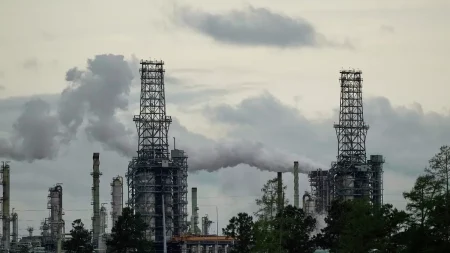
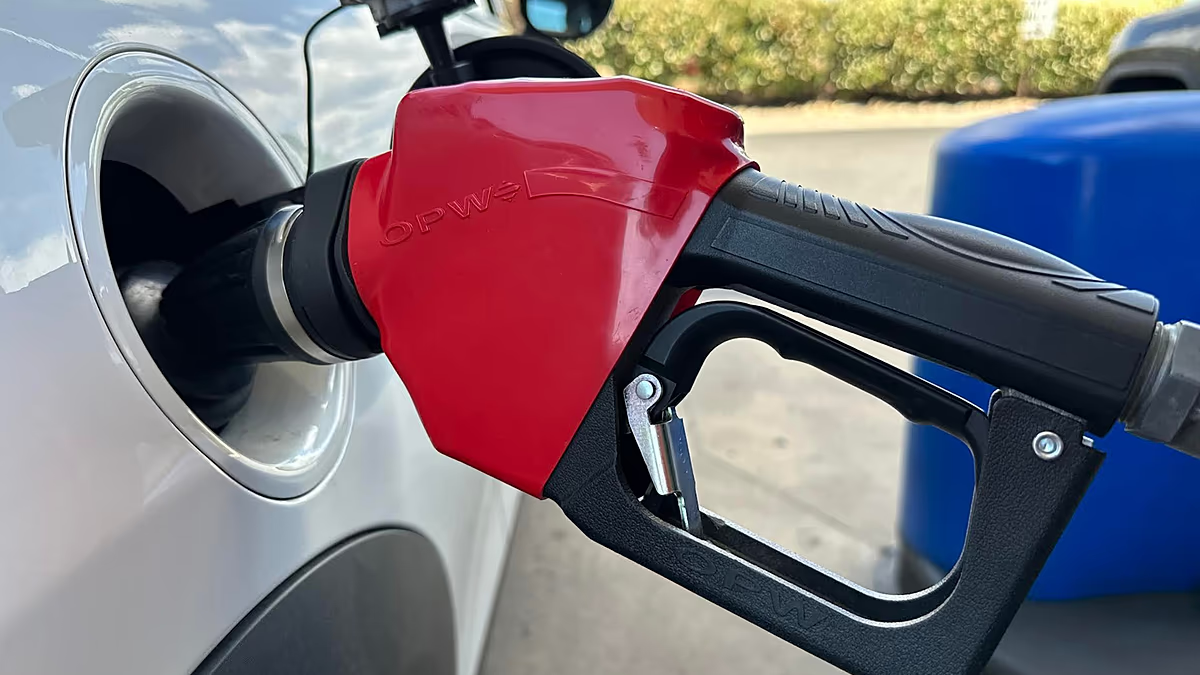
At the heart of this immediate peril is a sharp and volatile surge in energy costs, largely ignited by conflict in the Middle East. The OECD report details staggering increases in key commodities: Asian natural gas prices have soared by over 80%, with European gas not far behind. The ripple effects extend to oil, fertilizers, and other vital products, creating a dual threat for importing nations. Higher energy bills directly weaken consumer spending and industrial output, while simultaneously fueling broader inflation. This burden falls most heavily on developing countries, where households already devote a larger portion of their income to essentials like food and fuel, leaving them acutely vulnerable to price spikes that can quickly translate into social hardship.
Compounding the energy crisis is the stubborn persistence of inflation itself. Even under an optimistic scenario where conflict subsides, the OECD expects global inflation to climb to 4% this year. The mechanism is a painful chain reaction: elevated energy costs raise production expenses, ongoing supply-chain snarls add friction, and pricier fertilizers push food costs higher. This treacherous landscape puts central banks in an immensely difficult position, trapped between the need to support growth by lowering interest rates and the imperative to anchor inflation expectations by keeping monetary policy tight. The OECD stresses that credibility is paramount, warning against premature rate cuts that could unravel hard-won progress, even as the human cost of high borrowing rates mounts for families and businesses.
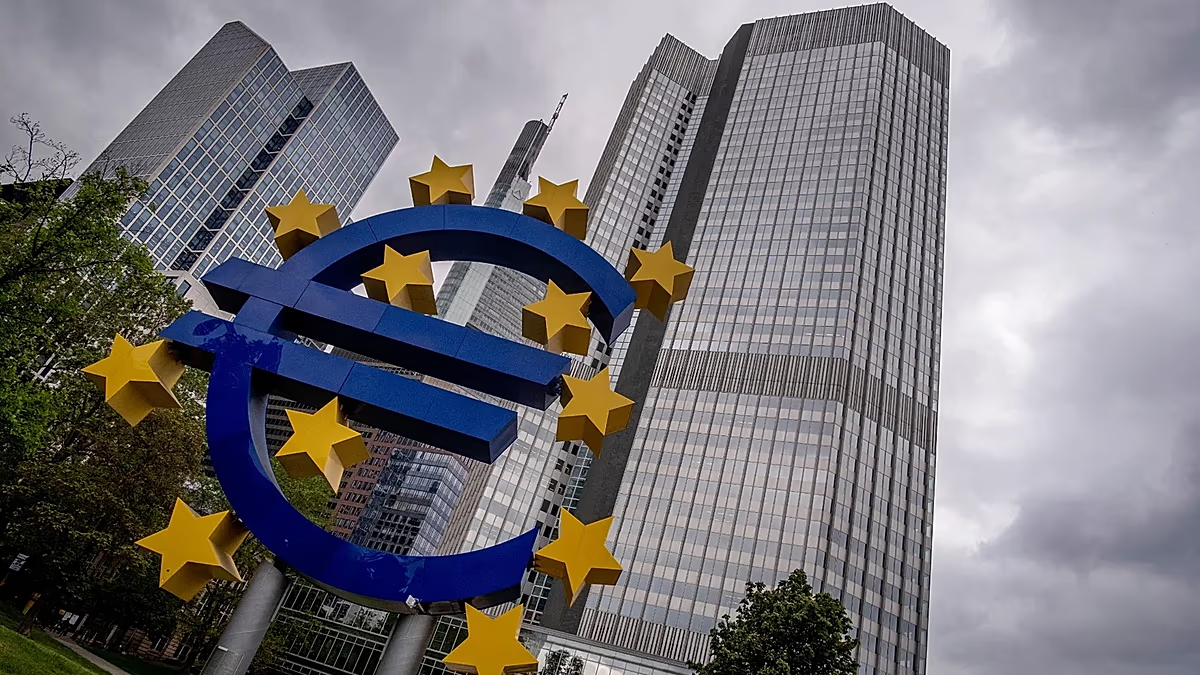
Nowhere are these intertwined risks more evident than in Europe. The euro area, deeply exposed to natural gas price shocks, is bracing for particularly modest growth of just 0.8% in 2026. While a resilient labor market and increased defense spending offer some buffer, these are offset by tighter national budgets and the gradual end of post-pandemic EU recovery funds. The United Kingdom faces a similar slowdown. The path forward for the continent is fraught; its fate is inextricably linked to the duration of the energy crisis. A swift resolution could pave the way for a gradual recovery by 2027, but a prolonged disruption would severely test the economic resilience of its member states, with repercussions felt across the global trading system.
Amid this gathering gloom, one significant source of optimism and potential strength continues to shine: the transformative investment in artificial intelligence. The OECD identifies AI as a rare bright spot, a dynamic force that supported global investment, production, and trade momentum even before the latest geopolitical flare-up. Businesses have shown remarkable adaptability in recent years, and the increasing visibility of AI’s potential to boost productivity could deliver a meaningful lift to growth, particularly by 2027. However, this promise itself is not immune to current threats. The report notes a critical irony: the vast data centers and complex semiconductor supply chains that power the AI revolution are themselves massively energy-intensive and rely on specialized inputs from regions now in turmoil. Thus, the very engine of hoped-for future growth is vulnerable to the present disruptions.
Ultimately, the OECD’s outlook presents a global economy at a crossroads, balancing palpable risks against a pillar of technological promise. The immediate future hinges critically on the trajectory of conflict and energy markets, which will dictate whether inflation can be tamed and recessions avoided. In this uncertain climate, policymakers are walking a policy tightrope, while businesses and households worldwide navigate the squeeze of higher costs. The report suggests that the full productivity benefits of AI may still be understated and could arrive more forcefully in the coming years, potentially offering a powerful counterweight to current headwinds. Yet, this potential can only be realized in a stable environment. The overarching message is one of cautious vigilance: the foundation for a robust, inclusive recovery exists, but it is being shaken by immediate storms that demand careful and coordinated navigation from global leaders.