



Foreign investment is widely recognized as a vital engine for economic progress, fueling innovation, creating jobs, and strengthening local industries. When a multinational company decides to build a new factory or open a research centre, it does more than just bring capital; it weaves itself into the fabric of the local economy, fostering skills development and bolstering supply chains. Consequently, nations across the globe are engaged in intense competition to attract these international investors. Governments roll out sophisticated strategies—from tailored tax incentives and subsidies to high-profile investment forums—all designed to persuade corporate boards that their country offers the most fertile ground for growth. In Europe, this competition is particularly fierce, with each nation striving to present itself as the most stable, dynamic, and welcoming destination for foreign capital.
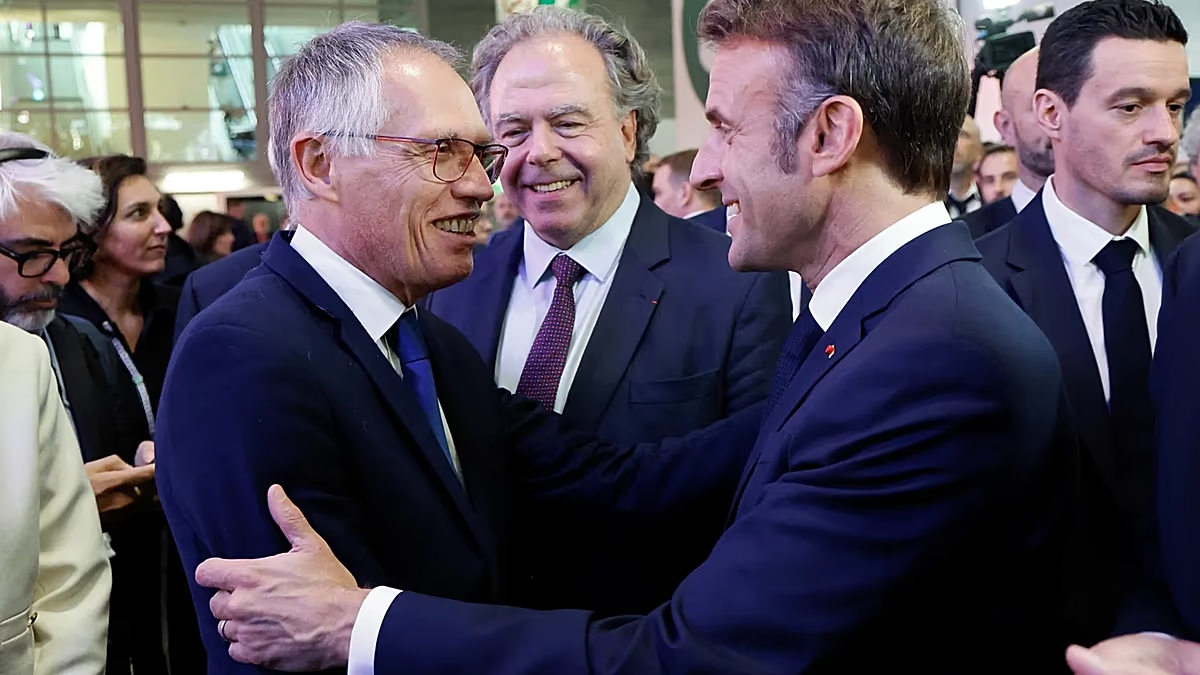
Within this European arena, France has actively positioned itself as a premier hub. Through initiatives like the annual “Choose France” summit, the government has aggressively courted international businesses. Recent announcements, such as a record €93 billion in investment pledges, showcase this ambition. However, the true measure of success is best seen through comprehensive surveys like the EY Europe Attractiveness Survey, which tracks the number of tangible, new foreign investment projects—such as new factories or business expansions—rather than financial flows that can be skewed by one-off transactions. The latest data reveals a challenging landscape: in 2025, Europe as a whole saw a 7% decline in these projects, hitting an eleven-year low. Despite this downturn, France retained its top position, albeit with a significant 17% decrease in projects. The United Kingdom and Germany followed in second and third place, respectively, with Germany’s project count falling to its lowest level since 2009, reflecting a concerning long-term trend.
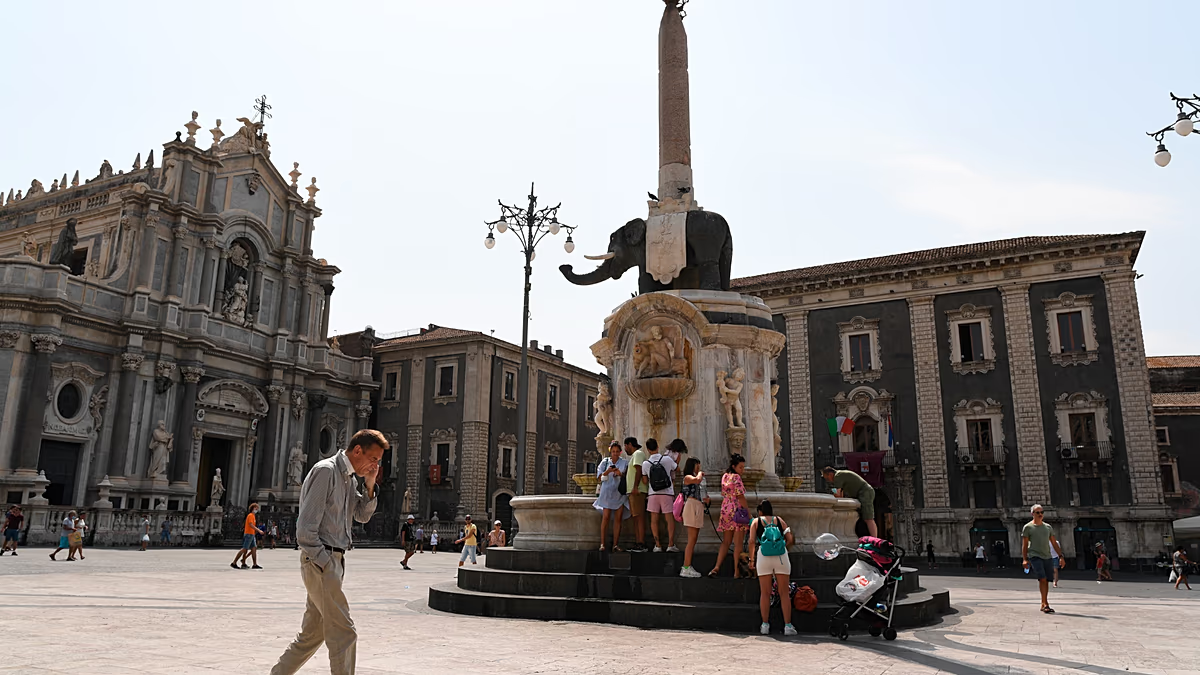
A closer examination of the European rankings reveals notable shifts beneath the surface. While traditional powerhouses like France, the UK, and Germany saw declines, several other nations demonstrated remarkable resilience and growth. Spain enjoyed a 20% surge in investment projects, propelling it to fourth place, while Turkey’s consistent rise continued, securing the fifth spot. Poland’s upward trajectory also persisted, solidifying its role as a Central European investment hub with a 10% increase. The Netherlands, too, posted growth. In contrast, countries like Italy, Belgium, and Portugal experienced downturns. This shifting map suggests investors are diversifying their European portfolios, potentially seeking out markets with competitive operating costs, strategic geographic positions, or dynamic domestic growth, signaling a recalibration of Europe’s investment geography.
The origins of this investment are as telling as the destinations. The United States firmly remained Europe’s largest external investor, underscoring the deep, transatlantic economic ties despite global uncertainties. Within Europe itself, German companies historically have been the continent’s most active cross-border investors. However, 2025 saw a sharp 24% contraction in their overseas project announcements, a retreat likely reflecting domestic economic pressures and global caution. Notably, France remained the preferred destination for German capital within Europe, but Turkey emerged as a surprising second, ahead of the UK, highlighting its growing appeal. This network of intra-European investment is crucial for regional cohesion, and a pullback from a key player like Germany ripples across the entire continent’s economic ecosystem.
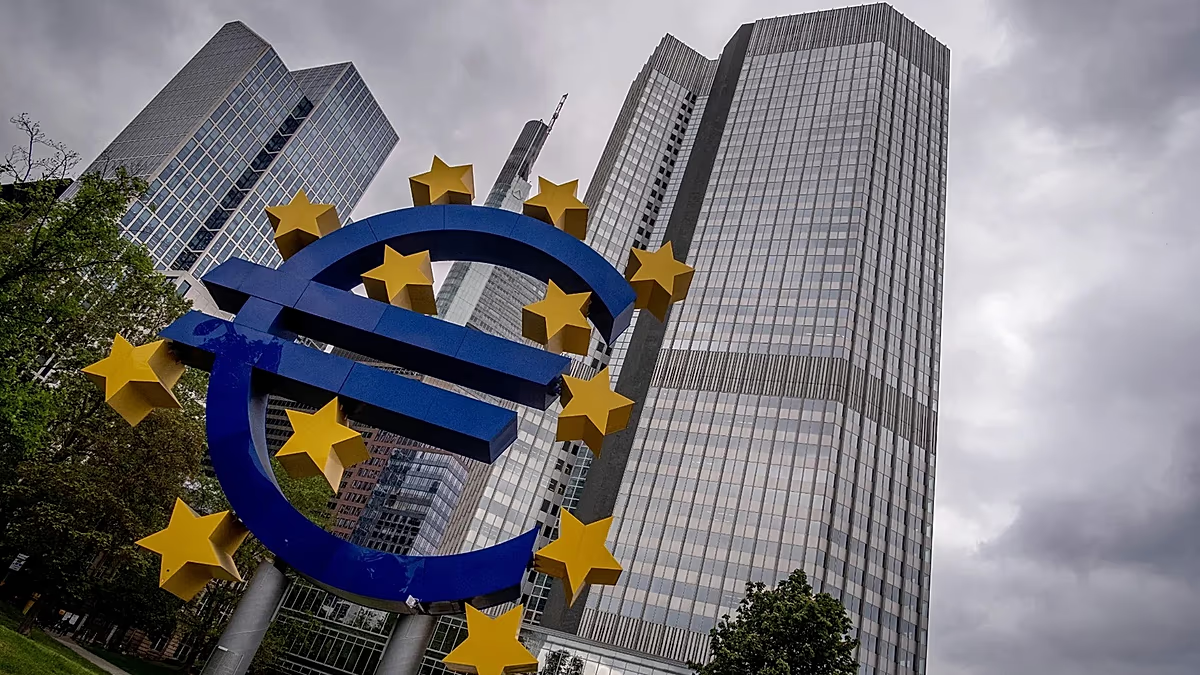
Zooming out to a global perspective frames Europe’s challenges in starker terms. According to UNCTAD, global foreign direct investment (FDI) flows contracted in 2024, but Europe was disproportionately affected, suffering a staggering 58% drop. While methodological adjustments—excluding conduit economies like Luxembourg and the Netherlands to avoid distortion—explain part of this dramatic figure, the trend is unmistakable. Asia consolidated its position as the world’s primary investment region, and North America saw significant growth. This indicates that Europe is not merely navigating a cyclical downturn but is potentially losing relative share in the global competition for capital. Investors appear to be weighing options worldwide and finding other regions, for now, to offer a more compelling mix of dynamism, stability, and growth potential.
This widespread caution among investors stems from a confluence of formidable headwinds. Analysts point to Europe’s weak macroeconomic growth prospects as a fundamental deterrent. When coupled with persistently high energy costs and a complex, fragmented regulatory landscape, the region’s competitiveness is strained. Mounting geopolitical tensions and fears of escalating trade disputes further cloud the outlook, prompting corporations to delay or scale back capital expenditure. Many investors are expressing frustration, perceiving a Europe burdened by high costs and bureaucratic complexity without the promise of robust returns. Therefore, the decline in projects is not a verdict on any single country but a response to a challenging continental environment. Reversing this trend will require not just national-level incentives but coordinated European efforts to enhance economic vitality, streamline regulations, and reaffirm the continent’s unified appeal in an uncertain world.