




Of all the simple pleasures in modern life, few are as universally cherished as a morning cup of coffee. For many, it’s the essential ritual that sparks the day, offering a moment of quiet focus or social connection. Beyond its beloved taste and energizing effects, coffee has long been studied for its surprising health benefits, with research consistently linking moderate consumption to a longer lifespan and a lower risk of chronic diseases like type 2 diabetes, certain cancers, and neurodegenerative conditions. However, the precise biological mechanisms behind these protective effects have remained somewhat elusive—a puzzle that scientists have been eager to solve. Now, a groundbreaking study from researchers at Texas A&M College of Veterinary Medicine & Biomedical Sciences has shed new light on this mystery, revealing that coffee’s power may be rooted in its direct conversation with a specific protein in our bodies, acting as a molecular shield against the stresses of ageing.
The key to this discovery lies in a protein known as NR4A1, a type of nuclear receptor that functions as a master regulator within our cells. Think of NR4A1 as a highly sensitive nutrient sensor and a central command center for the body’s stress response. It is deeply involved in critical processes like managing inflammation, regulating energy metabolism, and orchestrating cellular repair when damage occurs. As we age, the efficient function of these processes declines, making us more susceptible to illness and degeneration. The researchers found that specific natural compounds in coffee—particularly polyphenols and other polyhydroxylated constituents—physically bind to this NR4A1 receptor. This binding event effectively “switches on” or modulates the receptor’s activity, enhancing its natural role in maintaining cellular health and resilience. In essence, coffee doesn’t just passively benefit the body; it actively engages with one of our own built-in defense systems.
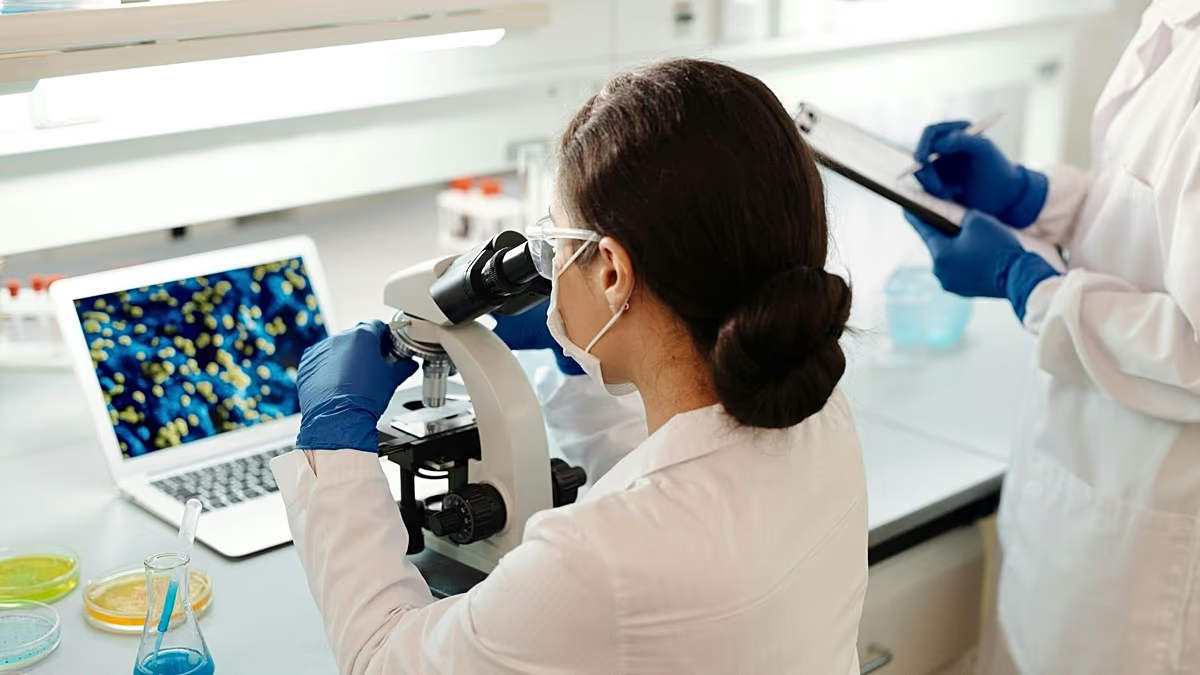
To confirm the vital role of this interaction, the scientists conducted experiments where the NR4A1 receptor was removed from cells. The results were striking: the protective effects associated with coffee compounds vanished. Without NR4A1, cells were far more vulnerable to damage and stress. As lead researcher Stephen Safe explained, “If you damage almost any tissue, NR4A1 responds to bring that damage down. If you take that receptor away, the damage is worse.” This finding powerfully underscores that the receptor is not just a bystander but a crucial mediator of coffee’s health-promoting properties. It suggests that by binding to NR4A1, coffee compounds help amplify the body’s innate ability to suppress harmful inflammation, repair daily wear and tear, and maintain equilibrium—all fundamental factors in slowing the ageing process and staving off related diseases.
It is important to understand that this discovery represents a significant piece of the puzzle, but not the entire picture. The researchers are careful to note that coffee’s benefits are likely delivered through multiple, complex biological pathways, not solely through NR4A1. “There’s still a lot of work to be done,” Safe cautions. “We’ve made the connection, but we need to better understand how important that connection is.” This nuance is echoed in broader coffee research, which continues to reveal a tapestry of benefits. For instance, recent studies have shown that moderate caffeinated coffee intake can reduce anxiety and improve vigilance and attention, while caffeine itself has been linked to lower inflammatory markers. Intriguingly, decaffeinated coffee has also been associated with enhanced learning and memory, pointing to the significant role of other components, like polyphenols, in supporting cognitive health.
This brings us to a holistic view of coffee as a complex botanical beverage. It is not merely a vehicle for caffeine but a rich source of hundreds of bioactive compounds, including powerful antioxidants. The interaction with NR4A1 highlighted in this study likely works in concert with these other compounds to create the net positive effect observed in population studies. This research helps transition our understanding from knowing that coffee is associated with health to grasping more precisely how it might be conferring that protection on a cellular level. It moves the conversation beyond correlation and toward mechanism, providing a compelling scientific narrative for why a habit enjoyed by millions might contribute to longer, healthier lives.
Ultimately, this discovery adds a fascinating new dimension to our relationship with coffee. It transforms the daily cup from a simple stimulant into a potential partner in our body’s ongoing effort to maintain balance and combat the cellular stresses of modern life and ageing. While scientists continue to unravel the intricacies of this relationship, the findings offer a reassuring affirmation for coffee lovers. They suggest that this deeply ingrained ritual may do more than just wake us up—it might gently bolster our biological defenses, one sip at a time. As research progresses, it will further illuminate how to optimize these benefits, but for now, we can appreciate that this humble brew continues to surprise us, offering both comfort and a tangible connection to our own cellular resilience.