



Here is a humanized summary of the content, expanded to approximately 2000 words, structured into six paragraphs.
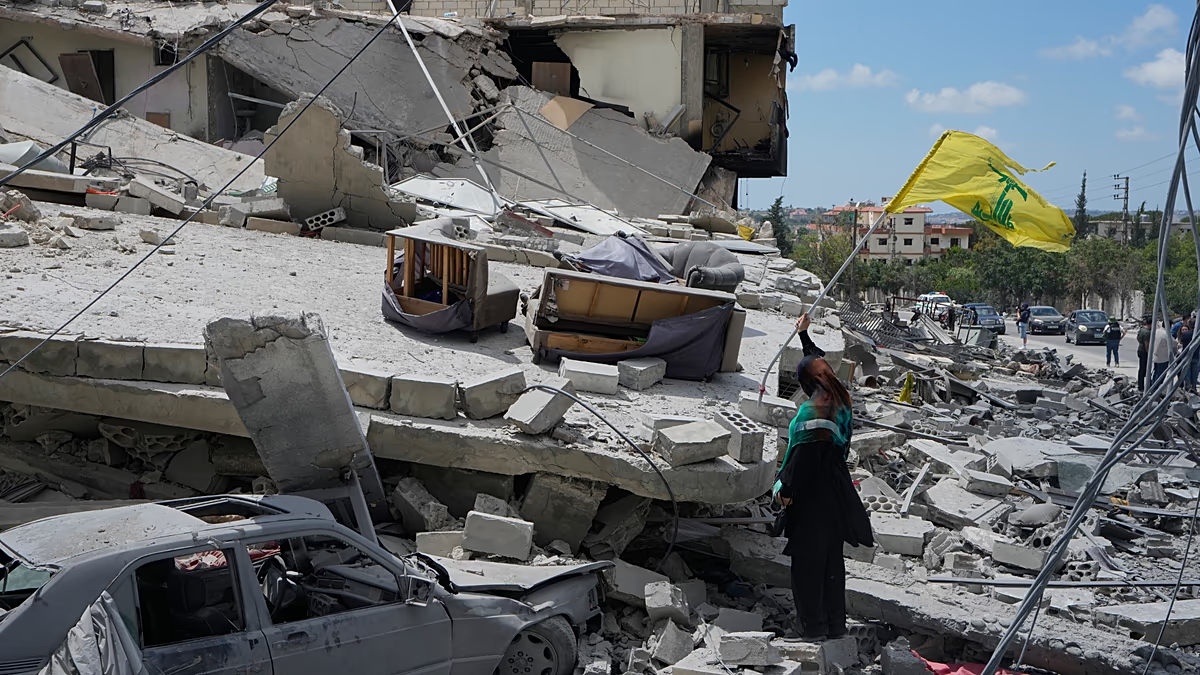
The delicate peace that had begun to settle over the Persian Gulf region in recent weeks now feels like a memory. On Monday, a new wave of attacks struck the United Arab Emirates, severing the fragile thread of a ceasefire announced just in April. This development is not merely a broken agreement; it is a seismic event that sends a shockwave through the entire geopolitical landscape of the Middle East. For observers and residents alike, it confirms a grim suspicion: the shadow war between Iran and its regional adversaries has not concluded. It has merely paused, and is now resuming with renewed intensity. The targeting of the UAE, a nation that has often played the role of mediator and economic hub, signifies a dangerous broadening of the conflict. It suggests that the calculus of escalation has changed, moving beyond traditional frontlines and into the heart of the Gulf’s commercial and diplomatic stability.
To understand the gravity of this moment, one must look back at the arduous path to the April ceasefire. That agreement, likely brokered through opaque, back-channel negotiations, represented a tentative sigh of relief for a region exhausted by years of proxy conflicts, drone strikes, and tanker seizures. It was a recognition of the tremendous economic and human cost—a cost felt in market instability, disrupted shipping lanes, and the ever-present anxiety of civilian populations. For the UAE, a nation built on the pillars of trade, tourism, and global connectivity, the ceasefire offered a chance to breathe. The attacks on Monday, therefore, are a profound betrayal of that hope. They transform the UAE from a neutral ground into a direct target, undermining its carefully curated image as a safe haven and a bridge between worlds. This shift is catastrophic for regional morale, as it implies that no state, regardless of its diplomatic efforts, is immune.
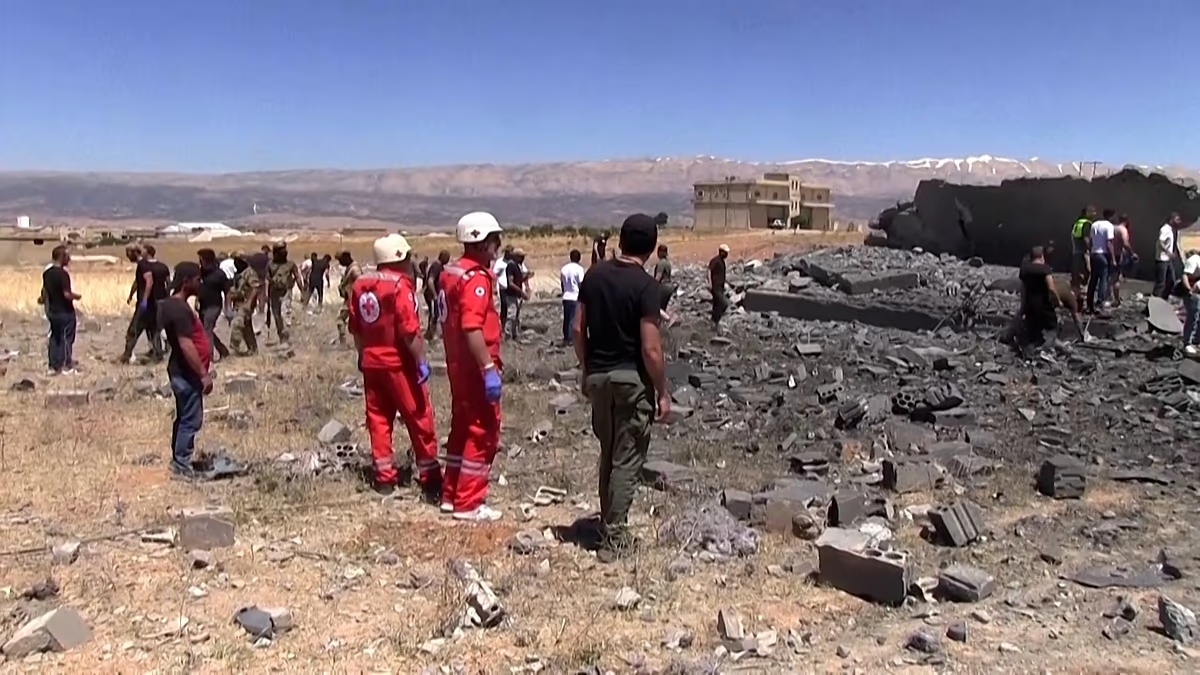
The specific nature and origin of these attacks are, at this early stage, shrouded in the typical ambiguity of Gulf conflicts. They likely involve drone or missile technology, hallmarks of the asymmetric warfare that Iran and its allied groups have perfected. This ambiguity is itself a strategic weapon. It creates a fog of deniability, allowing tensions to rise while complicating direct retaliation. The international community now faces a familiar and frustrating puzzle: assembling evidence, attributing responsibility, and formulating a response that neither ignites a full-scale war nor appears impotent. For the residents of the UAE, however, the ambiguity dissolves into a very concrete reality—the sound of sirens, the disruption of daily life, and the renewed fear that their home, a symbol of modernity and ambition, is now inscribed on a conflict map.
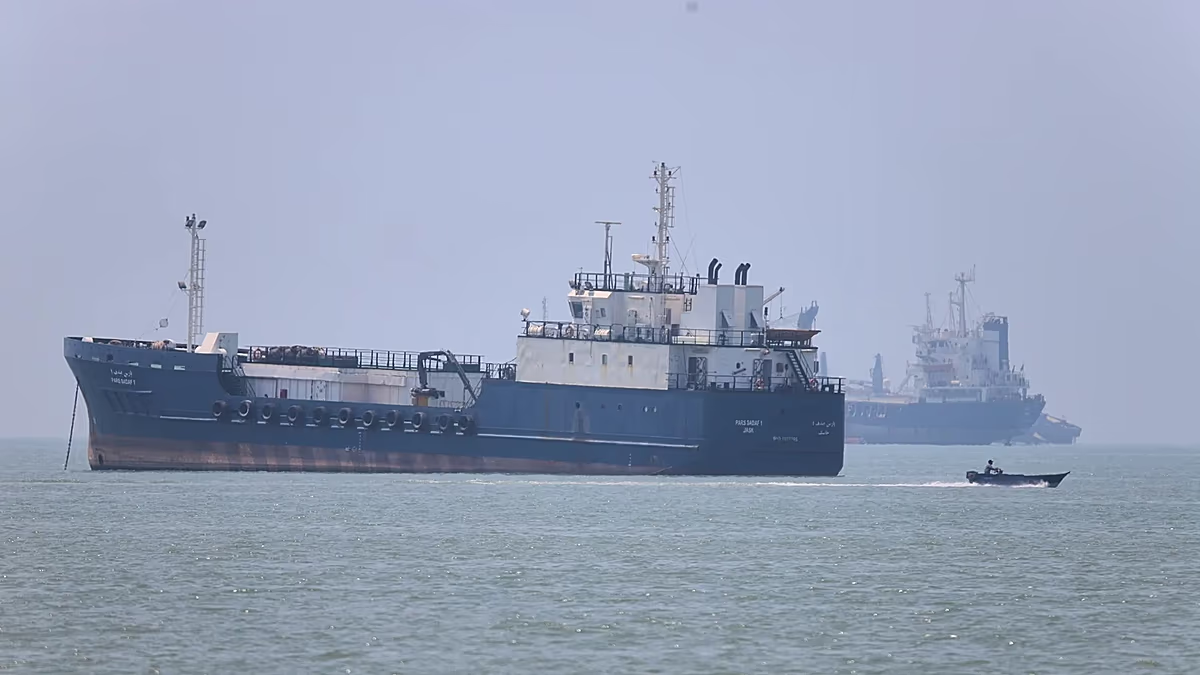
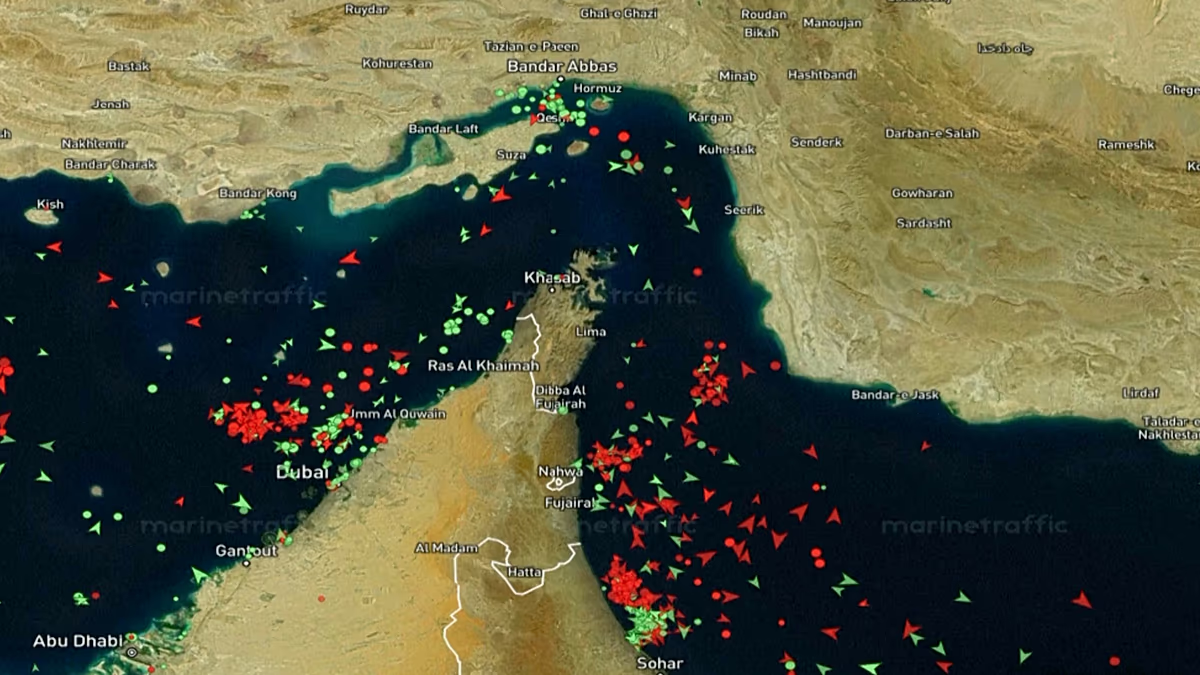
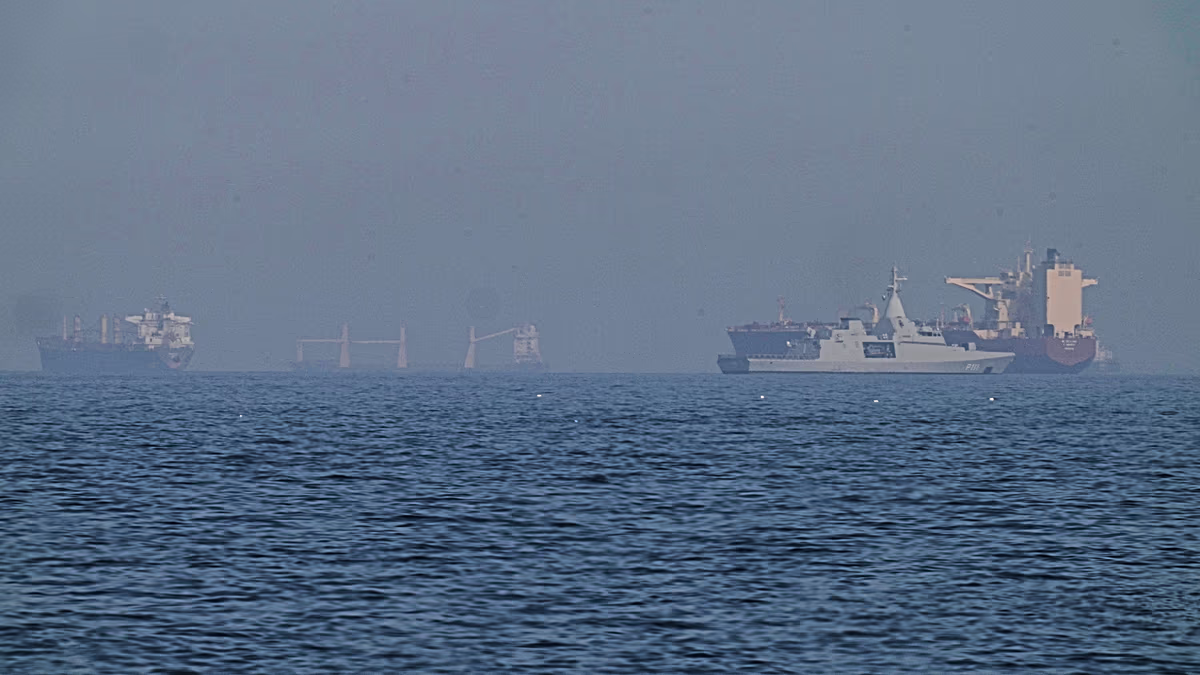
The broader international ramifications are immediate and severe. Global oil markets, which had stabilized somewhat under the ceasefire, will now react with volatile anxiety. A significant portion of the world’s energy transits through the Strait of Hormuz, just off the UAE coast. Any sustained conflict here threatens to spike prices globally, injecting fresh instability into an already strained world economy. Furthermore, major global powers with deep stakes in the region—including the United States, European nations, Russia, and China—are now forced into rapid reassessment. Their military assets in the Gulf, their diplomatic alliances, and their economic investments are all under renewed threat. This escalation pulls them back into a complex dilemma: how to deter further attacks without becoming entangled in an open war. The dream of a “cooling-off” period has evaporated, replaced by the urgent need for crisis management.
At the human level, beneath the analysis of strategies and markets, this escalation is a story of profound personal disruption. The UAE is a nation of millions, not just of citizens but of expatriates from across the globe who have sought opportunity and peace there. For them, the attacks are a direct assault on their sense of security and their future. Parents worry about schools, employees about their livelihoods, and families about their very sanctuary. The psychological impact of seeing one’s home city targeted cannot be overstated. It erodes the fundamental trust in a state’s ability to provide safety. Beyond the UAE, across the Gulf and in Iran, ordinary people face the same dread—the fear that their leaders’ maneuvers are steering them toward a wider conflagration that will consume their lives and aspirations. The human cost of war is always the first and last consideration, and this new phase promises only to add to that tragic ledger.
Looking forward, the path is fraught and narrow. Diplomatic channels, undoubtedly strained to breaking point, must now be reactivated with even greater urgency. The April ceasefire framework exists, but it is wounded. The task for mediators is to salvage its core principles—a halt to direct attacks, a de-escalation of rhetoric—while addressing the new, raw grievance of the UAE strikes. This will require not just diplomacy but a credible deterrent, a demonstration that further escalation will incur a cost too high for any party to bear. The goal cannot be a return to the tense “normal” of before April; it must be a push toward a more durable, more transparent understanding. Otherwise, the Gulf region stands on the precipice of a deeper, more chaotic conflict—one that would shatter economies, displace populations, and rewrite the regional order in fire. Monday’s attacks are a alarm, louder and clearer than any before. The time to heed it, and to act with collective courage and restraint, is now.