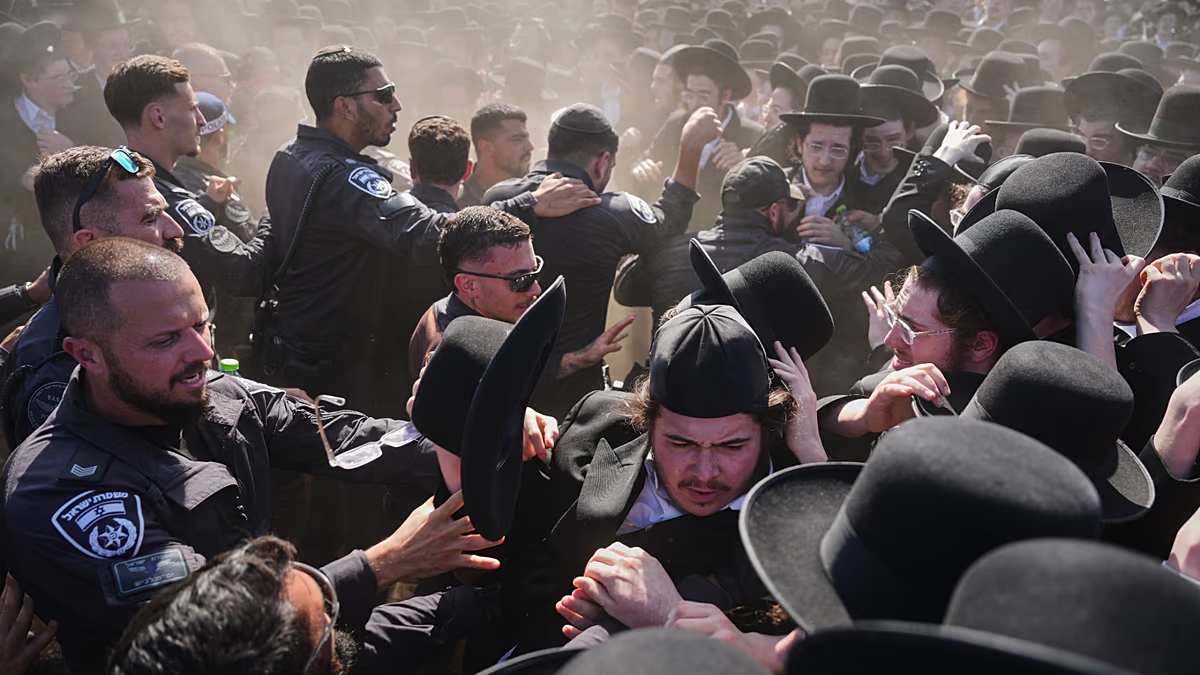




Under tight security and a notably somber mood, the annual Lag BaOmer pilgrimage at Mount Meron in northern Israel proceeded on Monday. This festival, which typically draws hundreds of thousands of ultra-Orthodox Jews for a night of immense bonfires, spirited prayer, and ecstatic dancing, was fundamentally altered this year. Authorities enforced strict crowd restrictions, a direct response to the tragic stampede in 2021 that claimed 45 lives, and, more urgently, to the ongoing security threats emanating from the nearby Lebanese border. The palpable tension between the deep human desire for communal celebration and the harsh realities of safety and conflict set the stage for a deeply conflicted observance.
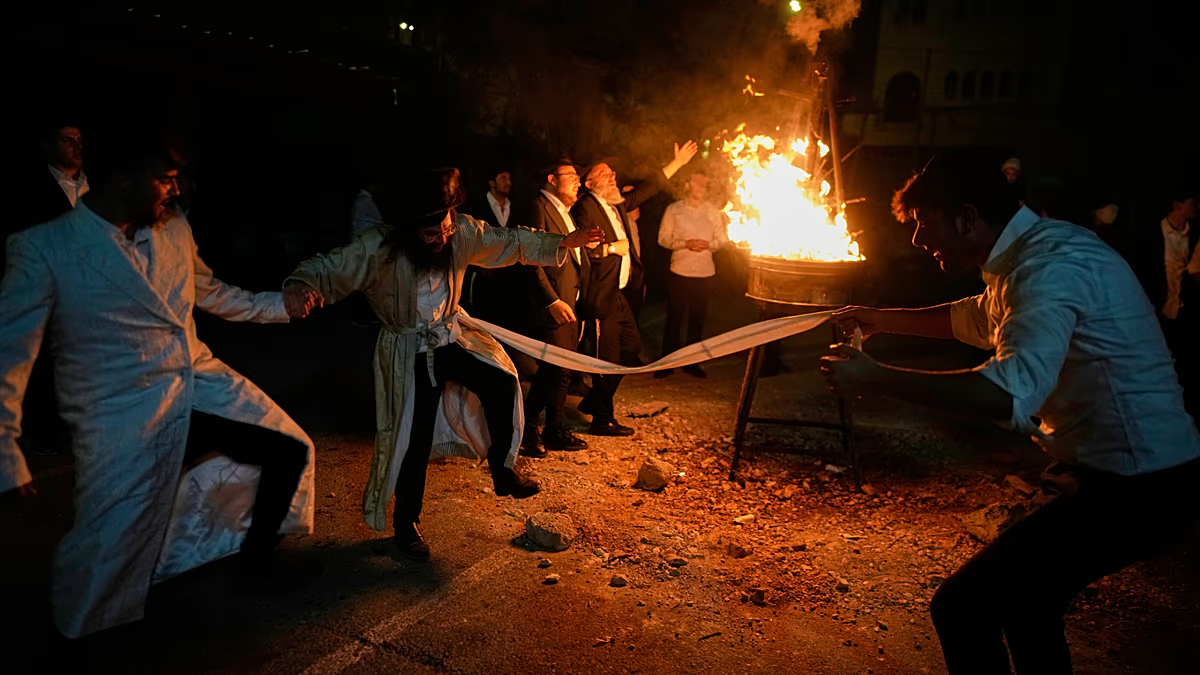
The heart of Lag BaOmer at Meron is the lighting of the grand bonfire, a ritual symbolizing the spiritual light of Rabbi Shimon Bar Yochai, the Talmudic sage whose death anniversary the day commemorates. This year, that honor fell to the Admor of Boyan, a revered spiritual leader within the Hasidic movement. As he kindled the flames, the scene was a shadow of its former self. While the fire’s glow still illuminated faithful faces, the massive, pulsating crowds of past years were absent. The dancing was more contained, the prayers perhaps more introspective, as participants navigated an atmosphere heavy with memory and caution. This central act of light persisted, but it was a subdued light, fighting against a darker backdrop.
The historical and spiritual weight of the day, marking an event roughly 1,900 years old, clashed painfully with contemporary dangers. In a significant and sobering decision, Israeli authorities canceled the secondary, traditional pilgrimage site near the Lebanon border entirely. This area, close to the tomb of another sage, Rabbi Jonathan ben Uzziel, was deemed too vulnerable due to the sustained hostilities with the Hezbollah militant group. This cancellation is a stark illustration of how ancient traditions are being reshaped by modern warfare. The path to prayer was literally cut off by the threat of rocket fire, forcing a reorganization of ritual life around the immediate imperative of physical survival.
For the individual pilgrim, the experience was thus layered with contradiction. Many arrived with a heart full of customary joy and devotion, seeking the transcendent connection that Meron promises. Yet, they were met with the constant presence of security personnel, the visible boundaries limiting movement, and the unspoken but universally understood awareness of the conflict simmering just miles away. The laughter and song were genuine but perhaps shorter-lived; the celebrations were heartfelt but carried an undertone of resilience rather than unburdened revelry. It was an act of quiet defiance—a decision to observe, to remember, and to connect, even if in a scaled-back and more conscious form.
This year’s restrained festival at Meron serves as a powerful metaphor for the current Israeli condition. It represents the struggle to maintain the rhythm of normal life, culture, and faith under the twin shadows of past trauma and present peril. The meticulous security measures honored the memory of those lost in the stampede by prioritizing the living, while the border cancellation bowed to the grim geopolitical realities. The event became less a wholesale escape into spiritual ecstasy and more a solemn testament to endurance, demonstrating how community and tradition adapt under immense pressure, bending but not breaking.
In the end, the flames at Mount Meron were lit, and prayers ascended as they have for generations. The Lag BaOmer observance, in its reduced and guarded form, ultimately affirmed the persistence of light. It proved that even when constrained by tragedy and threatened by conflict, the human spirit seeks moments of gathering, meaning, and hope. The bonfire this year was not just a memorial for an ancient rabbi, but a beacon signaling the determination to carry forward tradition, identity, and community through profoundly challenging times, holding fast to light amidst the encroaching darkness.