



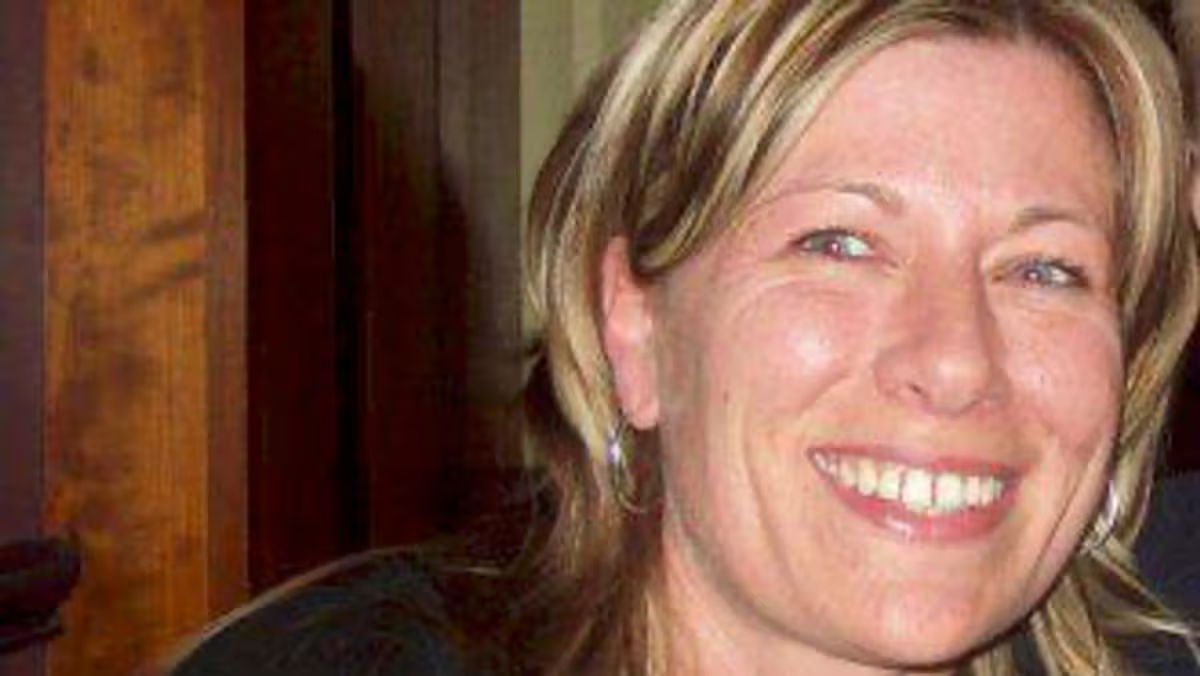
The story of Wendy Duffy, a 56-year-old British mother from the West Midlands who ended her life at the Pegasos assisted suicide clinic in Switzerland, is a profound tragedy that exposes the complex and painful intersections of profound grief, mental health, and the ethics of assisted dying. Her death is not a simple story of a single decision, but a heartbreaking narrative that unfolded over four years following an unthinkable personal loss. In 2019, her 23-year-old son, Marcus, died suddenly after choking on a sandwich she had made for him. This catastrophic event shattered Wendy’s world; a former care worker, she underwent years of therapy and took antidepressants but, by her own account, could never reconcile herself with the loss. Her journey to Switzerland, where she paid £10,000 for an assisted death despite having no terminal physical illness, was, for her, a final escape from an unbearable psychological pain she described as long-lasting and treatment-resistant.
However, Wendy’s choice has ignited a fierce and painful dispute between her grieving family and the clinic that facilitated her death, centering on allegations of failed communication and problematic assessments. Her twin sister, who wishes to remain anonymous, stated that the family was completely blindsided, learning of Wendy’s death through social media and news reports. She emotionally declared that had she known, she would have done everything in her power to stop her sister. This claim directly contradicts the clinic’s version of events. Ruedi Habegger, founder of Pegasos, asserted that Wendy’s four siblings were informed and had given their “blessings.” Wendy’s nephew, also named Marcus, has vehemently denied this, stating that no such contact ever occurred and that he has raised his concerns with both Swiss and British police, framing the clinic’s actions as a devastating failure of due diligence and care.
The core of the family’s anguish and ethical objection lies in their belief that Wendy was not of sound mind to make such an irreversible decision, and that the clinic’s safeguards were inadequate. Marcus points to what he describes as “clear signs” of deep depression following his cousin’s death, asking a pivotal question: “How can someone, by virtue of suffering from depression and suicidal thoughts, be deemed of sound mind?” From the family’s perspective, her wish to die was not a rational, autonomous choice but a symptom of the very mental health condition that should have disqualified her from the procedure. They argue that Pegasos, in approving a physically healthy woman, failed to properly distinguish between a considered, durable wish to die and the acute, distorted thinking of pathological grief and depression.
Pegasos, operating within Swiss law, follows a regulated process involving interviews, form submissions, and reviews of medical records by a panel that includes psychiatric experts. Mr. Habegger stated that Wendy passed her final psychiatric assessment just a week before her death and was “very decided.” Swiss law permits assisted suicide provided it is not done for selfish motives and the patient’s condition is deemed enduring, severe, and unresponsive to treatment. The clinic maintains that Wendy’s case met these legal criteria. This presents a stark dichotomy: the clinic’s view of a lawful, meticulously vetted procedure for intolerable suffering, versus the family’s view of a systemic failure that allowed a treatable mental health crisis to culminate in death.
In the days before her journey to Switzerland, Wendy herself offered a clear, if heartbreaking, rationale. In conversations with loved ones, she was resolute, saying, “I won’t change my mind… I want to die, and that’s what I’m going to do. And I’ll have a smile on my face when I do, so please be happy for me. My life; my choice.” This statement encapsulates the essential conflict of the assisted dying debate—the principle of personal autonomy versus the societal duty to protect the vulnerable. Wendy saw her decision as the final assertion of control over a life rendered meaningless by loss. Her nephew Marcus embodies the other side of this conflict, expressing understanding for her grief but profound disagreement with the process, believing she needed more support, not facilitation.
Ultimately, Wendy Duffy’s story leaves behind a landscape of raw sorrow and unresolved questions. It underscores the devastating, long-term impact of traumatic loss and the limits of therapeutic intervention for some individuals. Simultaneously, it forces a uncomfortable examination of the boundaries of assisted dying laws when the suffering is purely psychological, and the challenges of ensuring robust, transparent communication with families. The chasm between Wendy’s final sense of peace and her family’s enduring trauma and sense of injustice highlights that, even within a legal framework, such deaths are not merely medical or legal events, but profound human tragedies with endless reverberations. For those left behind, the search for answers and the burden of “what if” may be as enduring as the grief that led Wendy to seek her final exit.