



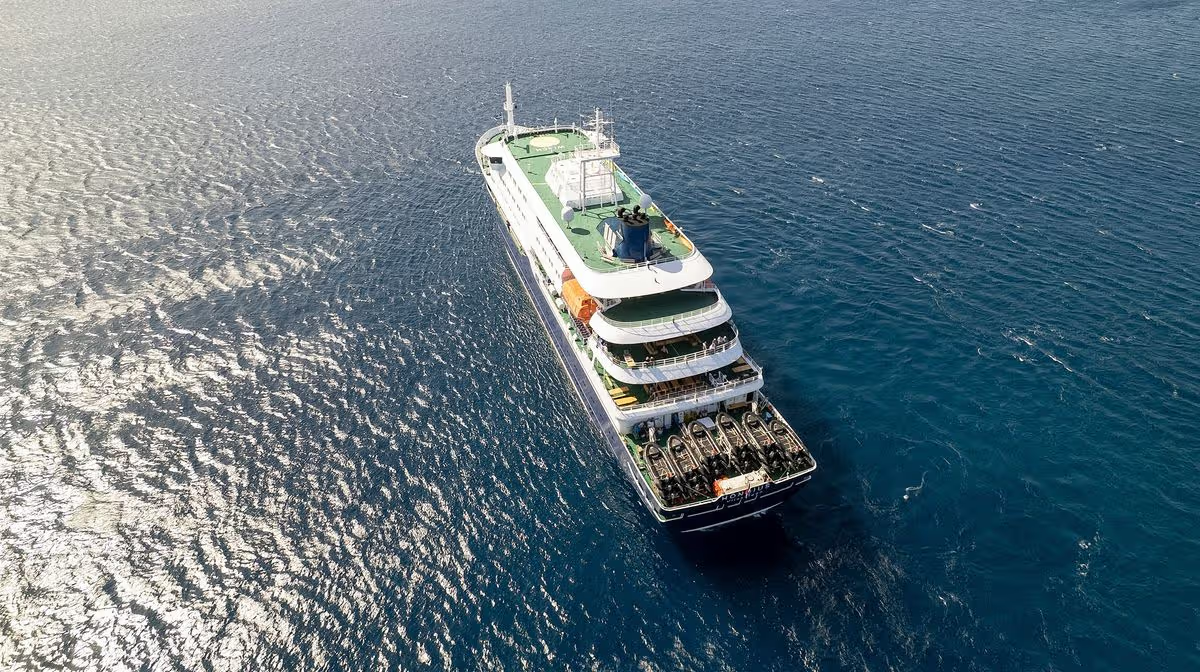
Of profound concern to health authorities and loved ones alike, a harrowing medical crisis has unfolded aboard the Dutch-flagged expedition cruise ship MV Hondius, transforming a journey from the wilds of South America to the Atlantic islands into a tragic ordeal. The vessel, operated by Oceanwide Expeditions, reported an outbreak of a “severe acute respiratory illness” suspected to be hantavirus, a rare and often severe infection. The situation has resulted in three fatalities and left a British passenger in a critical but stable condition in a Johannesburg intensive care unit, after a complex medical evacuation. With two confirmed cases and several others displaying acute symptoms, the incident has triggered an international response, casting a shadow over the ship’s voyage and leaving families and officials in a state of anxious vigilance as they coordinate a path to safety for all on board.
The human toll of this outbreak began to emerge in mid-April, marking a devastating turn for what should have been a voyage of discovery. The ship’s journey commenced on April 1st from Ushuaia, Argentina, bound for Cape Verde. Tragedy first struck on April 11th, when a Dutch passenger died aboard the vessel. With limited medical resources, the cause could not be determined at sea. His body was later disembarked on the remote island of St. Helena on April 24th, with his wife accompanying him for repatriation. Heartbreak compounded this loss when, during the return journey, the wife herself fell ill and passed away. Laboratory testing later confirmed she had tested positive for a variant of hantavirus. A third death followed on May 2nd, involving a German passenger; the cause of his death remains under investigation. These losses underscore the severe and unpredictable nature of the illness confronting those onboard.
In response to the escalating crisis, a complex medical and logistical operation is now underway, involving multiple governments and health agencies. The most urgent case, a British passenger, was already airlifted to a specialized hospital in South Africa on April 27th and remains in intensive care. Currently, the focus is on evacuating two symptomatic crew members—one British and one Dutch—who are suffering from acute respiratory symptoms, one severe. Dutch authorities are preparing a high-stakes evacuation using two specialized medical aircraft, a plan that underscores the seriousness of their condition. Furthermore, the ship’s planned disembarkation in Cape Verde has been cancelled for all guests, except for three individuals slated for medical evacuation. The final destination for the vessel and its remaining passengers is yet to be finalized, with Las Palmas or Tenerife in the Canary Islands as potential ports, as officials work to balance medical needs with containment protocols.
The pathogen at the centre of this tragedy, hantavirus, is a zoonotic disease typically transmitted to humans through contact with infected rodents or their droppings, dust, or saliva. While human-to-human transmission is exceptionally rare and typically only documented with specific strains in confined settings, the World Health Organization acknowledges it is possible, which likely informs the cautious approach being taken. The virus can cause Hantavirus Pulmonary Syndrome (HPS), a severe respiratory disease that progresses rapidly and has a high fatality rate. There is no specific antiviral cure or vaccine; treatment focuses on aggressive supportive care, particularly for respiratory distress, in an intensive care unit. This lack of direct treatment highlights the critical importance of early recognition and advanced medical intervention, as seen in the evacuation of the most severe cases.
Amidst the fear and uncertainty, international consular teams have mobilized to provide crucial support to nationals caught in the crisis. A UK Government spokesperson confirmed that Foreign, Commonwealth and Development Office teams are working “around the clock” from bases in the UK, South Africa, Spain, and Portugal. They are in direct contact with the family of the British man hospitalized in Johannesburg and are coordinating with the cruise operator and international partners to support all affected British nationals. This consular network serves as a vital lifeline for families separated by thousands of miles, offering updates, facilitating communication, and assisting with the intricate arrangements that such a multinational incident demands.
Despite the alarming nature of the outbreak, public health officials are urging perspective. Dr. Hans Henri P. Kluge, the WHO Regional Director for Europe, has stated clearly that the risk to the wider public remains low and that there is “no need for panic or travel restrictions.” This assessment is rooted in the virus’s primary transmission route from rodents to humans and its limited history of spreading widely between people. The response on the MV Hondius appears to be an exercise in extreme precaution to protect the vulnerable individuals still on board and the communities at potential ports of call. As the ship continues toward an undetermined safe harbour, and as medical evacuations proceed, the global community watches, hoping for the recovery of the ill and an end to this tragic chapter on the high seas.