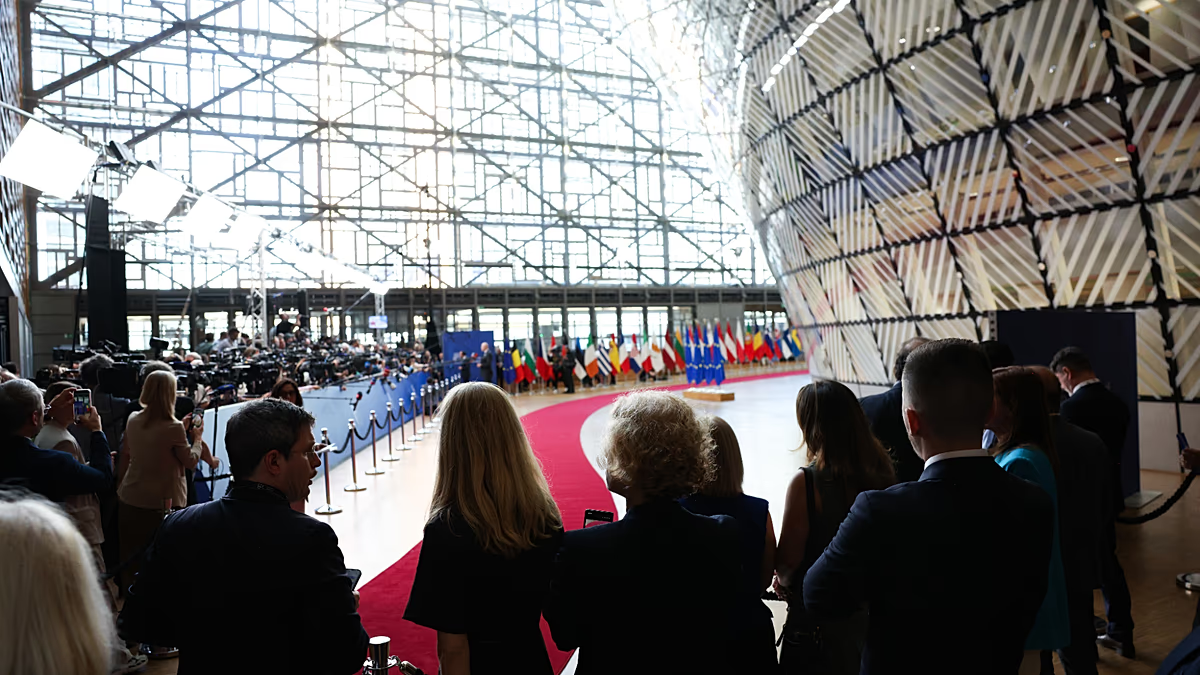



In the heart of European democracy, a troubling financial discrepancy has come to light, casting a shadow over the integrity of the very institutions designed to represent the public’s interest. The European Parliament’s own finance department has uncovered that political parties and their affiliated foundations misused approximately €1.5 million during the fervor of the 2024 EU election campaign. This isn’t just a dry audit finding; it represents a significant breach of trust, where funds intended for democratic engagement and public discourse were diverted from their proper use. What makes this situation particularly disheartening is the lack of transparency surrounding these activities. Citizens across the continent, who fund these operations through the EU budget and place their faith in the political process, are largely kept in the dark about which parties are involved and how exactly the money was misspent. This opacity undermines the foundational principle of accountability, leaving voters to wonder if their voices are being heard or if their contributions are being squandered behind closed doors.
Delving deeper into the mechanics of this issue, hosts Zoya and Ian from the podcast shed light on the specific parties implicated as the biggest offenders, though their identities remain somewhat shielded from full public scrutiny. More alarmingly, they explain how the European Parliament itself, through a labyrinth of complex bureaucratic procedures, inadvertently or perhaps deliberately helps these parties avoid broader examination. The processes in place are so byzantine that they can obscure wrongdoing rather than expose it, creating a protective layer that prevents meaningful oversight. This bureaucratic entanglement means that even when irregularities are flagged, they often get lost in a maze of paperwork and procedural delays, allowing the misdeeds to fade from public attention without resolution. It’s a system that seems designed more to maintain the status quo than to uphold the rigorous standards of ethical governance that Europeans rightfully expect from their representatives.
Shifting focus to the geopolitical stage, the podcast also highlights a critical meeting of EU finance ministers aimed at securing financial support for Ukraine from nations outside the bloc. This discussion comes at a pivotal moment, as Ukraine continues to defend its sovereignty against external aggression, and the EU seeks to bolster international solidarity. The effort to rally non-EU countries underscores the broader strategic importance of maintaining a united front in support of democratic values and regional stability. In a related development, Zoya and Ian share breaking news about a major personnel change at the European External Action Service, the EU’s foreign policy arm. Such shifts in key positions can signal new diplomatic directions or adjustments in the EU’s global engagement strategy, reminding us that the machinery of international relations is constantly in motion, with human decisions shaping the course of events far beyond Brussels’ corridors.
Amid these weighty discussions of finance and foreign policy, the podcast injects a moment of levity with a story that might seem trivial at first glance but speaks volumes about cultural identity and institutional sensitivity. A Spanish MEP expressed outrage when an inauthentic Galician octopus dish was served in the European Parliament’s canteen. This incident, while seemingly minor, taps into deeper currents of regional pride and the importance of authentic cultural representation within EU institutions. It echoes other historical “food fights” in political settings, where culinary choices become symbolic battlegrounds for recognition and respect. These episodes remind us that politics isn’t just about high-stakes negotiations and budget lines; it’s also about the everyday experiences and cultural nuances that define the diverse tapestry of European society, and how even a meal can become a point of contention or connection.
The podcast concludes with an open invitation for insider information on major job movements in Brussels or elsewhere, providing a contact via WhatsApp for tips. This call for engagement reflects a broader desire to peel back the layers of secrecy that often surround political and bureaucratic circles. By encouraging whistleblowers and informed observers to come forward, the hosts aim to foster a culture of transparency and accountability, counteracting the opacity that has allowed issues like the misspending to persist. It’s a reminder that journalism and public scrutiny play crucial roles in holding power to account, and that every piece of information, whether about multimillion-euro discrepancies or personnel changes, contributes to a more informed and vigilant citizenry.
In summary, this episode paints a picture of a European political landscape where significant challenges—from financial misconduct and bureaucratic obfuscation to geopolitical strategizing and cultural sensitivities—intertwine to shape the democratic experience. The misspending of €1.5 million is not just a fiscal error but a symptom of a larger transparency deficit, one that leaves the public grasping for answers. As the EU navigates support for Ukraine and internal reforms, the need for clearer processes and greater openness becomes ever more urgent. Meanwhile, stories like the Galician octopus controversy highlight the human elements within these institutions, where identity and tradition resonate deeply. Through it all, the podcast underscores the importance of continued scrutiny and public engagement, urging listeners to look beyond the surface and demand the accountability that is essential for a healthy, functioning democracy.